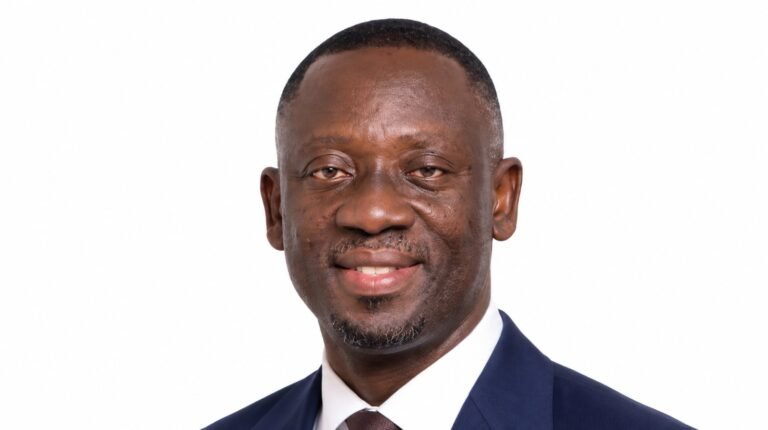
(L – R) Prof. Isaac Boadi, Dr. Frank Bannor and Dr. George Domfe
By Bright Philip Donkor
The Institute of Economic Research and Public Policy (IERPP) has described the 2025 Mid-Year Fiscal Policy Review as a document filled with revenue optimism but devoid of substance, strategic direction, and credible growth initiatives. According to the Institute, behind the glossy fiscal narratives lies a troubling pattern of underperformance, cuts to capital investment, and a lack of a coherent economic recovery plan.

Speaking during a press conference held under the theme “Unpacking Critical Elements of the Govt’s 2025 Mid-Year Fiscal Review” at the Ghana International Press Centre, Prof. Isaac Boadi, Executive Director of IERPP and Dean of the Faculty of Accounting and Finance at the University of Professional Studies, Accra (UPSA), presented a stark contrast to the government’s claims in the budget.
“The 2025 Mid-Year Budget is a textbook case of revenue optimism masking structural failure. Without a real plan for inclusive growth and investment, Ghana’s fiscal direction remains dangerously adrift,” Prof. Boadi said.
The theme of the Finance Minister’s mid-year review presented to Parliament on July 24 –“Resetting the Economy for the Ghana We Want”— projected an image of macroeconomic progress, citing falling inflation, cedi stability, and improved fiscal indicators. However, Prof. Boadi argued that beneath this façade, the numbers told a different story, one of shortfalls, cuts, and unfulfilled promises.
Fiscal base
He revealed that total revenue and grants underperformed by more than GH¢3.24 billion. Prof Boadi explained that key components of this shortfall included Oil Revenue – missed by GH¢2.66 billion; Grants – missed by GH¢339 million; and Non-Tax Revenue- missed by GH¢1.48 billion.
“These shortfalls raise serious doubts about the realism of government revenue forecasts. The budget’s optimism obscures a revenue structure still heavily reliant on volatile oil prices and uncertain donor inflows,” Prof. Boadi noted.
In response to the revenue underperformance, the government slashed total expenditure by GH¢18.4 billion. According to Prof. Boadi, this aggressive expenditure compression disproportionately affected capital expenditure—the portion of the budget dedicated to infrastructure, schools, hospitals, and long-term development.
“The numbers may show fiscal discipline, but it comes at the cost of public investment and job creation. You can’t cut your way to prosperity,” he stressed.
No growth strategy
Prof. Boadi further critiqued the government’s inability to outline a credible, funded, and time-bound growth strategy. While policy slogans such as the “24-Hour Economy and The Big Push Programme” have been prominently featured, he said there was little evidence of coordination, sectoral integration, or measurable outcomes.
“Despite grand announcements, synergy is missing, and implementation remains sluggish. Sectoral silos still dominate. Without a clear roadmap and credible funding, these programmes remain rhetorical flourishes,” he stated.

Exposing lies
Touching on developments in the real and energy sectors, Dr. Frank Bannor, a lecturer at GIMPA and Senior Research Fellow at the Institute of Economic Research and Public Policy (IERPP), challenged the government’s claims of economic progress.
He stated: “When facts fall, trust crumbles. Accuracy isn’t optional in economic leadership. Misleading statistics raise serious questions about the credibility of Ghana’s fiscal management.”
Dr. Bannor took particular issue with claims made by the Minister of Finance, Dr. Cassiel Ato Forson, in paragraphs 64 and 65 of the Mid-Year Budget Statement, where the Minister stated: “Non-oil GDP growth picked up strongly, growing at 6.8% in the first quarter of 2025, the highest since 2018.”
But, Dr. Bannor explained that, according to data from the Ghana Statistical Service (GSS), this statement was factually incorrect. “The provisional real GDP growth rate without oil and gas for Q3 2024 was 8%. That clearly contradicts the Minister’s claim. So the assertion that 6.8% is the highest since 2018 cannot be true,” Dr. Bannor said, referencing official figures.
He emphasised that such misrepresentation, intentional or not, distorts public understanding of the economy’s health and threatens the credibility of the government’s fiscal reporting.
Services sector neglect
Dr. Bannor also bemoaned the neglect of the services sector in the mid-year review, despite its dominant role in Ghana’s GDP composition and employment generation. He cited paragraph 63 of the budget, where the Minister focused on the industrial sector’s 3.4% growth while failing to mention the performance of the services sector.
“This is deeply concerning. In Q4 of 2024, the services sector achieved the highest real GDP growth at 6.3%. This sector, covering trade, ICT, transport, education, health, real estate, and more, employs the majority of Ghana’s workforce,” Dr. Bannor explained.
He stressed that ignoring the sector in fiscal planning and public reporting was not just an oversight, but a policy misstep that could have dire consequences for livelihoods and household incomes. “A decline in services sector growth translates directly to job losses and worsening living conditions. This should be a frontline concern, not a footnote,” he added.

Structural cracks
Furthermore, Dr. George Domfe, Senior Research Fellow at the Institute of Economic Research and Public Policy (IERPP) and the Centre for Social Policy Studies (CSPS) at the College of Humanities, University of Ghana, cautioned that while the recent appreciation of the Ghanaian cedi and the country’s historic trade surplus may give cause for celebration, the underlying economic structure still harboured vulnerabilities that must not be overlooked.
He stated,“Appreciation today? Celebrate, but don’t ignore the structural cracks.” He explained that the Ghanaian currency had faced decades of depreciation against major international currencies due to the country’s persistent reliance on imports. Historically, he stated, Ghana had maintained a fixed exchange rate regime in the years following independence, but had since transitioned to a managed floating exchange rate system.
Demand, supply factors
Dr. Domfe explained that several factors on both the supply and demand sides are currently supporting the appreciation of the cedi. On the supply side, he mentioned that increased foreign direct investment, the export of key commodities such as gold, crude oil, cocoa, and timber, as well as inflows from loans, grants, and remittances were all helping to boost foreign currency reserves. He noted that other contributors to foreign currency inflows include the growing number of foreign students attending Ghanaian educational institutions and West African nationals seeking healthcare services in the country.
Dr. Domfe also highlighted that on the demand side, government expenditure had remained relatively low due to the current administration’s decision to review contracts initiated by the previous government. Consequently, many contractors have not been paid since the beginning of the year, reducing the outflow of funds. Additionally, he noted that a fall in global crude oil prices, though Ghana is a net exporter, had contributed positively to cedi stability by lowering the cost of imported oil-based products. Ghana’s successful debt restructuring programme, he added, had significantly enhanced the country’s debt sustainability profile and boosted investor confidence, resulting in increased foreign capital inflows.

About The Author