By Kwadwo Afari
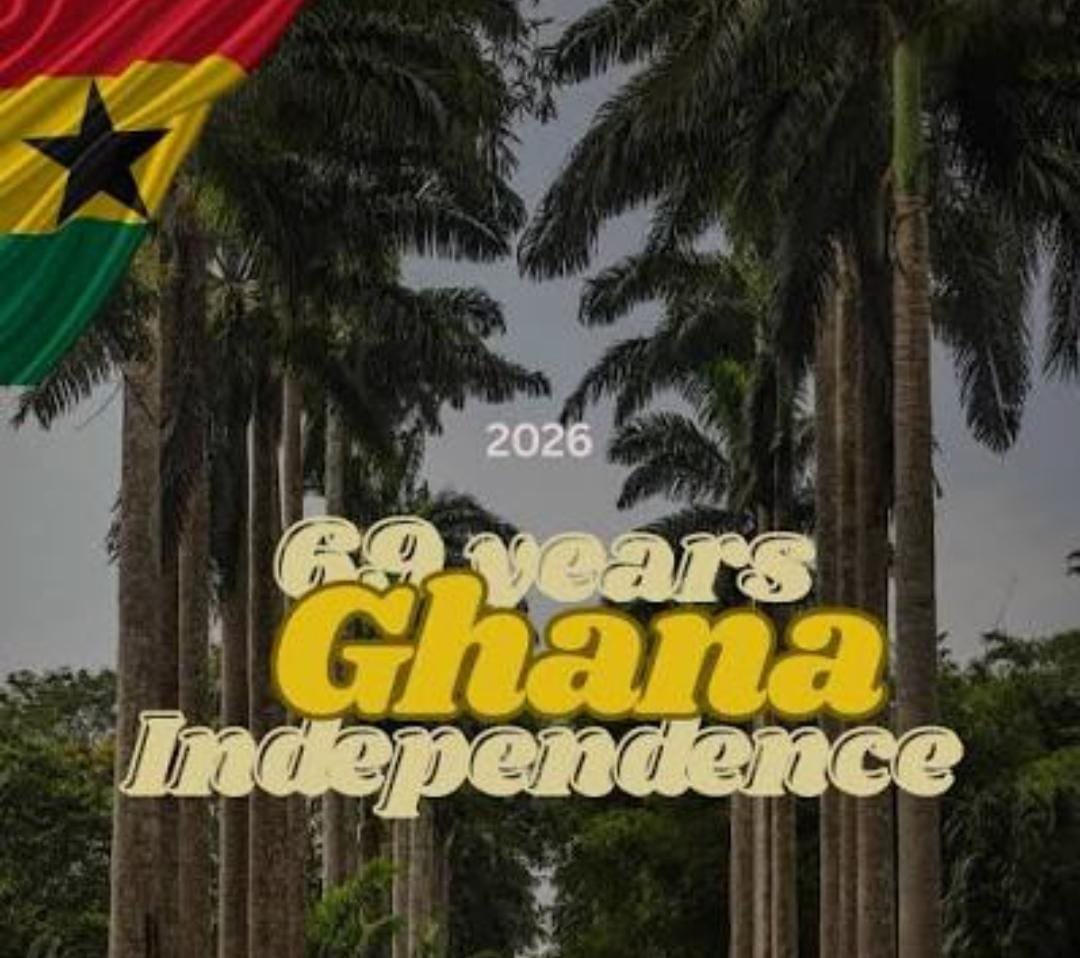
This year marks the 69th anniversary of Ghana’s independence—a historic triumph against colonial domination. March 6th, 1957, symbolized the restoration of sovereignty and the recovery of dignity for a people long subjugated. The lowering of the British flag and the raising of Ghana’s red, gold, and green banner, emblazoned with the black star, was more than a political act; it was a rebirth of the idea of freedom.
Independence opened a space of vast potential, but also a battleground where the weight of the past confronted the stubborn hope of citizens and other African nations. Its legacy is dialectical: the dream of self-determination and cultural pride was inspiring, yet the realization soon dawned that formal decolonization was only the first step. True liberation required mental, institutional, and economic transformation.
Sadly, the post-colonial state often replicated colonial structures. A new elite appropriated the machinery of extraction and coercion, replacing foreign rule with tribalism and clientelism. The “tyranny of the majority”—or of entrenched minorities—fueled coups, exclusions, and the tribalization of politics.
The question “What did independence bring?” admits no single answer. It demands reflection on both the light of autonomy and the shadows of incomplete freedom.
For decades, successive regimes—civilian and military alike—have strayed from the principles of a free society. Nkrumahist progressives turned independence into a one-man narrative, elevating collectivism over individual rights. Ironically, self-described conservatives failed to defend principled individualism, retreating instead into silence, sectionalism, and reactionary politics. The result has been a moral vacuum that enabled demagogues and opportunists to rise unchecked.
The paradoxes of March 6th endure. Education systems promised cultural renewal but largely preserved colonial syllabi, training youth for government jobs rather than innovation. Justice systems sanctified arbitrary power in the name of patriotism. Economically, independence did not free Ghana from dependency. Commodity exports, debt, capital flight, and corruption entrenched a cycle of mismanagement. Sovereignty became a “golden cage,” where leaders managed misery rather than transformed it.
Sixty-nine years on, Ghana risks a constitutional crisis. The 1992 constitution, far from safeguarding liberty, concentrates power in a single office — an arrangement closer to dictatorship than to democracy. Politicians thrive on partisan combat, loyalty, and patronage, while institutions weaken. Extreme polarization has deceived us into accepting patronage and tribalism as substitutes for genuine politics.
Rural poverty is really a prime example of a problem our leaders seem unwilling to confront: politicians are out of control — promising more, spending more, delivering less, and pushing off the fiscal problems to some future day. What is the principle of good government here? The answer is ‘keep adding programmes and divide.’ The government has become a machine that grows faster than the society it governs.
Even the youth, heirs of independence, seem increasingly disengaged from liberty. Many demand “free everything”—health care, childcare, education—without embracing the responsibilities of freedom. Patronage is valued over excellence, security over opportunity, equality over innovation. This dependency reflects a deeper cultural surrender: when liberty is forgotten, authouritarianism fills the void.
Our poverty and political stagnation are not accidents but the result of the gradual erosion of rights-respecting institutions. Today, the government consumes more than 60 percent of all that ordinary citizens produce — compared to perhaps what the colonizers took before independence. Yet, few people seem interested in asking the advocates of still more government such cogent questions as “Why should our own government take more from citizens? The danger lies not in dramatic collapse but in slow corrosion of freedom —when unjust means are normalized for supposedly good ends.
We must resist. As scripture reminds us: “For what shall it profit a man, if he shall gain the whole world, and lose his own soul?” Independence is betrayed when leaders wield it for corruption and control. True freedom requires sacrifice, responsibility, and principle.
Today, as we commemorate March 6th, 1957, let us remind ourselves—and especially the youth—that independence is not a gift but a burden to be carried. Freedom is always nobler when chosen, defended, and lived. Ghana’s future depends on rekindling that spirit of liberty, lest we remain trapped in the illusions of neo-colonialism and the false promises of dependency.
About The Author