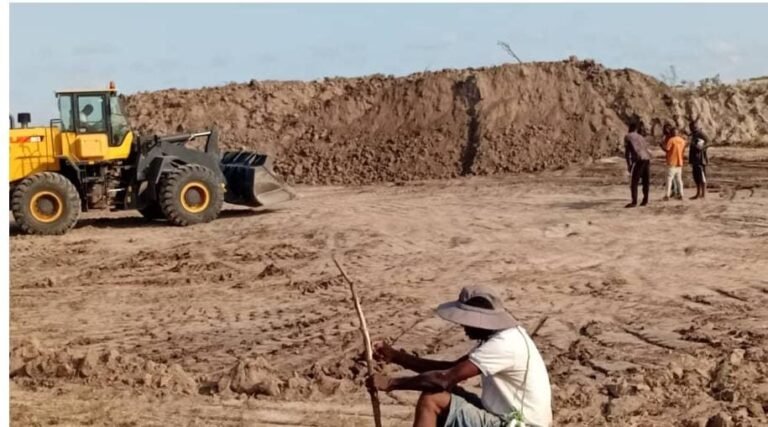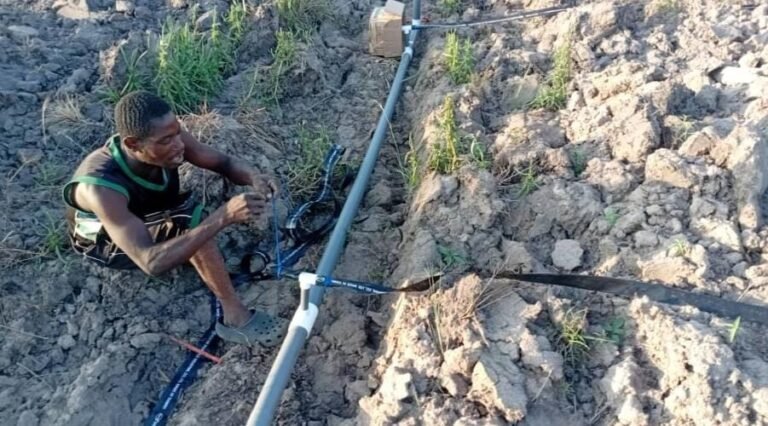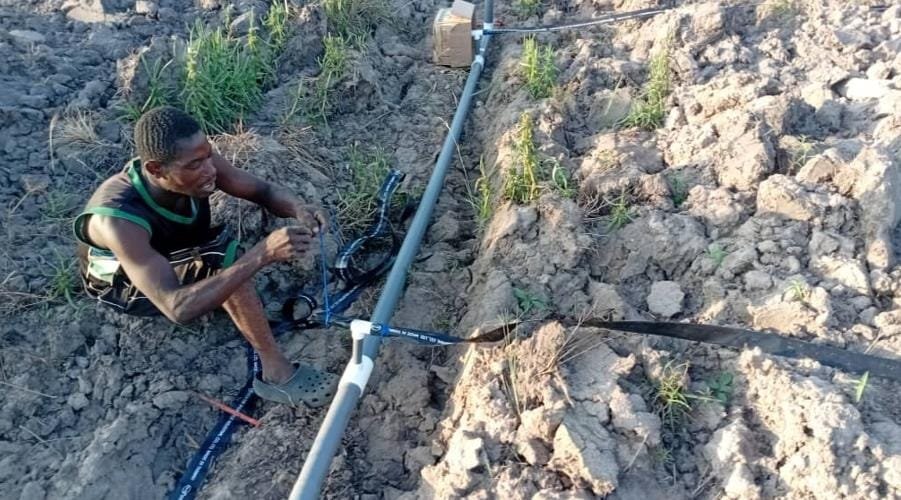
 Nurture Nature Foundation (NNF) has supported Gabriel Adusu, a farmer with a physical disability from Ada Foah, with irrigation materials to improve watermelon production and promote climate smart agriculture at Madavonor in the Ada East District.
The intervention included the installation of irrigation tubes on Mr Adusu’s one and a half acre farm. The system will help him supply water directly to the crop, sustain production when rainfall is inadequate and reduce losses associated with relying entirely on the rainy season.
NNF also provided fuel to help operate the irrigation system as the watermelon plants progress towards maturity.
Expressing his appreciation, Mr Adusu said the support had improved irrigation on the farm and would help him reduce production costs and losses.
“Thank you to the Executive Director of Nurture Nature Foundation for supporting me with my irrigation. My irrigation system is now better, and I can use it to save at least 70 per cent of the costs and losses I experience during the rainy season,” he said.
“I have planted watermelon, and I am now irrigating it. The irrigation setup is very expensive, but Nurture Nature Foundation has helped me to put it in place. I thank them very much,” he added.
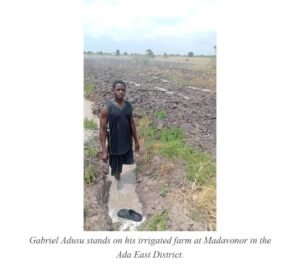
Mr Adusu appealed to NNF and other organisations to extend similar assistance to more persons with disabilities so they could venture into farming and other productive economic activities.
“I am pleading with them to support other persons with disabilities so that they can also go into farming or other businesses. Disability is not inability. It is possible to succeed when you make up your mind,” he stated.
He said he was hopeful that continued access to fuel and other support would enable him to maintain the farm until harvest and improve his livelihood.
Peter Asiedu, Executive Director of Nurture Nature Foundation, said the initiative formed part of the organisation’s efforts to promote inclusive agricultural development and help vulnerable farmers adapt to changing climatic conditions.
According to him, depending entirely on rainfall threatens food security and limits agricultural productivity, particularly as rainfall patterns become increasingly unpredictable.
“We are at Madavonor, where we have assisted Gabriel Adusu, a person with a physical disability, to install irrigation tubes on his watermelon farm. The tubes are now in good working condition, and we are beginning to break the cycle of total dependence on rainfall,” Mr Asiedu said.
“We cannot depend solely on the rains for food security and maximum productivity. We must invest in climate smart agriculture to support farmers and build resilient food production systems,” he added.
Mr Asiedu called on the government, development partners and private sector organisations to support NNF in expanding the intervention to more young people, women and persons with disabilities who are interested in agriculture.
He noted that providing farmers with irrigation equipment and other essential inputs could create sustainable employment, strengthen rural livelihoods and encourage more people to view agriculture as a viable business opportunity.
“Agriculture should not be seen as a punishment. It is a lucrative business that can provide employment, improve livelihoods and offer people meaningful career opportunities,” he said.
The intervention is expected to increase Mr Adusu’s productivity, reduce his vulnerability to changing rainfall patterns and demonstrate how inclusive climate smart agricultural support can empower persons with disabilities in rural communities.
About The Author