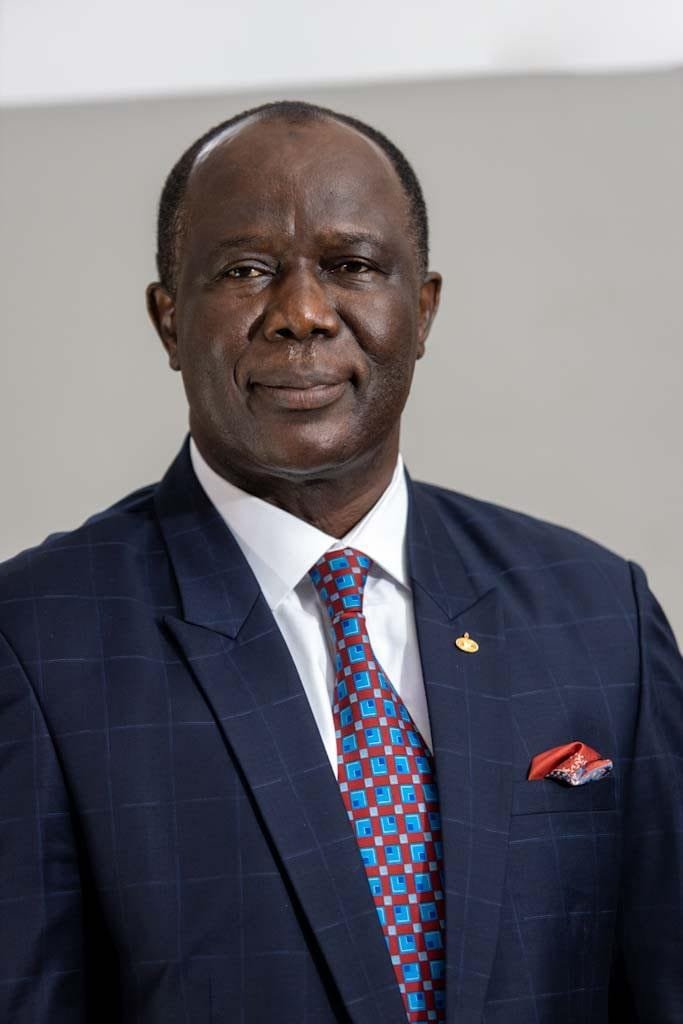
Dr Jeffrey Haynes, Professor Emeritus of Politics, London Metropolitan University, UK
By Professor Jeffrey Haynes
The long-celebrated baseline of democratic stability and interfaith harmony in Ghana is facing a quiet but perilous shift in its social fabric. For decades, the peaceful coexistence between the country’s Christian majority (71%) and Muslim minority (20%) served as a model for a region frequently torn by sectarian strife. However, recent developments reveal a troubling trend driven by the weaponisation of faith for political leverage and the steady rise of exclusive Christian nationalism. Together, these forces threaten to dismantle a historic tolerance that many had assumed was permanent. I will soon return to Accra, returning to a landscape that has shifted noticeably compared to the climate during my last visit to Ghana a year ago. Where my previous assessments viewed Ghana’s interfaith peace as a resilient, self-sustaining element of national stability, I now observe a deliberate weaponisation of religion, with political opportunists and radical charismatic leaders actively transforming quiet theological differences into sharp electoral tools to divide voters.
The vulnerability of this religious peace became starkly apparent following a series of flashpoints driven by digital media over the last few months. Over the past year, subtle undercurrents of religious preference have consolidated into overt, exclusionary anti-Muslim rhetoric. I see localised frictions—which once would have been quieted through traditional community structures—being hyper-amplified and rapidly escalated by digital media and social media algorithms. The friction ignited when social media videos circulated featuring highly offensive remarks about the Prophet Muhammad made by a charismatic Christian pastor. The backlash was swift and volatile; an imam delivered a retaliatory sermon, and shortly thereafter, a video emerged showing the physical assault of the pastor while in custody. Viral videos of offensive religious remarks and subsequent retaliatory acts have fundamentally changed the speed and volatility of communal friction, demonstrating how local grievances are easily exploited to transform personal faith into an electoral tool.
At the heart of this shifting dynamic is the growing influence of Christian nationalism and its deepening structural ties with the transnational right. In my recent book, Christian Nationalism and Democracy in Ghana (Routledge, 2025), I describe a close – albeit informal – alignment between local Pentecostal-Charismatic elites and elements of the American Christian Right. This external influence has shifted local rhetoric away from traditional civil religion toward an aggressive brand of Christian nationalism that actively seeks to manipulate state policy, public monuments, and legislative frameworks. Driven in part by prominent charismatic leaders, this ideology moves beyond personal faith to argue that Ghana should be fundamentally remade according to specific Christian values. Proponents of this worldview seek to direct not only moral life but also national policy and economic governance. Though Ghana’s constitution explicitly forbids the formation of political parties based on religious or ethnic considerations, this has not stopped ideological figures from seeking to influence individual politicians through de facto endorsements from the pulpit.
This ideological shift has formalised into what Shaykh Mustapha Abdul-Hamid recently described in a recent Danquah Institute Lecture as a deliberate weaponisation of faith. The rise of high-profile Muslim leaders within major political parties is no longer treated as standard political competition. Instead, radical elements are framing it as an existential threat to the Christian majority, a divisive rhetoric that has rapidly accelerated. By casting democratic competition as a spiritual battle, opportunists risk dividing the electorate into rigid sectarian camps, manipulating public sentiment at the expense of long-term democratic trust.
Beyond rhetoric, the friction between communities is occasionally felt within state-regulated spaces, notably in education. Ongoing controversies surrounding uniform policies and religious practices in mission and public schools have exposed gaps in structural protections for minority students. When Muslim students face barriers to exercising their religious freedoms within public or state-funded institutions, it erodes the fundamental civic trust required to maintain national cohesion. The danger is clear: when state institutions or symbols, such as the contested projects surrounding national monuments, are seen as favouring one religious group over another, the inclusive nature of Ghanaian citizenship is compromised.
To prevent these simmering tensions from fracturing the state, immediate institutional interventions are required, as Ghana cannot rely solely on the passive assumption that its culture of tolerance will endure automatically. First, the state must institutionalise local dialogue by establishing permanent, district-level interfaith councils to serve as early-warning mechanisms that can resolve local disputes before they escalate. Second, the Ministry of Education must standardise policies by enforcing uniform, inclusive guidelines across all public and mission schools to ensure that education remains a space for unity rather than division. Third, political parties and civil society must actively reject sectarian rhetoric and condemn the use of identity politics in campaigns, focusing instead on policy, track records, and economic strategies. Fourth, the state must reaffirm constitutional secularism by maintaining strict neutrality in religious affairs, ensuring no single group exercises undue influence over public policy or state resources. Finally, religious broadcasters and digital influencers must be held accountable to existing standards against hate speech to prevent the digital escalation of sectarian grievances.
The bottom line: Ghana currently stands at a critical crossroads where the blurring of the line between moral guidance and political strategy poses a serious threat to democratic integrity. By confronting the creeping influence of Christian nationalism and actively rejecting the weaponisation of faith, Ghanaians can safeguard the interfaith harmony that remains the country’s greatest national asset.
About The Author