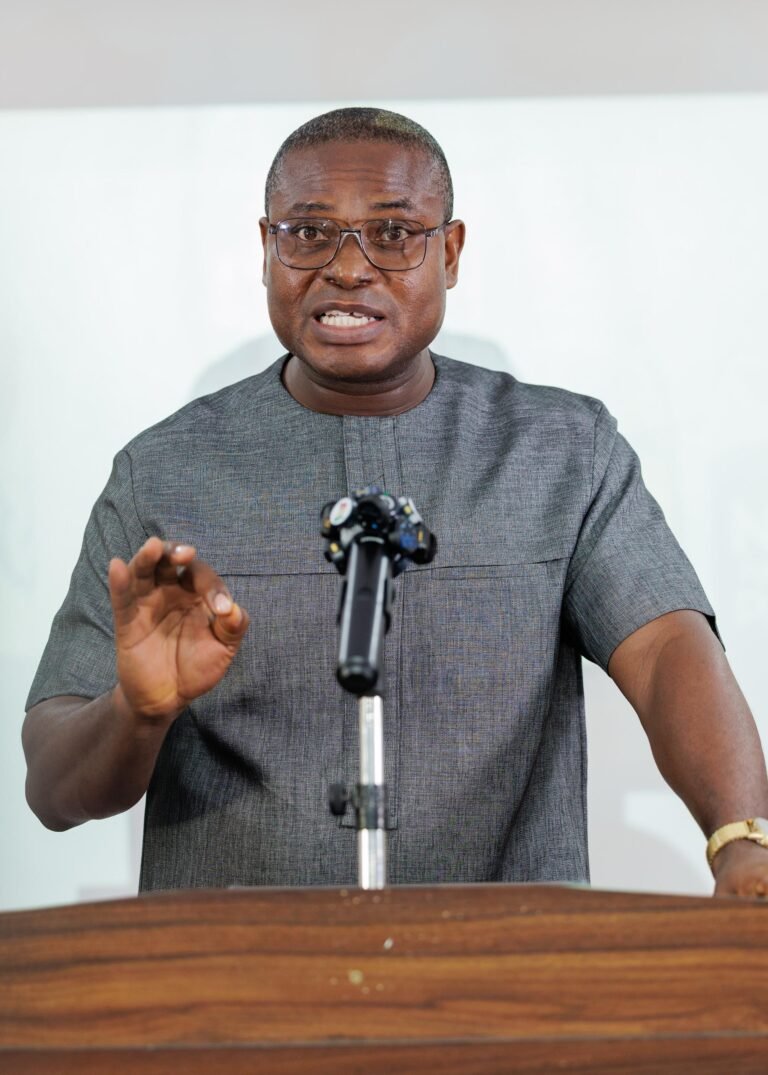
Dr. Kwasi Nyame-Baafi, Director at the Institute of Economic Research and Public Policy (IERPP), has raised strong concerns about the direction of Ghana’s economic management. In a Facebook post on Thursday, March 5, 2026, the economist stated that some of the recent policy decisions taken by the government could have significant implications for the country’s long-term economic stability.
According to him, the trajectory of current economic policies raises important questions about sustainability, particularly at a time when Ghana is striving to consolidate gains made in stabilising the economy. He noted that careful and responsible management of the economy remains essential to safeguarding national resources and ensuring that growth benefits the broader population.
Dr. Nyame-Baafi maintained that his concerns were rooted in economic realities rather than partisan considerations, stressing that the future of the national economy must be treated as a matter of public interest.
“When we say we are worried about the future of the economy, it is not politics but a matter of fact. The current policy choices of government leave much to be desired,” he wrote
The economist questioned the rationale behind what he described as the government’s handling of Ghana’s gold reserves, suggesting that the policy could have serious implications for the country’s financial stability. According to him, selling a significant portion of inherited reserves at a lower price only to later buy them back at a higher price raises fundamental questions about economic prudence.
“How do you sell more than half of the reserves you inherited at a relatively cheap price, only to return later to buy them back at a much higher price ? Ghanaians demand answers and we need to know the motivation behind this ‘reckless’ policy choice,” he stated.
Dr. Nyame-Baafi also expressed reservations about the “over-appreciation” of the Ghana cedi. While currency stability is often welcomed by businesses and consumers, he cautioned that artificially strengthening the currency could have unintended consequences for domestic industries.
“The other issue is not currency appreciation; the issue is over-appreciation. Artificially strengthening the currency risks undermining local industries and increasing import dependence. What is an economy without strong real sectors?,” he asked.
Beyond the exchange rate debate, the IERPP director criticised what he characterised as an over-reliance on the gold sector as a driver of economic growth. He argued that basing a national growth narrative on a single commodity exposes the economy to volatility and long-term vulnerability.
“Building an entire growth narrative around gold is not responsible economic management. What happens when gold prices fall?”, he wrote
He further referenced earlier remarks made by the Finance Minister, Cassiel Ato Forson, noting that the minister had previously attributed economic growth to illegal mining activities.
“Just a year ago, Ato Forson described the 5.7% GDP growth as ‘galamsey-driven growth.’ If in 2025 the gold sector is growing at 33.6% compared to 19.1% in 2024, what kind of economy are we building, a galamsey economy?” he questioned.
Dr. Nyame-Baafi also warned about the broader implications of policies that could encourage unsustainable exploitation of natural resources, particularly in the context of illegal mining activities that have drawn national attention in recent years.
“At what cost are we willing to continue with such unsustainable economic management? Human lives? Environmental destruction?” he asked.
The economist further argued that the country had begun to see signs of economic recovery before 2025 and suggested that policy continuity might have been a more prudent approach.
“The economy was turning the corner prior to 2025. The least that could have been done was to continue key policies that had begun stabilizing the system and not reset them.Ghanaians deserve a responsible economic management,” he further stressed.
About The Author