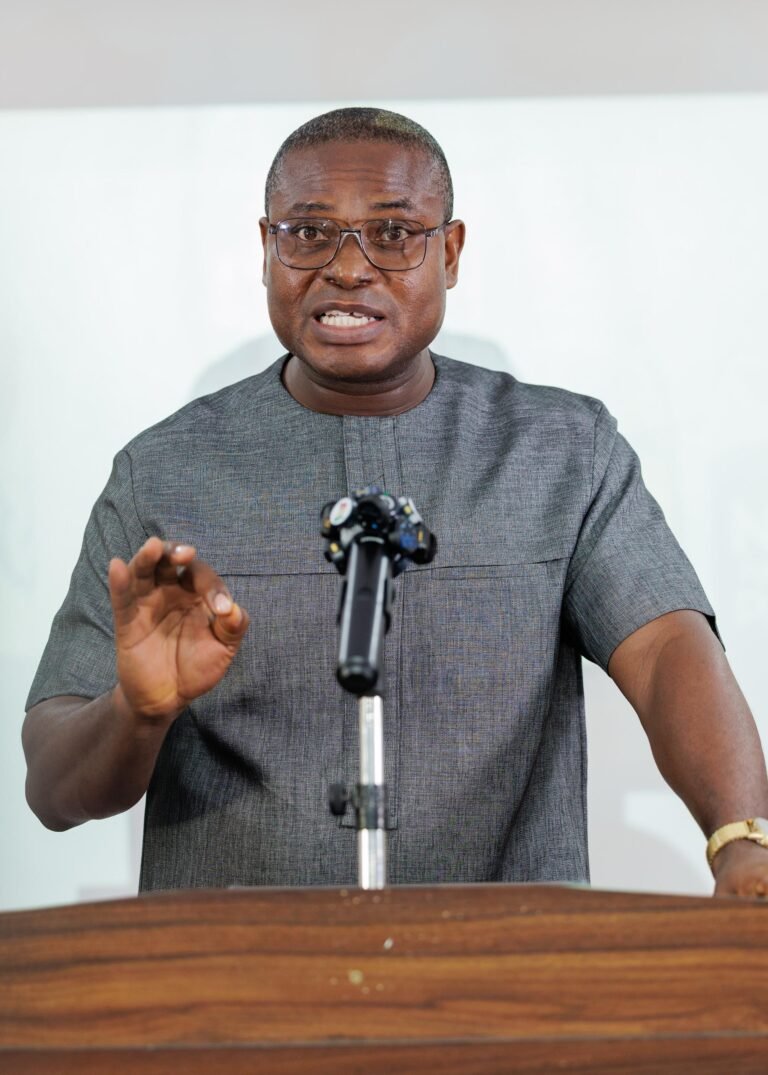
Dr. John Kingsley Krugu, former EPA Executive Director & 2024 NPP PC for Zebilla
Dr. John Kingsley Krugu, former Executive Director of the Environmental Protection Agency (EPA) and the 2024 New Patriotic Party (NPP) parliamentary candidate for Zebilla Constituency, has declared that the NPP remains the only political tradition offering practical solutions to Ghana’s economic challenges, insisting that “NPP offers solutions, but NDC prefers excuses.”
In an exclusive interview with the Daily Statesman, he stated that the NPP governs with facts and measurable policies, not slogans and rhetoric. He argued that while political communication may win applause, governance requires discipline, data and accountability.
“We stand with Ghanaians, not with failed policies,” he stressed, noting that citizens expect leadership that delivers tangible outcomes rather than shifting narratives.
He further contended that the NDC must urgently reignite economic growth or risk facing public judgment at the polls in 2028. In his view, governance is ultimately assessed by performance indicators such as job creation, inflation control, fiscal discipline and investor confidence.
Unrealistic 24-hour economy
Touching on the NDC’s handling of its flagship 24-hour economy proposal, Dr. Krugu said the policy had not been translated into a coherent national implementation framework. He questioned the clarity of its funding structure, sectoral focus and measurable benchmarks, arguing that transformative economic policies must be backed by detailed execution plans.
The former EPA Executive Director added that Ghanaians deserve transparency in governance and clarity in economic direction, particularly at a time when households and businesses are demanding stability and growth. He emphasised that the NPP would continue to present alternative policy options grounded in data, institutional experience and long-term national interest.
According to him, the NPP’s philosophy of governance is grounded in data, institutional reform and economic discipline. He stated that the Ghanaian voter is interested in results, not repetition of slogans like the unfulfilled 24-hour economy and betrayal of the cocoa farmers.
Dr. Krugu questioned the operational details of the NDC’s 24-hour economy concept, asking how it would be financed sustainably without exacerbating fiscal pressures. He also called for clarity on sector prioritisation, labour regulations and energy reliability, noting that any round the clock production model would require stable electricity supply, logistics infrastructure and security coordination.
“Transformative economic policies must be backed by detailed implementation frameworks, clear timelines and measurable benchmarks. Otherwise, they remain campaign themes rather than governance strategies,” he reiterated.
Holding NDC accountable
On accountability, Dr. Krugu maintained that the NPP would continue to scrutinise the NDC’s performance, and hold it responsible for what he described as inconsistencies between promises and policy execution. He said the electorate would ultimately assess the government based on employment data, energy crises, inflation trends, exchange rate stability and fiscal performance.
He cited ongoing national debates over youth unemployment, power outages, and business financing constraints as examples of areas requiring urgent policy precision. According to him, small and medium enterprises, which form the backbone of Ghana’s economy, need predictable tax regimes, reliable power supply and access to affordable credit to expand operations and create jobs.
Dr. Krugu added that the NPP stands with Ghanaians seeking stability and opportunity, not with what he described as failed or untested policy narratives. He reaffirmed the party’s commitment to presenting alternative policy proposals grounded in institutional experience and long term national interest.
Strengthening NPP base
Dr. Krugu further called on party members across the country to intensify efforts at the grassroots level, stressing that strengthening the party’s base remains critical to electoral success.
According to him, while loyalty and support for the party’s elected leaders, including flagbearer Dr. Mahamudu Bawumia, are both essential and expected, members must not lose sight of the foundational structures that sustain the NPP’s electoral strength.
“It is normal and necessary to rally behind our leaders. But we must never neglect the structures that brought us this far. The base is the heartbeat of the NPP. Without an engaged, informed and energised grassroots, no campaign can succeed,” he stated.
Dr. Krugu emphasised that electoral victories are not secured solely through national messaging or high-level endorsements, but through consistent engagement within polling stations, electoral areas and constituencies.
He noted that the NPP’s historical strength had been rooted in its polling station executives, electoral area coordinators and constituency officers, who serve as the first point of contact between the party and the electorate. According to him, reinforcing these structures with skills, resources and strategic coordination is essential to maintaining political momentum.
Role of professionals
Dr. Krugu also urged professionals within the party to move beyond passive support and actively contribute their expertise to grassroots mobilisation.
He cited practical examples of how various professional groups can support the party’s efforts at the local level.
Teachers, he explained, are well positioned to organise community forums and public discussions to educate voters on policy issues, governance processes and civic responsibilities. Such engagements, he said, help deepen political awareness and encourage informed participation in the democratic process.
Lawyers and former government appointees, he added, could provide guidance on electoral laws and regulatory frameworks, ensuring that party activities at the constituency and polling station levels remain compliant with national regulations.
Their expertise, he said, is particularly important during voter registration exercises, internal primaries and general election preparations.
Dr. Krugu further highlighted the importance of media practitioners within the party’s ranks. Journalists and communication professionals, he noted, could play a strategic role in amplifying the party’s message, countering misinformation and showcasing development initiatives and success stories from constituencies across the country.
“In today’s information driven environment, narrative matters. We must ensure that our achievements and policy alternatives are communicated clearly and consistently, especially at the local level where voters want to see tangible impact,” he said.
Caution over centralised campaigns
He cautioned against over centralisation of campaign activities, arguing that sustainable political growth depends on decentralised mobilisation anchored in community engagement. According to him, strong grassroots networks not only improve voter turnout but also foster party unity and resilience during challenging political periods.
Dr. Krugu also encouraged youth and first time voters within the party to become more active in organisational activities. He said mentoring young members and integrating them into constituency operations would help secure the party’s long term relevance.
While reaffirming his support for the national leadership, he reiterated that strengthening the base should remain a top priority in the party’s strategic planning.
“Leadership provides direction, but the grassroots provide energy. If we keep the base strong, disciplined and informed, victory becomes highly achievable in 2028,” Dr. Krugu further stated.

About The Author