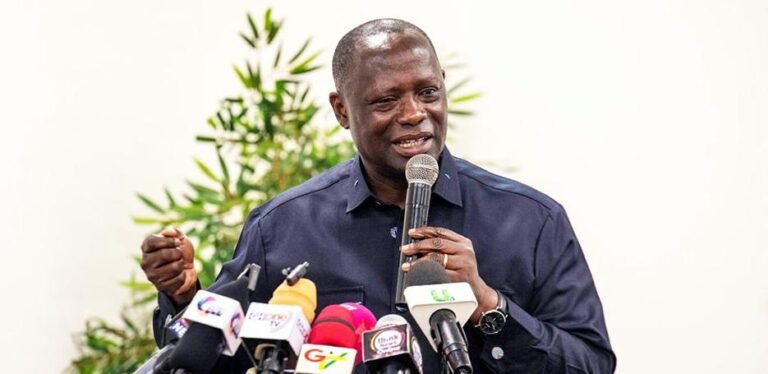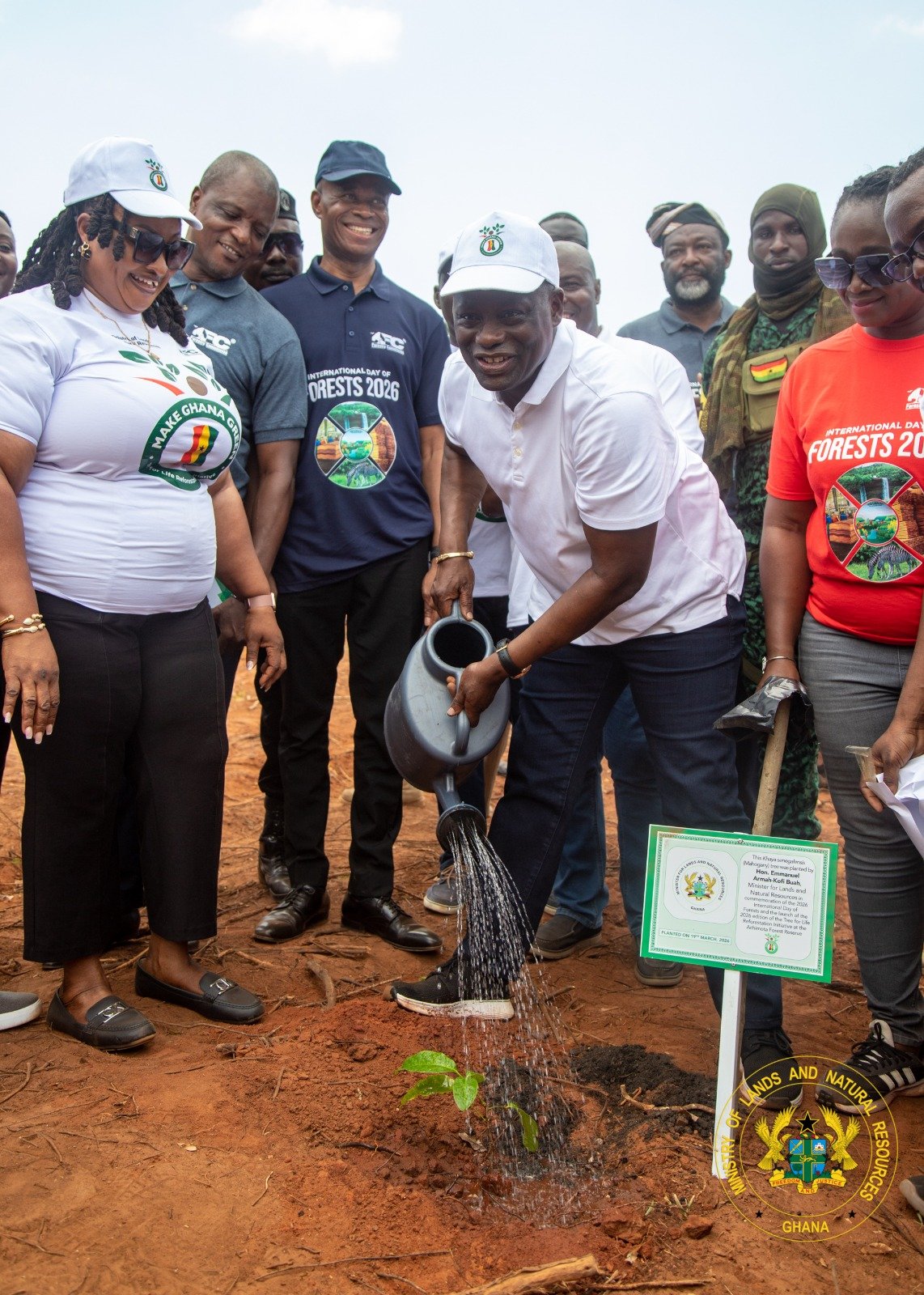
The Minister of Lands and Natural Resources, and Acting Minister of Environment, Science and Technology, Emmanuel Armah-Kofi Buah, yesterday launched the second edition of the Tree for Life Reforestation Initiative, describing it as part of the government’s plan to turn Ghana’s forests into engines for jobs, carbon credits, and economic growth.
Speaking at the Achimota Forest Reserve during activities marking the 2026 International Day of Forests, he emphasised that Ghana’s forests must play a central role in the country’s economic transformation. He said the initiative reflected the government’s commitment to linking environmental sustainability with economic growth, adding that protecting and restoring forests had become a key component of Ghana’s long-term development strategy.
Powerful engines
Mr. Armah-Kofi Buah noted that forests are no longer merely ecological treasures but powerful engines for national prosperity. He explained that the theme for this year’s commemoration, “Forests and Economies: Sustaining Our Future”, mirrors the vision of President John Dramani Mahama and challenges Ghanaians to rethink their relationship with nature.
He stated that “a standing, thriving tree is not just an ecological asset but a financial one,” pointing to opportunities in carbon credits, sustainable timber, ecotourism, and pharmaceuticals. The Minister revealed that Ghana had successfully planted over 30 million seedlings in 2025, creating more than 41,000 jobs, and said the government is targeting another 30 million seedlings in 2026.
He emphasised the need to nurture trees, adding that “a seedling is a promise; a mature tree is a legacy,” and urged stakeholders across the country to view reforestation as both an environmental and economic priority.
National integration
The Lands Minister further underscored that forests must be integrated into national economic planning. He said the government sees trees as long-term assets capable of generating economic returns while simultaneously preserving the environment for future generations. He urged citizens to participate actively in tree planting and nurturing, reiterating that every seedling planted today represents both a promise and a legacy for the future.
He said the launch of the Tree for Life Initiative 2026 reinforces Ghana’s renewed commitment to a green economy, sustainable development, and environmental stewardship. He further encouraged private sector companies, civil society organisations, and educational institutions to join the initiative, noting that collaborative efforts are essential to achieving large-scale reforestation.
He stated that partnerships with local communities and businesses could enhance forest management, promote sustainable livelihoods, and expand opportunities for green investments across the country. He added that such collective action would ensure that the benefits of the Tree for Life Initiative extend beyond ecological restoration to broader social and economic development.
Green space
In her welcome address, Greater Accra Regional Minister, Linda Obenewaa Akweley Ocloo, highlighted the ecological significance of the Achimota Forest Reserve, describing it as a vital green space that improves air quality, moderates temperature, and enhances residents’ well-being. She said regional authorities had undertaken several interventions to reverse environmental degradation, including active participation in tree planting exercises across all assemblies.
The Regional Minister also disclosed that the regional government plans to work closely with the Parks and Gardens Department and the Ministry of Transport to plant trees along road medians and ensure their long-term maintenance. She stressed that urban green spaces and roadside plantations are essential in combating environmental challenges while fostering sustainable development.
Economic, ecological
For his part, the Chief Executive of the Forestry Commission of Ghana, Dr. Hugh C. A. Brown, also emphasised the economic and ecological value of forests. He stated that under the 2025 Tree for Life Initiative, a total of 23,600 hectares of degraded landscapes had been restored, with over 30.8 million seedlings planted nationwide.
Dr. Brown, however, cautioned that deforestation driven by illegal mining, logging, and agricultural expansion continues to threaten these gains. He drew attention to the dangers faced by frontline forestry officers, recounting recent attacks on personnel tasked with protecting Ghana’s forests.
He said: “The least we can do is ensure that the officers who protect our forests, sometimes at the peril of their lives, are adequately equipped.” He added that new measures, including tactical training, protective gear, and forest protection camps, are being rolled out to safeguard personnel. Dr. Brown further urged stronger public engagement, noting that “a well-informed public is one of the greatest tools we need in fighting illegal mining and illegal logging.”
Stakeholders’ commitment
The launch also featured solidarity messages from key stakeholders. Priya Gujadhur, Country Director of the Food and Agriculture Organization (FAO), reaffirmed the organization’s commitment to supporting Ghana’s environmental protection efforts, while a representative of the Ga Mantse pledged continued collaboration to preserve natural resources and promote sustainable development.
The event brought together a diverse group of stakeholders, including heads of security services, Members of Parliament, traditional and religious leaders, civil society organisations, sector agencies, school children, and members of the media. They expressed optimism that the Tree for Life Initiative would not only restore degraded landscapes but also create green jobs and contribute to the country’s broader economic agenda.
About The Author