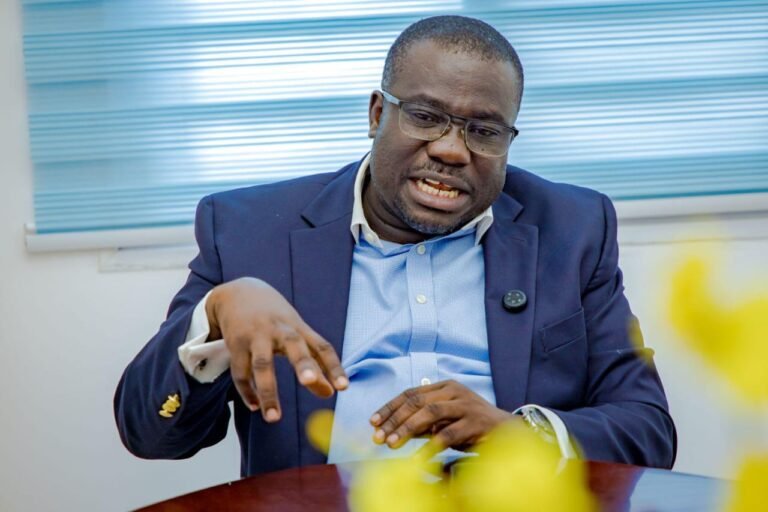
Dr Jeffrey Haynes, Professor Emeritus of Politics, London Metropolitan University, UK
By Dr. Professor Jeffrey Haynes
As Ghanaians enjoyed Christmas Day, President Trump authorised American military strikes in northwest Nigeria to deliver a message to ‘Islamic State West Africa Province’ whose members are killing Christians, as well as other Nigerians. The Nigerian government praised the attacks and said it provided the US with the necessary intelligence. US far-right political activist Laura Loomer expressed approval and described it as a justified reaction to the killing of Christians. She claimed that the US Defense Department informed her the strikes were a ‘direct response’ to killings of Christians by Islamist militants. Her view was shared by other allies and supporters of President Trump who had previously advocated for action concerning violence against Christian groups in Nigeria.
The US attack was facilitated by intelligence gathering by American surveillance aircraft taking off from Kotoka International Airport (KIA) under a controversial agreement signed by the Nana Akufo-Addo government in 2018. Critics of the deal, including former president, Jerry John Rawlings, and Brigadier General Nunoo-Mensah, former Chief of Defence Staff of the Ghana Armed Forces, claimed that it would compromise Ghana’s sovereignty and unacceptably enhance US influence. Both the Akufo-Addo and the US governments insisted that the deal didn’t amount to a permanent US military base but a defence pact allowing US forces and contractors wider access to Ghanaian facilities for joint exercises and training.
KIA is described as a Cooperative Security Location and part of the West Africa Logistics Network, facilitating intelligence, surveillance, and counter-terrorism activities, especially flights over Nigeria. A Tenax Aerospace aircraft was seen on November 7 by flight tracking data at MacDill Air Force Base, home to the headquarters of the United States Special Operations Command in Tampa, Florida. The plane flew to Ghana on November 24, just days after a high-level meeting between US and Nigerian security officials. Over the last month or so, the aircraft, a Gulfstream V, a long-range business jet often modified for intelligence, surveillance and reconnaissance missions, has flown over Nigeria almost daily.
The flights followed Trump’s threats in November militarily to intervene in Nigeria, claiming that Nigeria’s government is failing to stop violence against Christians in the country, and just months after a US pilot working for a missionary agency was kidnapped in neighbouring Niger. The US attack is an early sign that America is rebuilding its capacity in the region after Niger ordered US troops to leave a newly built air base and turned instead to Russia for security assistance. The site of the US bombing, near Sokoto in north-western Nigeria, is just over the border from neighbouring Niger and may indicate that the US is looking to extend its activities into Niger.
The Gulfstream V aircraft is said to be among several assets the Trump administration moved to Ghana in November 2025. It is unclear how many US aircraft are based in Ghana, but a former US official said the purpose of the missions include tracking down the kidnapped US pilot and gathering intelligence on militant groups operating in Nigeria, including Boko Haram and ‘Islamic State West Africa Province’.
What has all this got to do with Ghana? Ghana’s deputy defence minister did not respond to a request for comment from Reuters news agency and we can only speculate about the role of Ghana’s government in the US attack. It will be recalled that in August 2024, the then president, Nana Akufo-Addo, defended his government’s approval of expanded military cooperation with the United States, saying that it would enhance peace efforts in West Africa. A Status of Forces Agreement grants US personnel privileges, including visa-free entry and free use of radio frequencies, leading to controversy and accusations that it allows for a de facto air base. The deal, approved by parliament in July 2024, allowed for the deployment of US troops and their military equipment in Ghana, for US troops to use an airport runway that meets US standards, and to enjoy free access to Ghana’s radio spectrum. In return, the United States pledged to invest $20 million in equipment and the training of Ghanaian troops. According to the Akufo-Addo government, the agreement was in line with previous international pacts and did not constitute an offer to Washington to establish a military base.
Opposition lawmakers, including from the now ruling NDC, boycotted the vote after failing to block its approval, leaving members of the ruling party, the NPP, to ratify it. Akufo-Addo rejected assertions by critics that the deal would allow the United States to establish a military base in Ghana. He said: ‘So let me state with the clearest affirmation that Ghana has not offered a military base, and will not offer a military base … the United States of America has not made any request for such consideration and, consistent with our established foreign policy, we will not consider any such request’.
Ghana hosts extensive US military activities and logistics at KIA, the country’s main airport. The official designation and the extent of the US presence remain a subject of debate and political discussion, although it is clear that KIA functions as a crucial operational hub and it may be merely a semantic distinction not to call it an air base. What does this mean for Ghana? First, it means that Ghana is now enmeshed in the Trump government’s plans for an enhanced presence in West Africa, both to push back against enhanced Islamist militants and Russian involvement in the sub-region and also potentially to gain access to valuable minerals, including uranium, gold, lithium and rare earth elements. Second, Ghana’s involvement in the US attacks may encourage jihadis to target the country in retaliation for the de facto alliance with the US government and it is incumbent on the government to ensure the country’s security and sovereignty in 2026 and beyond.
The writer is an Emeritus Professor of Politics at London Metropolitan University, UK.
About The Author