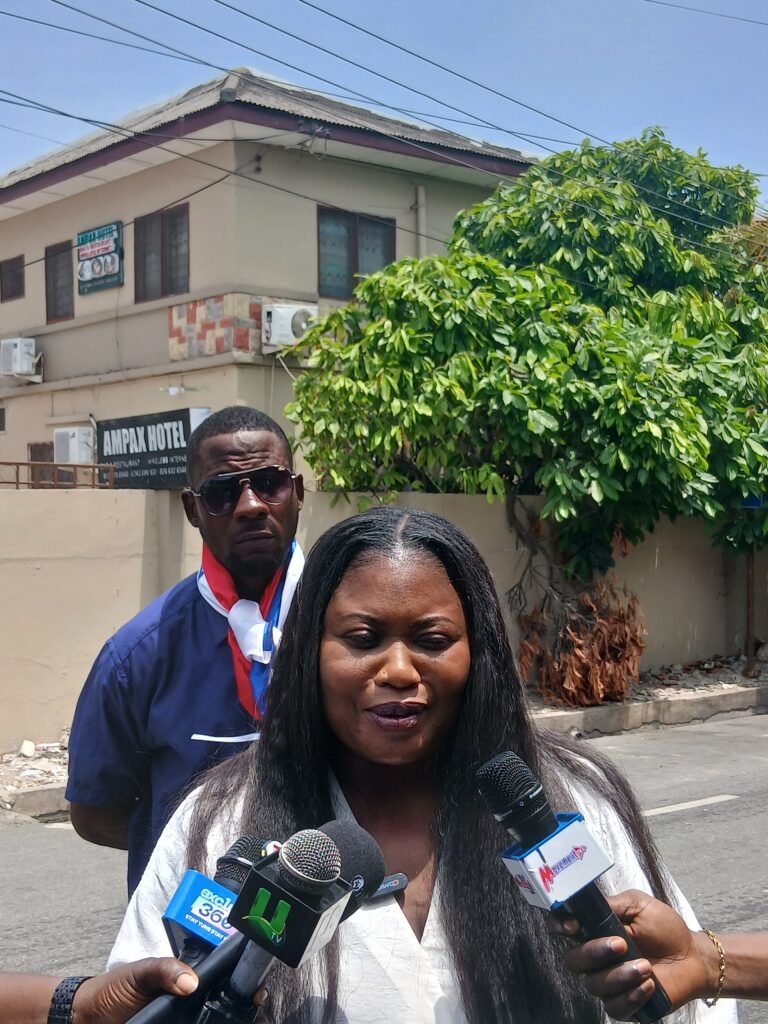
Senior Research Fellow at the Institute of Economic Research and Public Policy (IERPP), Dr. Frank Bannor, has called on the government to provide clear and credible answers on how it intends to close the widening revenue gap created by recent tax cuts, especially the abolition of the COVID-19 levy.
Speaking on Asaase Radio during a discussion on the 2026 Budget Statement, Dr. Bannor pointed to a critical red flag hidden within the detailed sections of the fiscal document. According to him, Appendix 3A of the 2025 budget shows that interest servicing remains the second-highest item on government expenditure. Out of the GH¢57.7 billion earmarked for interest payments, an overwhelming GH¢50 billion will go toward domestic debt alone.
“That is shocking. It reflects the volume of borrowing undertaken in the government’s first year, the debt it inherited, and the additional borrowing projected going forward.”
He explained that while external debt servicing stands around GH¢7.6 billion, this figure appears deceptively low because external debt payments are currently suspended. Most of these obligations, he cautioned, will resume from late 2026, with heavy repayment schedules expected through 2027, 2028, 2029 and beyond.
“This is worrying because it poses a significant threat to the fiscal discipline Ghanaians expect,” he stated. “It will test the government’s ability to rein in its borrowing appetite, something policy analysts have warned about for years. Ghanaians want a government that borrows less and prioritises productive investment.”
Dr. Bannor noted that the decision to abolish certain taxes, notably the COVID-19 levy, must be examined in this broader context of rising debt service obligations. The COVID-19 levy alone was projected to contribute GH¢3.21 billion to the government’s GH¢229 billion revenue target for 2025.
“Removing it creates a significant hole in the revenue projections,” he stressed. “And while it brings relief to households, what is relief to citizens becomes revenue loss to government.”
He emphasised that despite these revenue cuts, total expenditure remains unchanged at GH¢269 billion. This, in his view, raises an urgent question about the credibility and sustainability of the fiscal framework.
“Government cannot cut important sources of revenue without adjusting the expenditure side. The Finance Minister must explain how the shortfalls will be addressed, especially as he prepares to repeal the law governing the levy,” he stated.
Dr. Bannor further revealed that Ghana’s domestic revenue performance remains structurally weak. Excluding grants, domestic revenue stands around GH¢222 billion — placing the country’s tax-to-GDP ratio at roughly 15%, far below South Africa’s 24.8%.
“This shows that Ghana performs poorly in tax collection, even for the taxes already identified. Yet large segments of the population depend on government for essential services,” he said.
He further noted that while the tax cuts may be politically attractive, they pose serious risks if not balanced with realistic revenue measures.
“In a system already struggling with low domestic revenue mobilisation, such tax cuts raise deep concerns about fiscal sustainability. Government must be transparent about how it plans to fill the gap.”
About The Author