Government, through the Ministry of Lands and Natural Resources, has introduced a comprehensive set of reforms aimed at strengthening transparency, accountability and efficiency in the administration of public lands across the country.
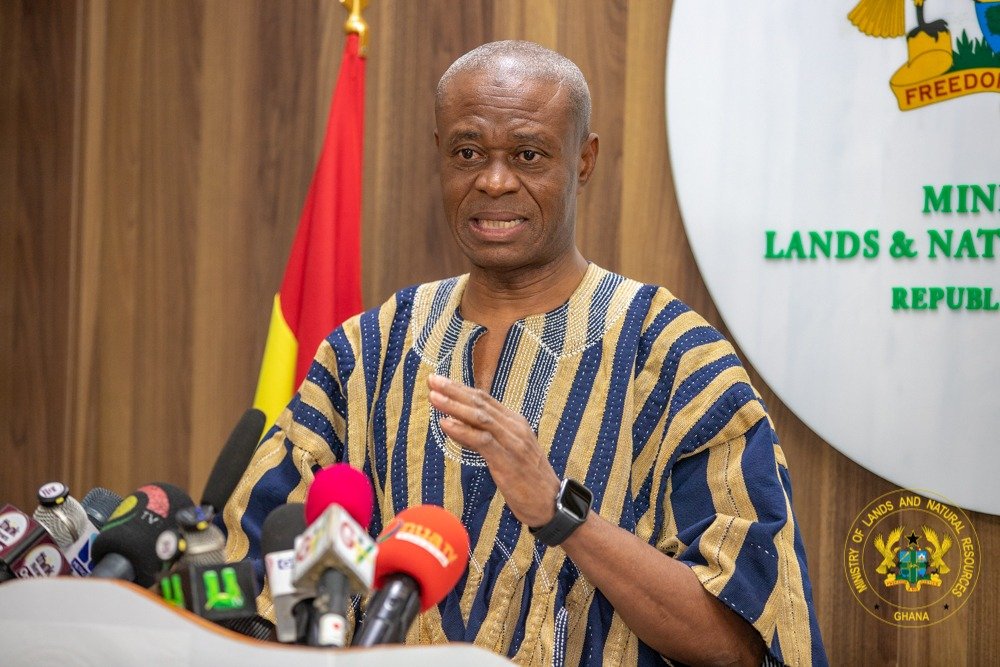
The Deputy Minister of Lands and Natural Resources, Yusif Sulemana, announced the measures at a press conference yesterday in Accra. He explained that the reforms were being implemented in line with Cabinet directives to restore integrity in public land management.
According to him, the Ministry, working in collaboration with the Lands Commission, had initiated the reforms to address longstanding concerns about inconsistencies, inefficiencies and lack of transparency in the allocation and management of public lands.
New premium framework
He indicated that one of the key reforms was the introduction of a new premium framework for public land leases. Under the arrangement, applicants would be required to pay at least 70 percent of the assigned market value of public land upfront, while the remaining 30 percent would be spread over the duration of the lease as ground rent.
Dr. Sulemana explained that the framework was designed to enhance revenue generation for the state while addressing previous situations in which individuals paid widely varying premiums for similar parcels of land.
He further disclosed that the Ministry had revised the Public Land Application Form, popularly known as Form 5, which would now serve as the single mandatory application instrument for all public land transactions nationwide.
He stated that the revised form would be used for both new applications and reapplications by individuals whose earlier submissions were cancelled during the recent review of public land allocations.
Accessibility, efficiency
To improve accessibility and efficiency, the Deputy Minister said the Lands Commission had been directed to publish the form on its official website so that applicants could download, complete and submit their applications electronically.
Dr. Sulemana also revealed that the Ministry had undertaken a comprehensive review of the Lands Commission’s internal processes for allocating public lands. He explained that the various stages involved in processing applications had now been clearly defined, with stronger internal checks and verification mechanisms introduced to enhance transparency and traceability in decision-making.
He noted that under the new system, no public land would be allocated without the prior approval of the Minister of Lands and Natural Resources, a measure he said was intended to strengthen ministerial oversight and ensure that all allocations align with national policy objectives.
Another major reform announced at the briefing was the standardisation of land market values for estates across the country. According to Dr. Sulemana, the Ministry and the Lands Commission had compiled reliable market values for several prime estates, including more than 30 estates within the Greater Accra Region.
He explained that the values would soon be published on the Lands Commission’s website to guide the assessment of land premiums, eliminate discretionary pricing and ensure fairness and value for money in all public land allocations.
The Deputy Minister further announced that a Public Land Protection Taskforce would soon be inaugurated to prevent encroachment on state lands, halt unauthorised developments and prosecute offenders where necessary.
As part of efforts to promote transparency, Dr. Sulemana disclosed that the list of all public land applications reviewed, covering more than 8,000 cases, would soon be published on the websites of the Ministry and the Lands Commission, beginning with the Greater Accra Region.
Suspension on public land transactions lifted
He added that the temporary suspension on public land transactions had now been lifted, but indicated that all services would henceforth operate strictly under the new reform framework.
Dr. Sulemana also revealed that the Ministry had initiated the procurement process for the national digitalisation of Ghana’s land administration system, noting that the initiative would be funded largely through the Lands Commission’s internally generated funds.
He explained that the digitalisation project was expected to significantly modernise land administration in the country and reduce human interference in land transactions, thereby promoting transparency, efficiency and accountability in the management of public lands.
About The Author