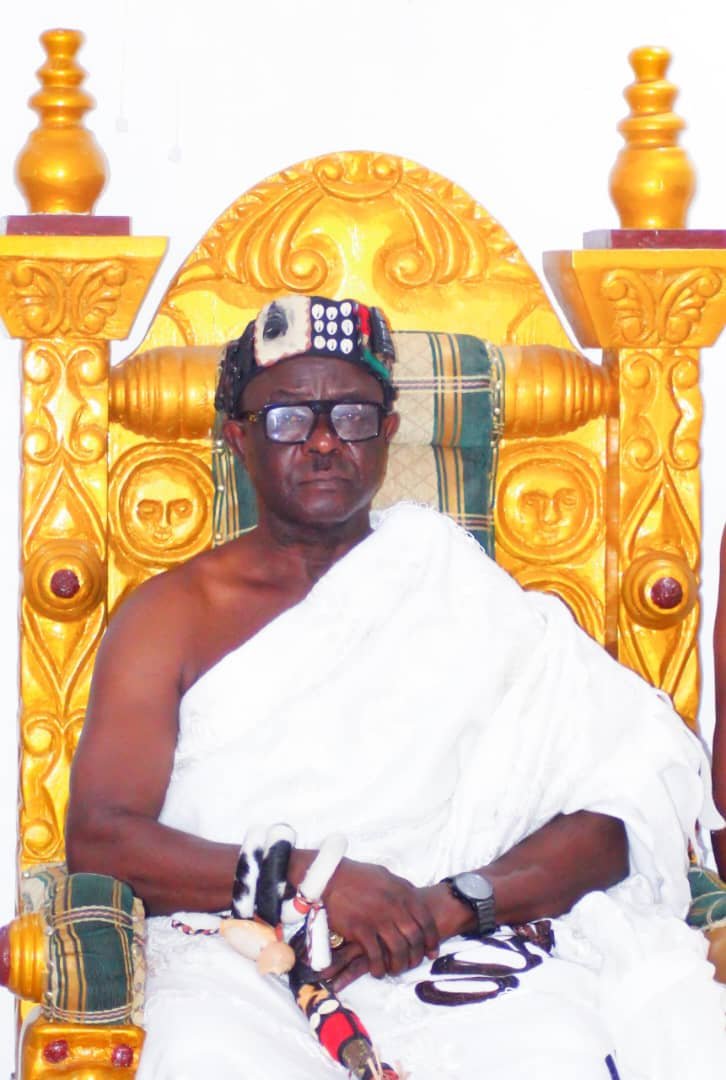
A deepening chieftaincy crisis within the Akyem Abuakwa traditional area in the Eastern Region has erupted into an unprecedented public confrontation between the Okyenhene, Osagyefo Amoatia Ofori Panin, and the Etweresohene, Daasebre Ofosu Kwabi Ayebiahwe, with both sides trading far-reaching accusations over authority, tradition, and territorial control.
The latest escalation followed a decisive declaration by the Akyem Abuakwa Standing Committee at the Ofori Panin Fie in Kyebi, where the Etweresohene was stripped of his traditional title “Daasebre,” barred indefinitely from the Okyenhene’s palace, and removed from all decision-making structures of Okyeman.
The announcement, delivered by Senior Counsel Kwame Boateng, described the Etweresohene’s conduct as rebellious and tantamount to treason against the Akyem Abuakwa State.
According to the Council, the Etweresohene had defied multiple summons to appear before the traditional authority to respond to what it described as “rebellious statements” circulating in public, including threats to resist the installation of a chief at Osenase.
The Standing Committee declared that no audience would ever be granted him at the Ofori Panin Fie, effectively excommunicating him from the traditional hierarchy.
His reporting rights were withdrawn, his seat on the Council vacated, and all towns previously under his division were directed to report to the Benkum Division headquartered in Begoro.
The Council further solidified its decision through customary rites, including libation and the sacrifice of a sheep, invoking ancestral authority to affirm the ruling.
In a strongly worded declaration, the elders emphasized that rebellion against the stool would not be tolerated, insisting that “he who rejects the state, is rejected by the state.”
However, in a sharp rebuttal, the Ofosu-Pema Royal Family—the lineage behind the Etweresohene stool—has rejected the authority of the Okyenhene over their affairs, describing the actions as a violation of centuries-old custom and an abuse of power.
The family insists that the Odauhene (Etweresohene) stool predates its alliance with Akyem Abuakwa and was never subordinate but rather joined the state as an independent ally.
They trace their historical ties back to the early 20th century, citing documented correspondence between Nana Sir Ofori Atta I and Odauhene Barima Obeng Akese, which portrayed a relationship of mutual respect rather than subordination.
According to the family, this partnership formed the foundation of Akyem Abuakwa’s consolidation, not conquest.
Central to the dispute is the contested Osenase stool. The Ofosu-Pema family argues that the Okyenhene has attempted to impose a non-royal, Boakye Asafo Agyei, as regent—an action they describe as contrary to customary law, which reserves such decisions strictly for the royal lineage.
They further allege that due process was breached when a case concerning the matter, adjourned indefinitely, was later ruled upon without notice in favour of Asafo Agyei.
Tensions escalated further after an alleged violent incident in Osenase, where the Etweresohene claims he was attacked by individuals linked to Asafo Agyei, leading to property damage and a police case.
The family maintains that despite reporting the incident, the Okyenhene failed to act, thereby breaching the sacred oath of protection that binds the traditional hierarchy.
In what appears to be a major turning point, the Ofosu-Pema family has declared a complete break from the Akyem Abuakwa Traditional Council.
They insist that the Odau Traditional Area is autonomous, with full control over its lands, towns, and chieftaincy matters. They have also announced a rebranding of the stool, declaring that the occupant shall henceforth be known as “Odeneho,” signaling independence from Okyeman authority.
The family has also fiercely opposed what they describe as attempts by the Okyenhene to annex their territories, including Osenase, Etwereso, and several other towns.
They argue that historical records, including a 1934 Supreme Court notice from the Gold Coast era, clearly recognize these lands as belonging to the Odau stool.
They further reject comparisons to Asante traditional governance, stressing that the powers of the Okyenhene are not equivalent to those of Otumfuo Osei Tutu II, particularly regarding land ownership and enstoolment authority.
In a sweeping declaration, the Ofosu-Pema family outlined a new path—announcing their exit from the Akyem Abuakwa Traditional Council, asserting full sovereignty over their territories, and indicating plans to seek formal government recognition as an independent traditional council.
Meanwhile, the crisis appears to have created divisions within the Odau bloc itself. Reports indicate that 12 chiefs within the group have distanced themselves from the Etweresohene’s stance and reaffirmed their allegiance to the Okyenhene, highlighting fractures within the traditional structure.
About The Author