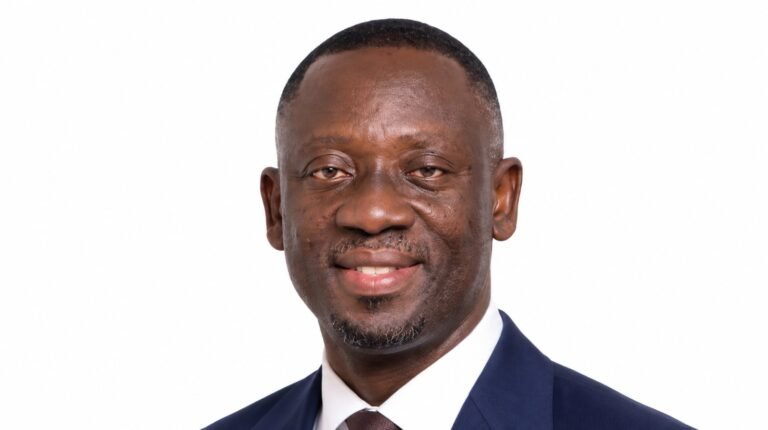
Dr Jeffrey Haynes, Professor Emeritus of Politics, London Metropolitan University, UK
By Dr Prof. Jeffrey Haynes
The impact of cuts to USAID funding to Ghana, announced without warning by the Trump administration in February 2025, is a subject of ongoing concern and has several implications. USAID is the abbreviation by which the United States Agency for International Development is widely known.
USAID has historically been a significant partner in Ghana’s development, including initiatives aimed at strengthening governance and democracy. In relation to the latter, USAID programmes have traditionally focused on improving local government capacity, increasing accountability, promoting free and fair elections, and enhancing human rights.
Suspension of USAID funding – a projected $156 million shortfall – will have widespread effects across various sectors. While the most immediate and critical concerns revolve around health, education, and agriculture, but the impact on governance and democratic consolidation should not be overlooked. For example, the Performance Accountability Activity (PAA), a $17.5 million initiative in the governance sector, aimed at enhancing transparency and accountability in the public sector, is a key programme that has been impacted.
Several effects on Ghana’s democracy are likely. They include: (1) Weakened transparency and citizen participation at the district level due to the pausing of initiatives like the PAA. (2) Challenges in strengthening accountability for improved development outcomes in district-level government. The Ghana Strengthening Accountability Mechanism (GSAM) Programme is likely to be affected. (3) Potential impacts on efforts to support transparent, fair, and peaceful elections, including support for the Ghana Electoral Commission (GEC) and civil society organisations involved in monitoring and civic education. (4) Difficulties in promoting active citizenship and holding local government officials accountable, due to reductions in the capacity of civil society organisations to advocate for these issues.
Mr Mahama’s government acknowledges the need to address the funding gap and prioritise areas impacted by the aid cuts, including those related to governance and democracy. While efforts are underway to explore alternative funding sources and strengthen domestic resource mobilisation, the sudden withdrawal of significant external support highlights Ghana’s dependence on foreign aid and underscores the need for sustainable domestic financing and long-term resilience strategies.
In addition, it is important to note that Ghana’s democracy has been described as ‘flawed’ in recent assessments; the country has experienced declines in both its Democracy Index and global ranking. The impact of USAID cuts could exacerbate existing challenges and require a renewed focus on strengthening democratic institutions and processes.
Perhaps coincidentally, the Mahama administration recently announced that it would take a number of West African deportees from the USA, at the request of the Trump government. So far, it is estimated that 14 deportees have arrived in Ghana, 13 from Nigeria and one from the Gambia. Ghana is said to have facilitated the return of the Nigerians to their country by while the Gambian is still being assisted to return home.
To explain the reason for the agreement with the Trump administration, President Mahama referred to ECOWAS’s free movement protocol allowing citizens of member states to enter and reside in other West African countries without a visa for up to 90 days. He stated that ‘We were approached by the US to accept third-party nationals who were being removed from the US. … We agreed with them that West African nationals were acceptable … All our fellow West African nationals don’t need visas to come to our country’.
According to Mr Mahama, it was appropriate to strike the deal with the Trump administration, as Ghana-US relations are in a ‘tightening situation’, with increased US tariffs on Ghanaian goods and visa restrictions on the country’s nationals. The agreement with the USA would, perhaps, encourage relations to remain positive and seek to offset financial implications of cuts to USAID.
Following pressure from the Minority in Parliament, Foreign Affairs Minister Samuel Okudzeto Ablakwa, stated that the agreement with the USA was a Memorandum of Understanding (MoU), not a binding treaty. According to the Minister, before approval the decision was thoroughly discussed by Cabinet and vetted by the Attorney General. Mr Ablakwa added that the MoU was ‘grounded purely on humanitarian principles and Pan-African solidarity to offer temporary refuge where needed, to prevent further human suffering … [without] financial nor any material incentives’.
Mr Ablakwa’s comments have given rise to speculation that the executive branch is contemplating undermining Ghana’s sovereignty for possible economic benefits, linked to tariffs on Ghana’s exports to the USA.
There are also legitimate questions about process and accountability. While there is no direct economic transaction, there are still potentially unwelcome political and social implications for Ghanaians.
It remains to be seen if the understanding with the USA to accept dozens of West African deportees strengthens Ghana’s international reputation as a humanitarian leader or erodes domestic trust in the Mahama government’s commitment to democratic governance.
Whatever the outcome, what is clear is that this seemingly technical MoU poses significant questions about Ghana’s sovereignty, accountability and the balance between humanitarian obligations and democratic principles.
Finally, Mr Trump’s government is characteristically transactional in its dealings with the rest of the world. Reductions to USAID, which Mr Trump’s government feels are entirely justified because as far as it is concerned, the USA sees no material benefit for its ‘largesse’, may impact deleteriously on Ghana’s democratic governance. It would be unfortunate if the Mahama government believes that the only way to improve its financial position in relation to the USA is to accept West African deportees in an agreement whose legality is questioned by critics, without paying urgent consideration to bolstering what some see as Ghana’s ailing democracy.
The writer, Dr Jeffrey Haynes, is a Professor Emeritus of Politics, London Metropolitan University, UK.
About The Author