 A new nationwide survey conducted by Apex Intelligence and Innovation Insights, a non-profit research organisation, has provided fresh insight into the dynamics shaping the New Patriotic Party’s upcoming national chairmanship race. The study covered all 16 regions and engaged 871 party delegates, offering a broad snapshot of leadership evaluation, candidate positioning and delegate expectations ahead of the internal contest.
According to the findings, delegates have delivered a mixed verdict on the performance of the current national executives. While 24.7 per cent rated their performance as good, the largest share, 43.8 per cent, described it as average. At the same time, 18.1 per cent rated performance as poor and 9.6 per cent as very poor. This points to a leadership environment marked more by guarded acceptance than strong enthusiasm, a condition that often creates room for change in internal party races.
The basis
The survey, which forms the basis of these insights, was conducted over a defined period in March, with fieldwork carried out between March 11 and March 22. It relied on a stratified random sampling of delegates drawn from all regions of the country, ensuring national representation, and was conducted with a high confidence level and a relatively narrow margin of error, lending credibility to the emerging trends captured in the findings.
At the heart of the findings is a mood of cautious acceptance among delegates, with the performance of the party’s current national executives receiving what can best be described as a moderate endorsement. While a section of respondents expressed satisfaction, the dominant sentiment leaned toward an average rating, suggesting neither outright rejection nor overwhelming approval. Political observers say such a climate often signals an openness to change, particularly in internal contests where delegates weigh continuity against renewal.
Early lead
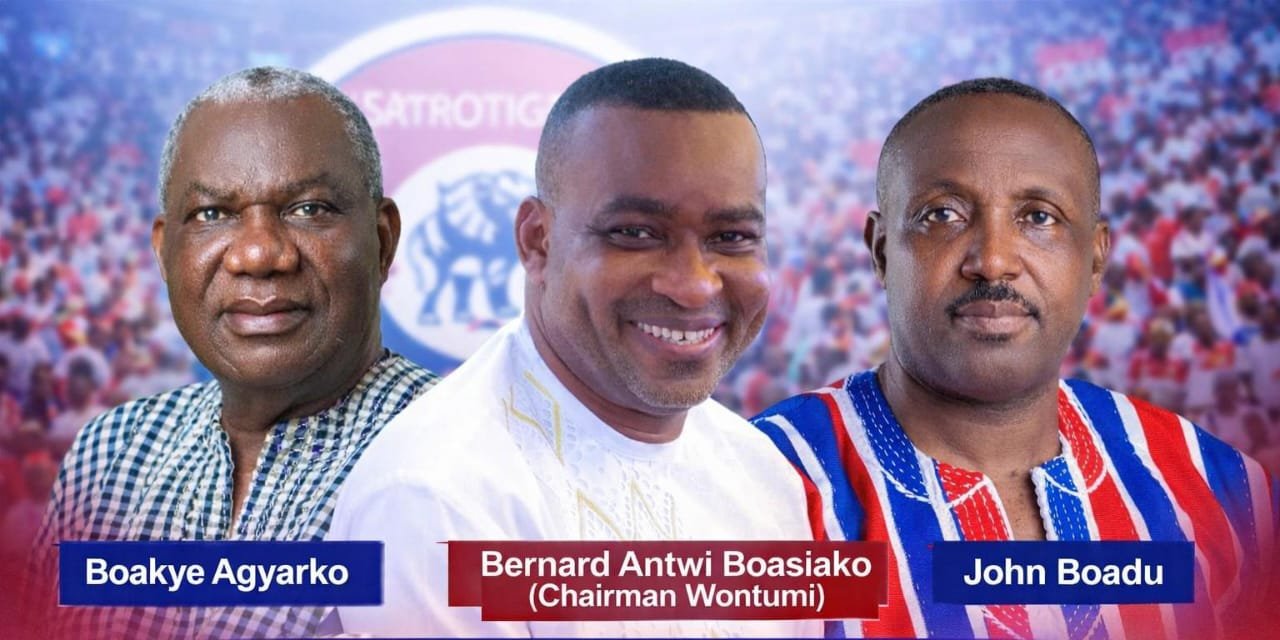
Against this backdrop, former Energy Minister Boakye Agyarko has emerged as the early frontrunner in delegate preference for the chairmanship position, ahead of Ashanti Regional Chairman Bernard Antwi Boasiako and former General Secretary John Boadu.
Per the findings, in terms of who is currently seen as most likely to win the chairmanship race, Mr Agyarko emerges as the leading contender with 38.2 per cent support among respondents. He is followed by Chairman Wontumi with 22.6 per cent, while Mr John Boadu records 21.6 per cent. Other aspirants trail considerably behind in the current delegate perception landscape.
Although internal party contests remain fluid and subject to rapid shifts, the data suggests that Boakye Agyarko currently holds a measurable advantage over his closest competitors, including Bernard Antwi Boasiako and John Boadu. The race, however, remains competitive and will require strong organisation, coalition-building and sustained outreach from all serious contenders.
Beyond candidate preference, the survey provides deeper insight into what is likely to determine the eventual outcome of the race. Delegates appear to be prioritising practical political qualities over symbolic appeal, with strong emphasis placed on the ability of a candidate to maintain close ties with the grassroots, demonstrate a proven track record, and unify the party across its various factions. This focus, according to political analysts, reflects a broader recognition within the party that internal cohesion and organisational strength will be critical ahead of future national elections.
Regional and demographic
The findings also highlight underlying regional and demographic patterns that could prove decisive. Some aspirants are seen to command strong loyalty in particular regions, while others appear to enjoy more dispersed support nationwide. Additionally, the survey suggests that middle-aged delegates constitute a particularly influential bloc, an indication that candidates may need to tailor their messaging and engagement strategies to resonate with this group.
Taken together, the results point to a contest that is shaping up to be far more than a straightforward popularity race. Analysts say the eventual winner will likely be the candidate who can successfully combine visibility with organisation, credibility, and the ability to build broad-based coalitions within the party. In that sense, the chairmanship contest is increasingly being viewed as a test of strategic leadership rather than personal appeal alone.
The implications of the race extend well beyond the internal workings of the party. The next national chairman will play a central role in shaping organisational discipline, political messaging, and mobilisation efforts, all of which are crucial to the party’s prospects in future electoral contests. For many observers, the survey underscores a clear message from delegates: the party’s rank and file are seeking leadership that can reconnect with its base, strengthen unity, and provide a coherent path forward in an increasingly competitive political environment.
About The Author