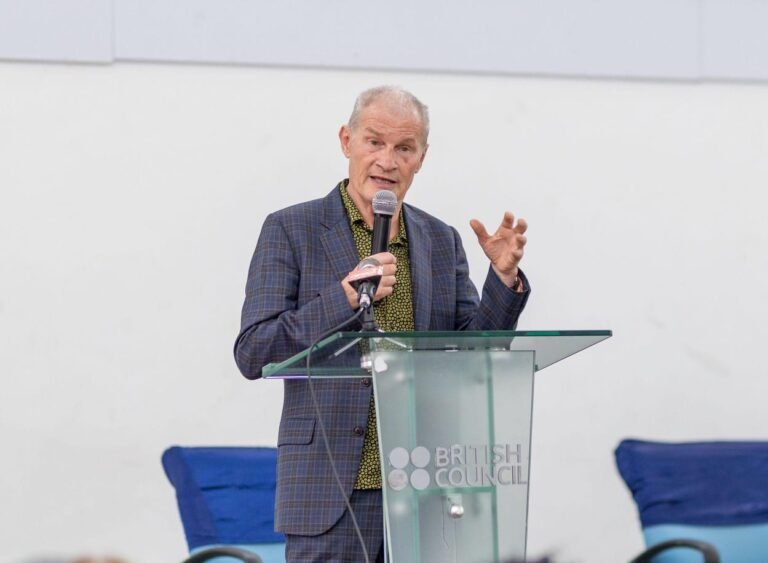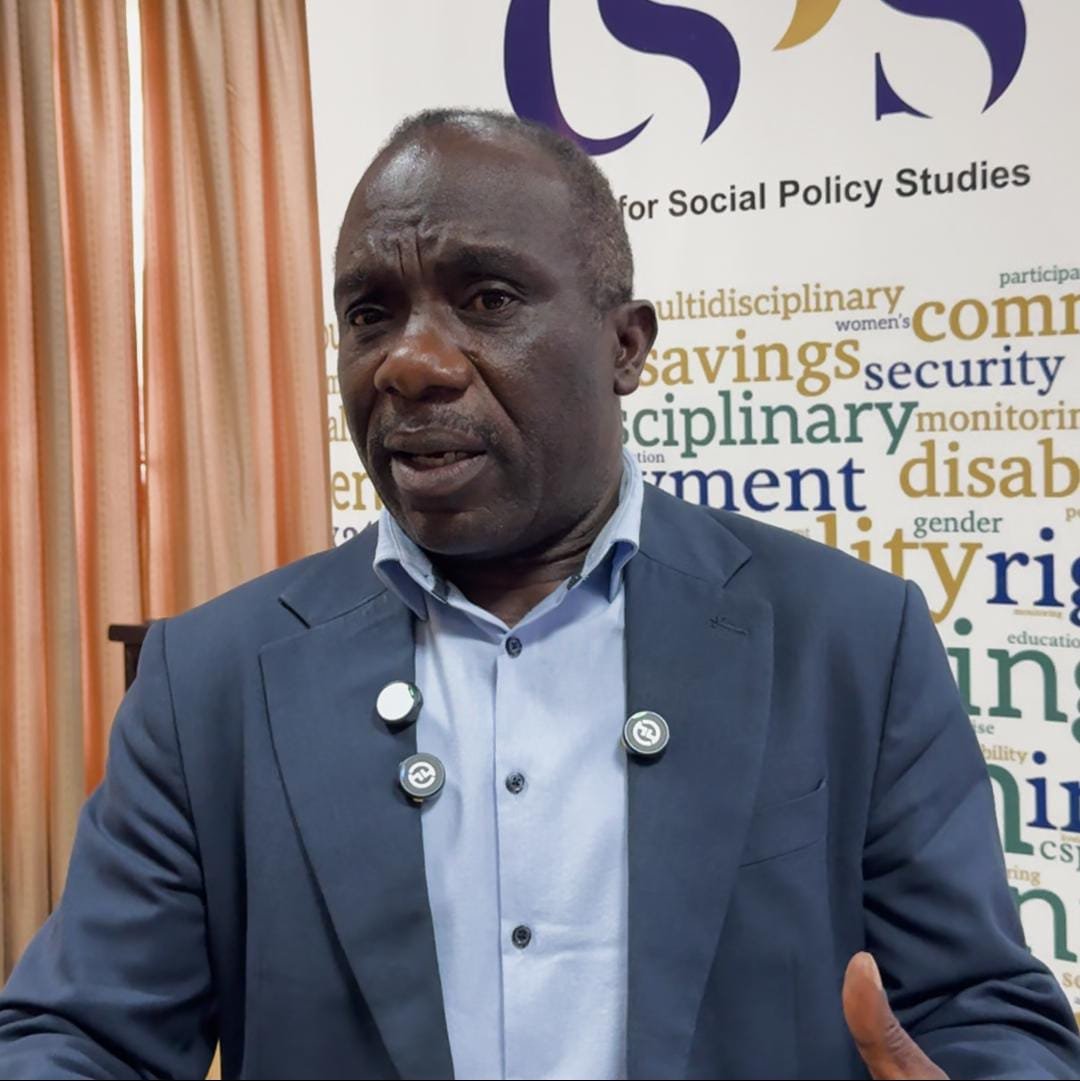
Prof. Nicholas Awortwi, Director for Institute of Local Government Studies (ILGS), was the Speaker of the CSPS @30 Public Lecture
The Director of the Institute of Local Government Studies (ILGS), Prof. Nicholas Awortwi, has urged the Centre for Social Policy Studies (CSPS) of the University of Ghana to strengthen its role in shaping public policy and influencing decisions that improve the dignity and well-being of citizens.
He said the Centre’s contribution over the next 30 years should go beyond academic teaching and research publications to ensuring that its work informs policy decisions and produces tangible improvements in people’s lives.
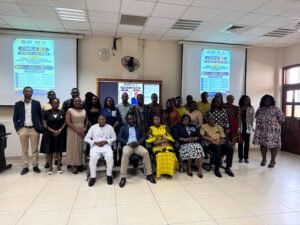
Speaking at a public lecture marking the 30th anniversary of the Centre for Social Policy Studies held at the University of Ghana Business School (UGBS) on Wednesday, 18th November, 2026, Prof. Awortwi stressed that human dignity must remain at the heart of social policy, arguing that the success of social interventions should be measured by how much they improve people’s living conditions.
The public lecture was held under the theme, “Three Decades of Social Policy Research and Training in Africa: Lessons, Challenges and Future Directions,” as part of activities marking the 30th anniversary of the Centre for Social Policy Studies (CSPS), University of Ghana.
“Social policy is about improving the dignity of the person, of the human being,” Prof. Awortwi further stated.
According to him, the teaching of social policy theories, the organisation of academic programmes and the publication of research papers would have limited impact if the lives of ordinary citizens remained unchanged.
He challenged the Centre to ensure that its research findings translated into policies that addressed the real challenges confronting people, particularly those whose dignity and well-being were undermined by poverty and inadequate social support.
Prof. Awortwi also called for stronger financial and institutional support for Metropolitan, Municipal and District Assemblies (MMDAs), arguing that inadequate resources continued to undermine their ability to deliver on their development responsibilities.
He explained that local government authorities were often confronted with what is known as unfunded mandates, where laws assign them responsibilities to promote local development, provide infrastructure and deliver basic services without providing sufficient resources to carry out those functions.
Although government had recently increased financial transfers to assemblies, he said the assemblies also needed to strengthen their Internally Generated Funds (IGF) and institutional capacity to meet their responsibilities.
He identified enterprise support, job creation and the provision of basic infrastructure as some of the critical areas requiring greater attention from local authorities.
Prof. Awortwi further expressed concern about the limited financial resources available to local government, noting that when allocations from the District Assemblies Common Fund, development partners and assemblies’ internally generated funds were considered together, the total resources available to them remained inadequate relative to their responsibilities.
On the evolution of social policy in Ghana and Africa, he observed that the sector had undergone significant changes over the past three decades, particularly following the economic reforms of the 1980s and 1990s.
He explained that during that period, governments were encouraged to reduce their involvement in several social services, leading to the introduction of user fees in education and healthcare and a reduced emphasis on social protection interventions.
Consequently, social policy, including pensions and other social protection measures, was often treated as secondary to economic policy, with attention given to it only after economic reforms failed to deliver the expected development outcomes.
However, Prof. Awortwi said experience over the years had demonstrated that economic development could not be pursued at the expense of social welfare.
“Social policy must go along with economic policy and the two must complement each other,” he emphasised.
He argued that economic policies would achieve limited results if they failed to address the social needs of citizens, particularly older persons who required healthcare and financial support after retirement.
Drawing attention to the situation of senior citizens in Ghana, he called for serious consideration of a universal social pension to provide financial security for older persons, especially those who had not been able to make adequate provisions for their retirement.
He noted that Ghana’s retirement age was 60, while the country’s life expectancy stood at approximately 66 years, raising concerns about the vulnerability of some older persons after leaving active employment.
According to him, many senior citizens faced financial difficulties and the risk of destitution after retirement, making it necessary for the state to strengthen social support systems for the ageing population.
Prof. Awortwi maintained that access to social protection should not depend on individuals first proving that they were destitute before receiving assistance.
He argued that social policy must be designed around the dignity of every individual, ensuring that citizens could access necessary support without being subjected to conditions that undermine their self-worth.
He said the country needed to move towards a social protection system that recognised the needs of citizens throughout their lives, rather than treating social support merely as assistance for people who had fallen into extreme poverty.
About The Author