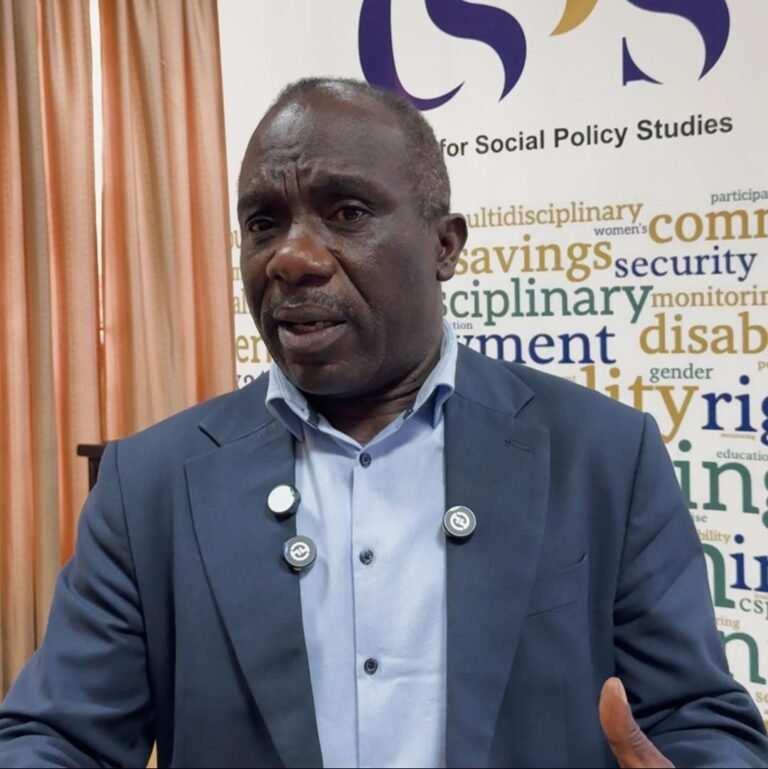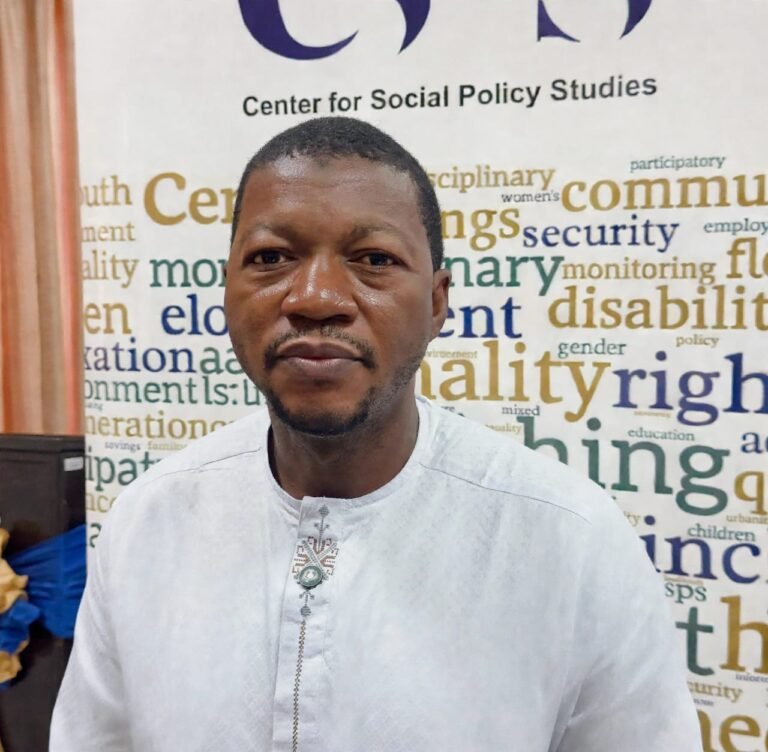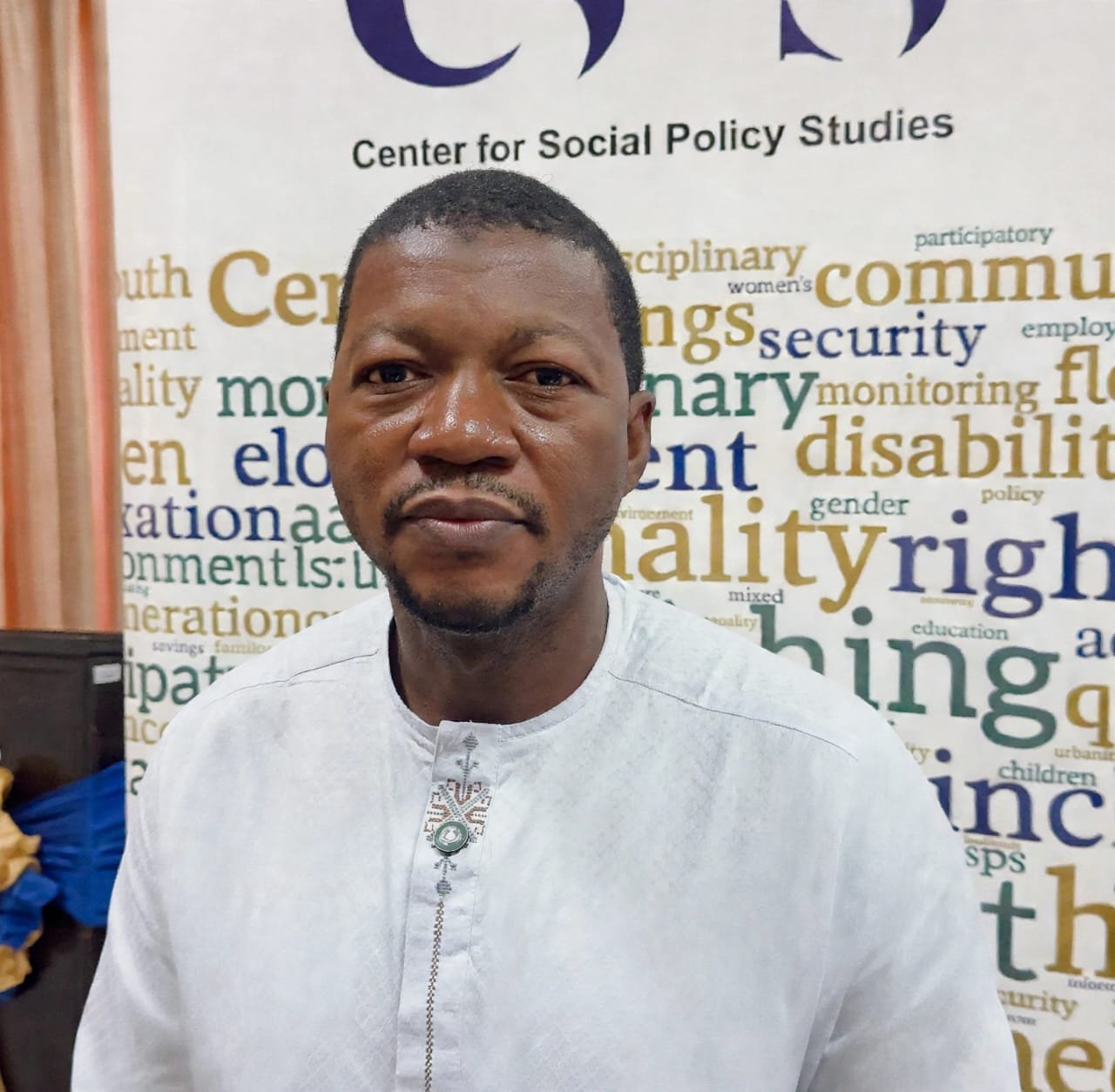
Prof. Abdul-Gafaru Abdulai, Director of the Centre for Social Policy Studies (CSPS), was the host of the CSPS Public Lecture
The Director of the Centre for Social Policy Studies (CSPS), Prof. Abdul-Gafaru Abdulai, has called for increased government investment in social protection programmes, stressing that adequate funding and public awareness are critical to ensuring that citizens fully benefit from such interventions.
He said government must prioritise social sector ministries responsible for implementing social policies and protection programmes, arguing that their budgetary allocations must reflect the importance attached to the welfare and well-being of citizens.
Speaking at a public lecture marking the 30th anniversary of the Centre for Social Policy Studies held at the University of Ghana Business School on Wednesday, 18th November, 2026, Prof. Abdulai noted that Ghana’s spending on social protection had remained inadequate over the years, with expenditure on such programmes accounting for less than one per cent of the country’s Gross Domestic Product (GDP) for an extended period.
The public lecture was held under the theme, “Three Decades of Social Policy Research and Training in Africa: Lessons, Challenges and Future Directions,” as part of activities marking the 30th anniversary of the Centre for Social Policy Studies (CSPS), University of Ghana.
He identified the Ministry of Gender, Children and Social Protection and other key social sector institutions as particularly important to the implementation of effective social protection interventions.
According to him, inadequate funding affects the capacity of these institutions to deliver essential services and contributes to delays in benefits intended for vulnerable populations.
“Without the resources, you wouldn’t be able to protect citizens enough,” he stressed, adding that adequate funding was necessary to ensure that beneficiaries received their entitlements on time.
Prof. Abdulai also highlighted the need to change public perceptions about social protection, explaining that many Ghanaians still regard such interventions as gifts from government rather than rights and entitlements associated with their citizenship.
He referred to a 2022 study conducted by UNICEF in collaboration with researchers at the CSPS to examine how Ghanaians understand social protection and its implications for national development.
One of the key findings, he said, was that many beneficiaries did not understand social protection as a life-cycle intervention designed to support people at different stages of their lives. Instead, they largely associated it with assistance for poor and vulnerable groups.
Using beneficiaries of the Livelihood Empowerment Against Poverty (LEAP) programme as an example, Prof. Abdulai explained that some recipients did not even consider questioning the amount they received because they viewed the payments as gifts.
He argued that this perception was partly attributable to the absence of a legal framework underpinning social protection programmes at the time.
However, he welcomed the introduction of Ghana’s Social Protection Act, describing it as an important development that provides a legal foundation for the country’s social protection interventions and strengthens beneficiaries’ ability to demand accountability and question shortcomings in the delivery of their entitlements.
He said the next important step was to intensify public education to ensure that citizens understood their rights and recognised social protection as an entitlement rather than an act of charity.
Reflecting on the Centre’s 30 years of work, Prof. Abdulai acknowledged the difficulty of capturing its extensive research and institutional contributions, noting that the Centre had undertaken several projects in collaboration with key social sector institutions across the country.
Among its contributions, he cited capacity-building initiatives undertaken in collaboration with the Ministry of Gender, through which the Centre provided training for various offices within the Local Government Service across the country.
He said such initiatives demonstrated the Centre’s commitment to strengthening institutional capacity and supporting the effective implementation of social policies in Ghana.
About The Author