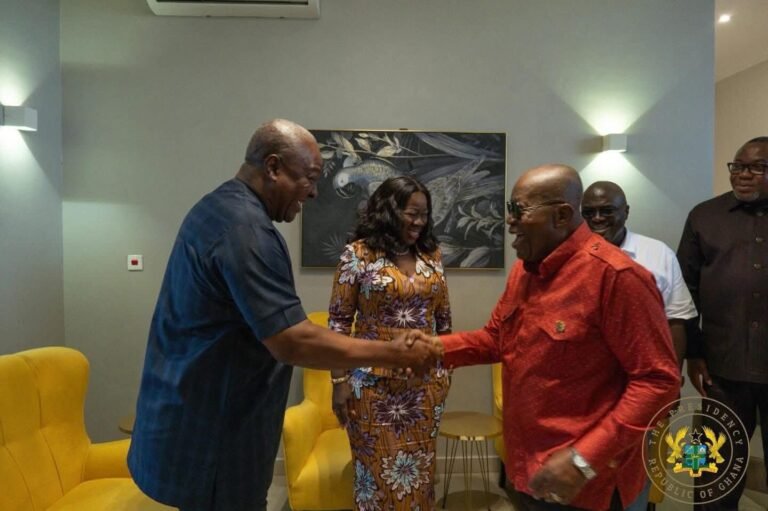
The Africa Policy Lens (APL) has reacted to President John Dramani Mahama’s recent remarks on the Ghanaian cedi, raising concerns over the feasibility of his stated economic targets. During a media interaction on Wednesday, September 10, 2025, the President indicated that his administration aims to limit the cedi’s annual depreciation to 5% and suggested that the local currency would remain within a “GHC12 to GHC13 band”.
While the comments may sound reassuring, APL described them as “nonetheless concerning” given the complexities influencing exchange rate movements.
In its statement, the think tank explained that the cedi’s performance is shaped by both exogenous and endogenous factors, noting that “exogenous factors are mostly beyond the control of local economic managers compared to the endogenous factors”.
The statement further highlighted examples of external pressures on the local currency, such as sudden spikes in global crude oil prices, which could force Bureau de Change operators to seek more dollars, exerting “significant pressure on the local currency.”
It also cited the impact of changes in US monetary policy, warning that if the Federal Reserve raises its repo rate, “investors would find US dollar-denominated assets more attractive,” potentially triggering cedi depreciation.
APL also pointed to fluctuations in commodity markets, stressing that “a decline in the prices of commodities such as gold and cocoa on the global market could adversely affect the local currency,” as reduced foreign exchange supply would limit the Bank of Ghana’s ability to intervene effectively in the market.
Expressing surprise at the President’s confident assertion, APL asked, “How does the NDC government intend to achieve this? Which variables and models were used to arrive at such a conclusion? Ghanaians deserve transparency!”APL statement further read.
About The Author