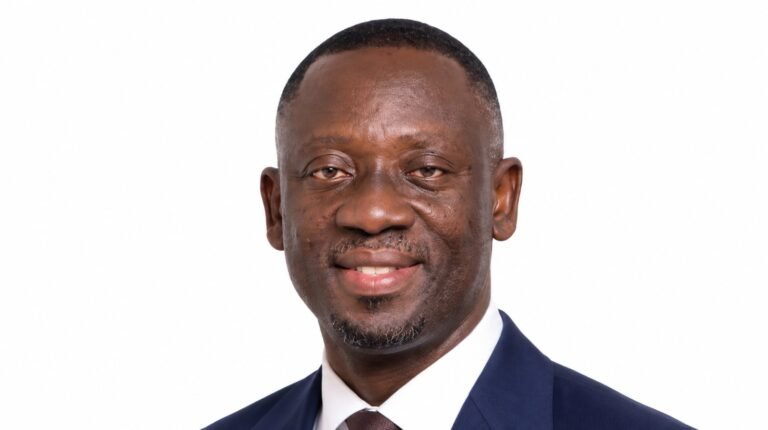
Former Vice-President and 2028 NPP flagbearer hopeful, Dr. Mahamudu Bawumia, has emerged as the overwhelming favourite among delegates of the New Patriotic Party (NPP) to lead the party into the 2028 general elections, according to a new internal poll conducted by the Africa Policy Lens (APL).
The survey, which sampled 30,631 NPP delegates across all 16 regions, revealed that 63.8% of respondents prefer Dr. Bawumia as their candidate of choice for the 2028 presidential race.
Coming in second is Kennedy Agyapong, who garnered 28.9%, reflecting his continued strong appeal among the party’s grassroots. Other contenders included Dr. Bryan Acheampong with 4.6%, Yaw Osei Adutwum with 1.5%, and Kwabena Agyapong with 1.2% support.
According to APL, the poll employed a Proportionate Stratified Sampling approach, ensuring fair representation of all regions. Regions with larger delegate populations were assigned proportionally higher samples relative to those with fewer delegates. The data collection was conducted by APL’s trained in-house research team, which utilized the organisation’s well-resourced call centre to conduct and verify interviews. This infrastructure, APL noted, enabled researchers to revisit any particular interview for validation and quality control purposes.
The data further shows that Dr. Bawumia leads in 14 out of the 16 regions, while Hon. Kennedy Agyapong dominates in only two regions, the Central Region and Western North Region.
Presentation of survey
Presenting the findings of the survey at the Leadership House, Accra, the Director of Research at Africa Policy Lens and Senior Lecturer at the University of Ghana, Dr. Hayford Mensah Ayerakwa, emphasised the crucial role of economics, security, and social policy in advancing nation-building efforts across the continent.
Dr. Ayerakwa said the think tank remained committed to promoting innovation, dialogue, and evidence-based policy interventions that support Ghana’s development and contribute to broader African progress.
“Our vision is to foster a society where innovative solutions drive meaningful change. We want innovation, we want change, but it must be anchored on specific, measurable deliverables,” he stated.
Dr. Ayerakwa noted that Africa Policy Lens, which is composed primarily of academics and researchers, has over the past few months been actively engaged in producing high-quality, data-driven analyses on key socio-economic and political issues.
“The good thing is that we are doing this beyond the short of our country. If you visit our website, you’ll find a number of publications we’ve been putting up from time to time, and we’ve been very active within the broader Kenyan economic landscape as well,” he added.
He said the think tank’s mission was to advance Ghana’s development through quality research, policy advocacy, and partnerships that address critical national challenges.
“We believe in dialogue, collaboration, and partnerships, and we’ve tried to do this to the best of our ability,” he added.
Research and political insight
He said, as part of its ongoing work, Africa Policy Lens had conducted extensive research into political developments in Ghana, particularly regarding the New Patriotic Party’s (NPP) internal preparations ahead of the 2028 general elections.
“We all know that the New Patriotic Party is gearing up to elect a flagbearer in anticipation of the 2028 general elections. So, February 30 will be an important date for the party,” he said. He explained that the organization had applied rigorous academic methods to assess political trends and voter patterns, using the NPP delegate album as a case study.
“When we began our analysis, the party’s delegates’ album was being vetted across constituencies. We examined the regional distribution of delegates, noting that some regions had smaller numbers while others had much larger ones, for instance, the Ashanti Region has the most, followed by others with fewer,” he added.
Dr. Ayerakwa said the team used proportionate and stratified sampling techniques to ensure fair representation across regions. “We stratified by region based on the number of delegates, sampled the number of people we needed to speak to, and then proceeded with phone interviews. For each sample, we also created a replacement buffer, in case some respondents were unreachable,” he said.
Credibility of research and polls
A Senior Fellow at the Africa Policy Lens and Senior Lecturer at the University of Ghana, Dr. Joshua Jebuntie Zaato, underscored the importance of academic credibility, methodological rigor, and transparency in conducting opinion polls and national surveys. He acknowledged that polls, like any research exercise, could sometimes produce mixed results, but insisted that their credibility cannot be judged solely by whether they “get it right” or “get it wrong.”
“Polls sometimes get it wrong, and they get it right too. So the credibility of a poll cannot just be condensed into whether it got it right this time or that time. There is much more that goes into the process than just the size of the sample,” he noted.
He said “the first question any observer should ask is who is behind the poll and whether they possess the academic training and expertise required to conduct credible research.”
“One of the things to look at is who are those behind the poll? Do they have the academic knowledge to conduct polls? That’s important. At Africa Policy Lens, we have the human resource capacity. All of us are academics. We teach at some of the leading universities in Ghana, including the University of Ghana and the University of Professional Studies, Accra. We teach research methods and polling as part of our work,” he stressed.
Research capacity, institutional credibility
Dr. Zaato noted that the Africa Policy Lens is staffed by senior academics with established reputations both locally and internationally. “If you visit our institution, you’ll see that our CVs, publications, and research outputs are publicly available. The four of us here have collectively published close to a hundred academic and intellectual papers. That alone shows the level of scholarly rigour we bring into our polling and research processes,” he stated.
He added that the think tank operates within ethical and professional frameworks that meet the minimum academic and intellectual thresholds for conducting surveys. “Just like in law where you are required to establish a prima facie case, we want to show that we have met that threshold. We have the infrastructure, the technology, and the people to collect and process data reliably,” he stated.
To build public confidence, Dr. Zaato said Africa Policy Lens is opening up its operations to demonstrate how its data is collected and processed. “We want to show you what happens behind the scenes — our infrastructure, our call center, and how we transmit and validate data. If not for ethical considerations, we could even allow you to listen in to some of the responses. But we take ethics seriously, so we can only demonstrate the process without compromising respondents’ privacy,” he told pressmen.
He said the think tank uses trained personnel and standardized data collection procedures to ensure accuracy, consistency, and transparency in its work.
“We have a team of 12 people making calls as part of our data collection process. We want to assure Ghanaians that our systems are robust, ethical, and technologically equipped to deliver credible research outcomes. We are not just interested in producing numbers. We are interested in producing insight that policymakers, political actors, and citizens can trust. Our commitment to transparency is part of our effort to deepen democratic dialogue and national development,” he further stated.
About The Author