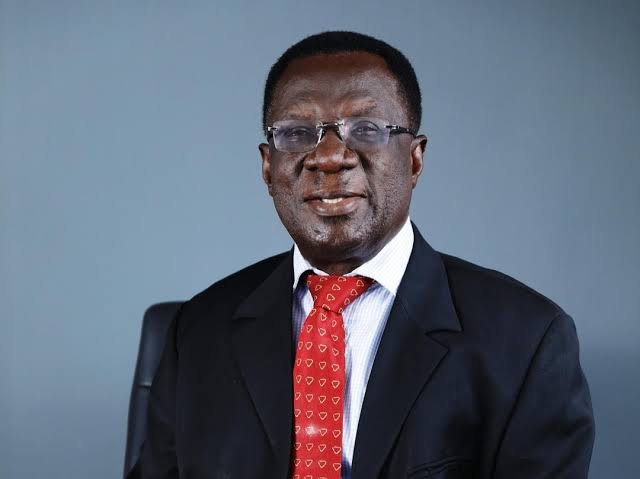
The US$2 million investment by the Ghana Infrastructure Investment Fund (GIIF) in Ghana’s proposed Accra SkyTrain project received approval from the Fund’s Governing Board before the transaction was executed, according to the witness statement filed before the High Court in Accra by counsel on behalf of Professor Christopher Ameyaw-Akumfi.
The approval, according to the former GIIF Board Chairman, gave the green light for the Fund to invest the amount as an anchor investor in exchange for a 10 percent stake in the project development vehicle.
Not an unauthorised release
The defence says the transaction was therefore not an unauthorised release of public funds for the construction of railway infrastructure, as alleged by the prosecution, but an equity investment made pursuant to a decision of the GIIF Governing Board.
The issue has become central to the ongoing criminal trial involving Prof. Ameyaw-Akumfi and former GIIF Chief Executive Officer Solomon Asamoah in Case No. CR/0448/2025, The Republic v. Solomon Asamoah & Professor Christopher Ameyaw-Akumfi.
According to the defence, the Board’s approval was formally recorded in the minutes of its meeting held on October 24, 2018. Item 7.1 of the confirmed minutes states that, following the Board’s approval, US$2 million was to be invested in the Accra SkyTrain project at the request of the Ministry of Railways, with GIIF serving as the anchor investor in return for a 10 percent stake. The defence argues that the document provides direct evidence that the investment received institutional approval before the subsequent payment.
The defence has consequently urged the court to distinguish between an equity contribution to a project development company and money released for physical railway construction. It says GIIF acquired shares in Ai SkyTrain Consortium Holdings (Mauritius), the special purpose vehicle established to undertake project development and feasibility work, and that the subsequent failure of the SkyTrain project to reach construction should not, by itself, transform the original investment into a criminal disbursement.
Response to charges
The claims form part of Prof. Ameyaw-Akumfi’s response to charges arising from the abandoned Accra SkyTrain project. He is standing trial alongside former GIIF CEO Solomon Asamoah after the High Court, Criminal Division, dismissed applications of no case to answer and directed the accused persons to open their defence. The prosecution, led by Deputy Attorney-General and Minister for Justice Dr Justice Srem-Sai, has maintained that the US$2 million transaction amounted to an unauthorised dissipation of public funds.
Prof. Ameyaw-Akumfi, a former academic, Minister of State and Member of Parliament, has denied wrongdoing and maintained that he acted within the statutory and governance framework of GIIF. He served as Chairman of the Fund’s Governing Board from January 2017 until the expiration of his tenure in December 2020.
At the centre of his defence is a series of documents that, according to his lawyers, establishes a clear chain of institutional approval. Before the matter reached the Governing Board, the proposed equity contribution had been considered by the GIIF Investment Committee. The committee’s records indicate that it evaluated and recommended the SkyTrain project development contribution at its meeting on September 28, 2018.
Board minutes
The subsequent Board minutes of October 24, 2018 are being relied upon heavily by the defence. The recorded decision referred specifically to the US$2 million investment, GIIF’s proposed 10 percent stake and its role as anchor investor. The defence contends that the wording of the minutes leaves little room for the suggestion that the payment was made without Board knowledge or approval.
Further support, according to the defence, is contained in an addendum to GIIF’s 2019 Budget
Estimates circulated to the Audit Committee in January 2019. The document classified the SkyTrain project among “already Board Approved Projects” and made provision for a US$2 million drawdown. Former GIIF Board Member and Audit Committee Chairman Yaw OdameDarkwa, who appeared as a prosecution witness, reportedly acknowledged during crossexamination that neither he nor other committee members raised a contemporaneous objection to the classification.
The defence has also pointed to an emergency Board meeting held on November 19, 2019, at which the status of the SkyTrain project was discussed. Prof. Ameyaw-Akumfi chaired the meeting. According to the defence, the minutes contain no indication that any Board member challenged the validity of the original investment approved.
Role of Ameyaw-Akumfi
Another important issue is the role played by Prof. Ameyaw-Akumfi in the actual transfer of funds. His defence says that, as a non-executive chairman, he was not responsible for GIIF’s daily financial administration or cash management. Under the Fund’s internal controls, transactions above GH¢500,000 required the joint signatures of the Chief Executive Officer and Board Chairman.
The defence therefore characterises the chairman’s signature on the payment documentation as a countersignature required under the established disbursement procedure rather than an independent instruction to release funds. Trial evidence, it says, showed that payment requisitions were prepared and processed through GIIF’s professional finance structure before reaching the authorised signatories.
The prosecution’s case has also focused on the fact that the planned SkyTrain system was never constructed. The defence, however, argues that construction was not the immediate purpose of the US$2 million payment. Rather, the money represented GIIF’s equity contribution to the project development structure.
Cross-examination
Under cross-examination, prosecution witness Francis Aboagye, a Senior Intelligence Officer of the National Intelligence Bureau, is said to have acknowledged that GIIF’s statutory mandate under the Ghana Infrastructure Investment Fund Act, 2014 (Act 877), permits it to participate as an anchor equity investor in project development vehicles. The defence argues that the acquisition of a shareholding necessarily required payment for shares.
The defence has further attributed the subsequent collapse or suspension of the project to external circumstances, particularly the COVID-19 pandemic and the global economic disruption that followed. According to evidence cited by the defence, the crucial project-development period in 2020 coincided with international lockdowns and severe economic uncertainty.
Counsel has argued that such events are relevant to the question of criminal causation and intent. Relying on Ghanaian jurisprudence, including the Quality Grain case, The Republic v. Ibrahim Adam & Others [2001–2002] SCGLR, the defence maintains that liability for wilfully causing financial loss to the State requires more than proof that an investment subsequently failed to achieve its intended commercial objective.
Characterisation of the investment
The defence has also challenged the characterisation of the investment as a financial loss. It points to audits of GIIF’s accounts by major external audit firms and the Auditor-General’s report, which, according to the defence, did not declare the US$2 million investment an actualised loss. Instead, paragraph 928 of the Auditor-General’s report recommended that GIIF continue monitoring the feasibility and recoverability of the investment.
Another issue raised during the trial concerns the absence of former Minister for Railways
Development Joe Ghartey as a prosecution witness. The defence says the SkyTrain project originated through the Ministry of Railways Development and that relevant agreements placed responsibility for securing Cabinet and parliamentary approvals on the Ministry.
The defence has questioned reliance on alleged statements attributed to the former minister by investigators. During cross-examination, the prosecution witness reportedly acknowledged that the former minister’s signed police statement contained only seven lines in which he denied committing any crime, while other verbal assertions attributed to him were not recorded in a signed statement.
Prof. Ameyaw-Akumfi has also stressed that his responsibility for GIIF ended with the expiration of his Board tenure in December 2020. He maintains that after a new Governing Board was constituted in January 2021, he no longer had authority over the Fund, its management or the monitoring of its investments.
About The Author