By Nurture Nature Foundation (NNF)
Ghana’s coastline stretches for more than 500 kilometers, with historic forts, vibrant fishing communities, and breathtaking scenery. From the bustling shores of Accra to the tranquil beaches of Ada and the surf spots of Busua, these coastal landscapes are more than just natural beauty. They feed families, attract tourists, sustain cultural festivals, and carry the memories of centuries of history.
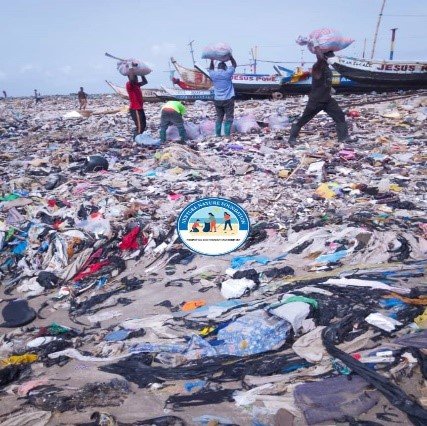
But today, many of these same beaches tell a different story. Once-pristine stretches of sand are marred by plastic bottles, discarded fishing gear, untreated sewage, and heaps of solid waste. Piles of debris wash ashore with the tides, clogging fishing nets and leaving an eyesore for residents and visitors alike. What should be Ghana’s greatest asset is, instead, becoming a liability.The hard truth is this: dirty beaches are strangling Ghana’s tourism potential.
Tourism Under Threat
Tourism is often dismissed as a luxury industry, but for Ghana, it is much more. It is one of the pillars of the economy, creating thousands of jobs and generating millions of dollars in revenue. In 2019, Ghana made global headlines with the “Year of Return,” which drew in an estimated 1.1 million international tourists, many of whom visited the coastal forts of Cape Coast and Elmina. These sites, tied to the painful but significant history of the transatlantic slave trade, are among UNESCO’s most cherished World Heritage landmarks.
Visitors who come to Ghana’s coast are looking for both history and hospitality. They want to see where history unfolded, but they also want to relax on clean beaches, sample local cuisine, and take home memories worth sharing. First impressions matter.
When a tourist steps off a bus at Cape Coast after a moving tour of the castle, only to find the adjoining beach strewn with plastic waste, the experience is diminished. Instead of being swept away by the beauty of the ocean, they are met with the smell of rotting waste, the sight of plastics and broken nets across the sand, and murky waters that no one dares to swim in.
These impressions matter. Tourists talk. They write reviews. They post photos. One disappointed visitor can discourage dozens more from making the trip. In a global tourism market where image is everything, Ghana cannot afford this.
Ripple effects on the economy
The decline in coastal tourism has ripple effects across society. It is not just the hotel managers or tour operators who suffer. The livelihoods of artisans, food vendors, local guides, and transport operators are tied to the flow of tourists. When visitors stop coming, small businesses fold, jobs disappear, and local economies shrink.
Fishing communities feel the blow most directly. For centuries, Ghana’s fishermen have depended on the sea not just for food but for dignity and tradition. Today, they return from long days on the water with nets tangled in plastic waste rather than fish. These plastics—many of them single-use bottles, sachet water bags, and discarded fishing gear—reduce catches, tear nets, and drive up costs. The women who smoke and sell fish, the carpenters who repair boats, and the traders who rely on fresh catches for income all feel the pinch.
It is a vicious cycle: dirty beaches scare away tourists, tourists spend less money, the economy shrinks, and communities grow poorer. Poverty, in turn, worsens the sanitation crisis as communities lack resources for waste management, perpetuating the cycle.
Meanwhile, Ghana’s competitors—destinations like Seychelles, Mauritius, and Zanzibar—continue to attract millions. They invest heavily in coastal maintenance, treating their beaches not as afterthoughts but as national treasures. The message is clear: in the global tourism race, clean beaches win.
A health and safety crisis
Beyond economics, dirty beaches pose a serious health hazard. Open defecation, untreated sewage, and industrial discharge into lagoons and along the coast create dangerous conditions. Pools of stagnant water and heaps of rubbish are breeding grounds for mosquitoes, spreading malaria. Contaminated waters expose communities to cholera, dysentery, hepatitis, and other waterborne diseases.
Children, who play along the shorelines, are particularly vulnerable. Tourists, too, face risks when they come into contact with polluted water. The result is not just a local problem—it is a national crisis that undermines public health.
Fishermen add another dimension to this health threat: fish stocks are declining, not just due to overfishing but because plastics disrupt marine life. Fish ingest microplastics, which can travel up the food chain and eventually land on our plates. What seems like an environmental nuisance today could turn into a food safety disaster tomorrow.
For a country striving to brand itself as “the Gateway to Africa,” these are not small challenges. They are red flags that undermine Ghana’s credibility.
Historical Context
Ghana’s beaches have long been more than just sand and sea. They are cultural spaces, places of festivals, drumming, storytelling, and trade. In towns like Jamestown, Chorkor, and Ada, the beach is a stage for life itself. It is where children learn to swim, where lovers meet at sunset, where fishermen return to cheers after a good catch.
But those same beaches today tell a story of neglect. The Korle Lagoon, once teeming with life, is now one of the most polluted water bodies in West Africa, receiving untreated sewage, industrial effluent, and solid waste. With every high tide, tonnes of this waste are pushed back onto nearby beaches, creating an endless cycle of pollution.
This is not just environmental decline—it is cultural erosion. Elders remember a time when beaches were clean, when festivals were vibrant, when fish were plentiful. That memory is slipping away, replaced by frustration and despair.
A shared responsibility
“The problem of dirty beaches is not insurmountable—it is a matter of will, leadership, and responsibility,” said Peter Asiedu, Executive Director of Nurture Nature Foundation (NNF).
“At Nurture Nature Foundation, we believe Ghana can reverse this tide, but action must be urgent and collective. The Ministry of Tourism, Arts and Culture must make coastal sanitation a central part of its development strategy. The Ministry of Sanitation and Water Resources, together with our Metropolitan, Municipal, and District Assemblies, must enforce sanitation by-laws consistently and without fear or favor.
“Equally, the private sector—our hotels, resorts, and tour operators—cannot remain on the sidelines. They should adopt stretches of our coastline as part of their Corporate Social Responsibility. Tourists do not only travel for history; they travel for an experience. That experience is shaped by what they see, touch, and breathe. Clean beaches must therefore be treated as a national priority, not a seasonal afterthought.
“Every plastic bottle cleared, every drainage managed, and every by-law enforced is not just environmental work—it is an investment in Ghana’s future. We must reclaim our coastline, not only for tourists but for fishermen, for families, and for generations yet unborn.”
What ghana can learn
Ghana does not have to reinvent the wheel. Across the globe, countries have turned their beaches into world-class attractions by prioritizing cleanliness and conservation.
• Seychelles imposes strict waste management rules on hotels and resorts, ensuring that tourism operators are part of the solution.
• Mauritius invests heavily in community clean-up campaigns, pairing local pride with government support.
• Zanzibar has created marine protected areas, reducing pollution and restoring coral reefs, which in turn boost tourism.
These destinations have proven that clean beaches are not just possible—they are profitable. Ghana can learn from these models by adopting stricter enforcement, incentivizing businesses, and building community ownership.
Community Involvement
No government strategy can succeed without community participation. Residents who live near the coast are both the most affected and the most capable of change. Clean-up exercises, waste segregation, and local recycling programs empower communities to take charge.
Nurture Nature Foundation’s work in Jamestown demonstrates this potential. Through beach clean-ups, sensitization campaigns, and collaboration with fisherfolk, significant volumes of plastic have been removed. More importantly, a sense of pride and ownership has been restored. When communities see clean beaches as their responsibility, change becomes sustainable.
But participation must be incentivized. Small stipends for clean-up volunteers, provision of protective equipment, and recognition of community champions can sustain motivation. Without such support, enthusiasm often fades.
Policy and Enforcement
Ghana has laws and by-laws against littering and open dumping. The problem lies not in policy but in enforcement. By-laws must be applied uniformly, with offenders fined and monitored. Municipal waste systems must be improved, ensuring timely collection and safe disposal.
Additionally, coastal sanitation must be integrated into national tourism policy. A clean beach is not a side issue—it is a core component of tourism development. Ghana cannot market itself as a premier tourist destination while its beaches remain in disrepair.
A call to the nation
If Ghana is serious about becoming a world-class tourism hub, the journey begins with our beaches. Clean beaches mean safe communities, stronger economies, healthier fisheries, and a prouder image of Ghana to the world.
The choice is stark: invest in clean beaches now or pay the price later in lost revenue, declining health, and cultural erosion. The tide of neglect can be turned, but only if all stakeholders—government, private sector, communities, and civil society—act together.
Every kilogram of plastic cleared, every by-law enforced, every hotel that takes ownership of a beach brings us closer to the future we deserve. Ghana’s coastline is a gift. Let us not squander it.
About The Author