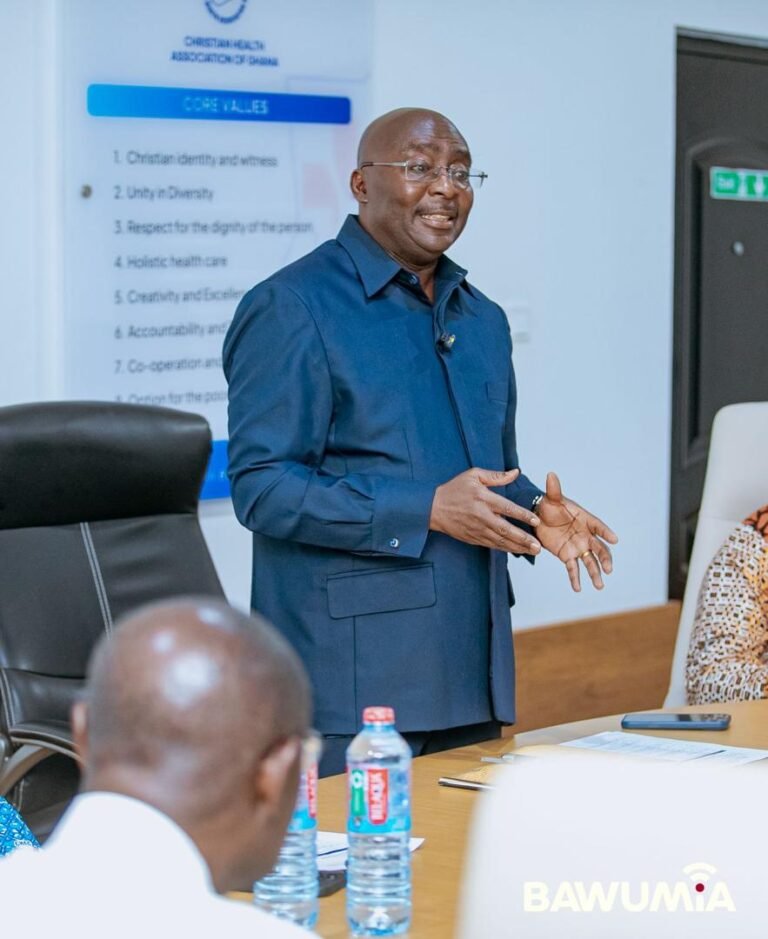
Deputy Ranking Member of Parliament’s Finance Committee, Dr Gideon Boako, has questioned the extent to which Finance Minister Dr Cassiel Ato Forson can claim credit for Ghana’s economic recovery, arguing that the current administration inherited significant foundations laid under the previous New Patriotic Party (NPP) government.
In a detailed assessment of the economic inheritance of successive governments, Dr Boako has called for a more objective assessment of the performance of finance ministers, insisting that their records must be judged against the economic conditions, policies and resources they inherited when they assumed office.
In a write-up titled “The Inheritance Test: What NPP Met, What Ato Forson (NDC) Met, And What Each One Actually Did,” Dr Boako draws a comparison between the economic circumstances confronting the NPP when it assumed office in 2017 and those inherited by the National Democratic Congress (NDC) administration in January 2025.
Drawing on comments by lawyer Kofi Bentil during TV3’s The Key Points programme on Saturday, November 14, 2026, Dr Boako argues that while some leaders inherit difficult circumstances and work to rebuild the economy, others inherit an existing recovery process and subsequently take credit for its outcomes.
He frames the debate around a fundamental question: “What did you meet?”
According to Dr Boako, the NPP government, under former Finance Minister Ken Ofori-Atta, inherited an economy in considerable distress in 2017, characterised by a deteriorating fiscal deficit, rising public debt, high inflation, slowing economic growth and a struggling International Monetary Fund (IMF) programme.
He cites the IMF’s February 2017 assessment, which indicated that Ghana’s fiscal deficit had deteriorated to approximately nine per cent of GDP in 2016, against a programme target of 5¼ per cent.
He further points to the country’s 2016 economic indicators, including a fiscal deficit of 9.3 per cent, debt-to-GDP ratio of 73.9 per cent, inflation of 15.1 per cent and economic growth of 3.4 per cent.
Dr Boako also highlights what he describes as significant government expenditure overruns, revenue shortfalls and accumulated arrears of approximately GH¢7 billion, arguing that the incoming NPP administration faced substantial fiscal challenges.
Despite those conditions, he maintains that the NPP government subsequently recorded improvements in key macroeconomic indicators.
He points to GDP growth increasing from 3.4 per cent in 2016 to 8.1 per cent in 2017, before settling at 6.2 per cent in 2018 and 6.5 per cent in 2019.
Inflation also declined from 15.1 per cent in 2016 to 11.6 per cent in 2017 and 5.7 per cent in 2018, before rising to 7.9 per cent in 2019.
For Dr Boako, these developments demonstrate that the NPP government undertook significant fiscal consolidation and economic recovery efforts during its first term.
He, however, does not absolve the NPP of responsibility for the subsequent economic crisis, acknowledging that the government’s handling of the economy deteriorated, particularly following the COVID-19 pandemic, increased expenditure pressures and the effects of the Russia-Ukraine war.
He notes that Ghana’s debt rose sharply, inflation reached 53.7 per cent at the end of 2022, and the country eventually defaulted on its debt obligations.
“That failure is NPP’s, and no honest person can deny it,” he concedes.
However, Dr Boako argues that the economic difficulties experienced during the latter part of the NPP administration should not obscure the foundations and policy interventions that preceded the current administration’s recovery efforts.
Forson inherited an ongoing recovery process
Turning his attention to the economic conditions inherited by Dr Ato Forson in January 2025, Dr Boako argues that the current Finance Minister assumed office under significantly different circumstances from those confronting his predecessor in 2017.
He identifies four major developments that, in his view, had already laid important foundations for economic recovery before the NDC government took office.
The first was Ghana’s existing IMF programme, a $3 billion Extended Credit Facility arrangement approved in May 2023.
Dr Boako points out that the programme had already undergone three reviews by the end of 2024, meaning that its policy framework, targets and reform commitments were established before Dr Forson assumed responsibility for the Finance Ministry.
“Forson did not negotiate a programme. He inherited one,” he argues.
The second, and perhaps most significant, was the progress made under Ghana’s debt restructuring programme.
Citing the 2026 Budget Statement, Dr Boako draws attention to the Finance Minister’s own acknowledgment that Ghana had successfully restructured 93.5 per cent of its total public debt by the end of 2024.
The restructuring included approximately $20.4 billion in domestic debt, $13.1 billion in Eurobonds and $5.2 billion in bilateral debt.
Dr Boako argues that the completion of the overwhelming portion of the restructuring before January 2025 was a major foundation for the subsequent improvement in Ghana’s debt position and fiscal outlook.
He therefore questions the extent to which the current administration can claim sole credit for the reduction in the debt-to-GDP ratio from 61.8 per cent in 2024 to 44.7 per cent in 2025.
“You are harvesting someone else’s farm,” he writes.
Credit rating improvements began before NDC took office
Dr Boako also challenges what he describes as the tendency to attribute Ghana’s entire sovereign credit rating recovery to the current administration.
He argues that the recovery in Ghana’s credit ratings was already underway before Dr Forson became Finance Minister.
He points to Fitch Ratings’ March 2023 decision to upgrade Ghana’s long-term local currency rating from Restricted Default to CCC following the resumption of payments on new domestic bonds.He further cites the October 2024 credit rating actions by Moody’s and Fitch following the completion of Ghana’s Eurobond restructuring.
Moody’s upgraded Ghana’s long-term ratings to Caa2 in October 2024, while Fitch upgraded the country’s long-term local currency rating from CCC to CCC+.
The Ministry of Finance’s 2024 public debt report also identifies the extensive debt restructuring and associated fiscal consolidation efforts as important factors behind the rating improvements.
Dr Boako argues that these developments demonstrate that Ghana’s movement towards restoring investor confidence did not begin in January 2025.
While acknowledging subsequent improvements under Dr Forson, he maintains that the current administration inherited a recovery process that had already made significant progress.
He likens the situation to a relay race, arguing that crossing the finishing line does not mean one runner completed the entire race.
Gold reserves and favourable international prices
The NPP legislator further examines the role of Ghana’s domestic gold purchase programme, arguing that its origins and early accumulation of gold reserves must be recognised when assessing the current government’s economic achievements.
According to him, the programme began in July 2021 under the NPP administration, and Ghana had accumulated approximately 30.53 tonnes of gold by December 2024.
He says the holdings subsequently increased to 38.04 tonnes by October 2025, meaning that a substantial proportion of the gold accumulated before Dr Forson assumed office.
He also argues that the significant increase in international gold prices contributed to Ghana’s improved external position and foreign exchange earnings.
Dr Boako therefore contends that the current administration benefited from both an existing gold reserve accumulation programme and favourable developments in the international gold market.
However, he raises concerns about the financial implications of the Bank of Ghana’s gold transactions, particularly the sale of gold and the subsequent costs associated with the programme.
The IMF’s 2026 assessment confirms that the Domestic Gold Purchase Programme generated losses exceeding US$1.7 billion, equivalent to approximately 1.5 per cent of GDP, in 2025. It also places the Bank of Ghana’s negative equity at 6.7 per cent of GDP at the end of that year.
Dr Boako argues that these developments raise important questions about the cost of the policies used to support the cedi’s appreciation and accumulate foreign exchange reserves.
Serious concerns
Despite his criticisms, Dr Boako acknowledges that Dr Forson has recorded some achievements during his tenure.
He credits the Finance Minister for maintaining Ghana’s commitment to the IMF programme, implementing corrective fiscal measures, recording a primary surplus of 2.5 per cent of GDP in 2025 and introducing amendments to the Public Financial Management Act to strengthen fiscal discipline.
He also recognises the operationalisation of the Sinking Fund and the establishment of the Ghana Gold Board (GoldBod) as important policy developments.
“Those are real. Credit where it is due,” he states.
Nevertheless, Dr Boako questions the sustainability and wider economic implications of some of the policies pursued by the current administration.
He particularly raises concerns about the scale of foreign exchange interventions by the Bank of Ghana to support the cedi’s appreciation, the losses associated with the gold purchase programme and the impact of delayed payments to public sector workers.
He argues that the government’s reported fiscal consolidation must also be assessed against outstanding financial obligations to teachers, public sector employees and other beneficiaries of government payments.
Among the concerns he highlights are unpaid promotion-related arrears affecting teachers, delayed salaries for newly recruited public sector workers and the cancellation, rephasing or rescoping of public infrastructure projects.
Citing figures and developments he attributes to the IMF and organised teacher unions, Dr Boako argues that fiscal discipline should not be measured solely by headline budget balances while government obligations remain outstanding.
“A primary surplus built on unpaid salaries is not a surplus. It is arrears by another name,” he writes.
He further maintains that the government must demonstrate how its announced economic programmes, including the proposed $10 billion New Economy agenda, will be financed and implemented without creating additional fiscal pressures.
Calls for performance to be judged against inheritance
In his concluding assessment, Dr Boako returns to the central argument that has informed his comparison of the two administrations: economic performance must be measured against the conditions inherited, the policies implemented and the actual value added by each Finance Minister.
He argues that the NPP entered office in 2017 facing a failed IMF programme, a high fiscal deficit, elevated inflation and declining economic growth, but subsequently recorded significant improvements in key economic indicators during its first years.
By contrast, he maintains that the NDC administration entered office in 2025 with an active IMF programme, substantial progress in debt restructuring, credit rating improvements already recorded and significant gold reserves accumulated under the previous administration.
While recognising the current government’s contribution to maintaining fiscal discipline and improving macroeconomic outcomes, he insists that these achievements should be properly distinguished from the foundations inherited from the previous administration.
For Dr Boako, the debate is not simply about which political party can claim better economic figures, but about establishing a fair basis for assessing the contribution of successive economic managers to Ghana’s development.
He further added: “That is not performance. That is inheritance dressed up as genius. Ghana does not need a minister who inherits ladders and claims he built them. Ghana needs a minister who can build one from a hole.”
About The Author