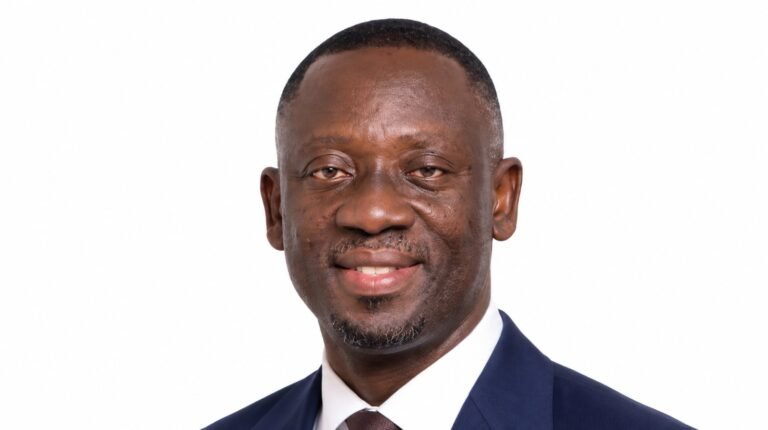
Director-General of the Ghana Education Service (GES), Prof. Ernest Kofi Davis, has emphasized that Ghana’s learning crisis cannot be addressed solely through externally driven, one-size-fits-all solutions.
 He made this comment at a panel discussion during during the launch of Professor Kwame Akyeampong’s latest book, co-authored with Dr. Sean Higgins, titled “Reconceptualising the Learning Crisis in Africa: Multi-dimensional Pedagogies of Accelerated Learning Programmes,” at the Kempinski Hotel Gold Coast City, Accra, on Wednesday, October 22, 2025.
Prof. Davis underscored the need for approaches that respect local contexts and the professional agency of teachers.
“We are faced with a situation where our educational system does not seem to deliver the outcomes we expect. We have a significant number of students who are unable to read and write at the appropriate age or level. So, we cannot claim that there is no learning crisis,” he said, highlighting the reality of widespread learning deficits in Ghana.
 Prof. Davis also linked the crisis to broader international influences on education, pointing out that many solutions are imported without sufficient adaptation. “We are frequently presented with pre-packaged solutions that devalue and ignore the strengths and positive aspects that already exist within our systems,” he said.
He criticized the dominant fidelity model of curriculum implementation, which demands strict adherence to prescribed materials. “This model assumes there is a perfect product that implementers must strictly follow. Yet, in our country, this fidelity model drives almost all development programmes we undertake. We do not apply the enactment model — a model that gives teachers agency, respects their professional knowledge, and positions them as individuals who can provide meaningful feedback,” Prof. Davis explained. He added that this approach often results in teachers being unfairly blamed when outcomes do not meet expectations.
 Highlighting the central role of language in learning, the GES boss said: “Education inherently begins with language. We start learning through language, we progress through language, and we ultimately fail or succeed because of language… there is no point bringing a student into the classroom if, at the end of the day, they remain virtually excluded because of the language barrier.”
In response to questions on how to improve access and quality of learning, Prof. Davis suggested reviewing the curriculum at foundational levels to ensure that the language of teaching and learning is carefully considered. “Although many of our schools are achieving high levels of access, the important question remains: do all students truly have access to the curriculum?” he asked.
On the question of who should define what counts as quality education in Africa, Prof. Davis stressed inclusivity. “I think all stakeholders should be involved because education is for everyone — learners, parents, communities, teachers, policymakers, and even the global community. We are training our students to function in the wider world. Everyone’s input in defining quality education is essential,” he said.
He further reiterated the purpose of quality education, noting: “What we do know is that quality education must equip our students with the knowledge, skills, attitudes, and values needed to improve their lives and contribute to society… Everyone must play a role.”

About The Author