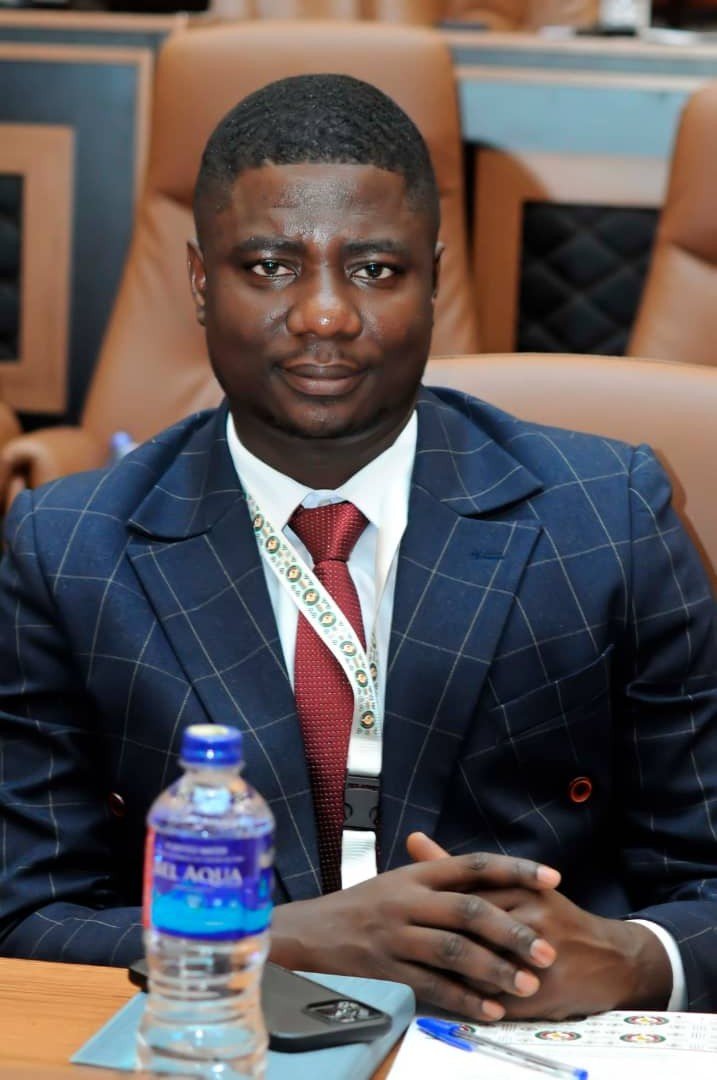
Dr. Frank Bannor, Spokesperson for the Finance and Economy Sector Committee of the New Patriotic Party
Ghana Dr Frank Bannor, Director of the Institute of Economic Research and Public Policy (IERPP), has credited the NPP presidential candidate and former Vice President Dr Mahamudu Bawumia’s digitalisation agenda, particularly the introduction of the Ghana Card and mobile money interoperability, for helping to expand access to financial services in Ghana.
His comments follow a revelation by Deputy Finance Minister Thomas Nyarko Ampem that “more than 80 per cent of Ghanaian adults own financial accounts, including bank accounts and mobile money wallets”, although only 22 per cent are considered financially healthy.
In a statement, Dr Bannor said the country’s progress in financial inclusion reflected the impact of digital financial reforms championed by Dr Bawumia, particularly the integration of mobile money platforms, traditional banking services and biometric payment systems.
He emphasised that the Ghana Card had been a critical component of the transformation by providing a reliable national identification system that made it easier for Ghanaians to establish their identities and access formal financial services.
According to him, the national identification system, together with mobile money interoperability, helped remove some of the traditional barriers that previously made it difficult for many people, particularly those outside the formal banking system, to access financial services.
The Bank of Ghana, effective July 1, 2022, made the Ghana Card the sole identification document for financial transactions at all its licensed and regulated financial institutions, including banks, specialised deposit-taking institutions and payment service providers.
Dr Bannor argued that the development was consistent with Dr Bawumia’s vision of using digital technology and national identification to extend financial access to more Ghanaians.
He recalled that in December 2017, Dr Bawumia had explained how mobile money interoperability could make it possible for virtually every Ghanaian to have access to banking services, even without necessarily maintaining a conventional bank account.
Explaining the significance of the reform, Dr Bannor said the system allowed funds to move between different mobile money networks, mobile money wallets and traditional bank accounts, as well as the e-zwich biometric payment platform.
He quoted Dr Bawumia’s explanation of the system, saying: “With the triangular feature which mobile money payments interoperability allows; that is the transfer of funds from mobile money accounts to bank accounts and vice versa, as well as from mobile or bank accounts to biometric payment card accounts (e-zwich), it means that anyone with a mobile account has a bank account.”He said the arrangement had significantly broadened the reach of financial services by enabling people to receive and transfer money, make payments and participate in the formal financial system through their mobile devices.
Dr Bannor maintained that the Ghana Card strengthened this arrangement by providing the identity verification required to connect individuals to regulated financial services, while interoperability ensured that users could transact across different financial platforms.
He said the combination of accessible digital identification and interconnected payment systems had helped advance financial inclusion beyond the traditional banking environment.
Bawumia’s vision becomes reality
Reflecting on the criticism that greeted Dr Bawumia’s financial inclusion proposal in 2017, Dr Bannor said the achievement demonstrated the importance of visionary leadership and the ability to implement innovative policies.
“When Dr Bawumia explained in December 2017 that it was possible for every Ghanaian to own a bank account, the naysayers, NDC mocked him,” he stated.
He argued that the critics had failed to appreciate the potential of mobile money interoperability to bridge the gap between conventional banking and mobile financial services.
According to him, the development had demonstrated that financial inclusion did not necessarily require every individual to visit a banking hall or maintain a conventional bank account before accessing essential financial services.
“Today, Bawumia’s vision is a lived life! Ghana needs visionary leadership!” he further emphasised.
About The Author