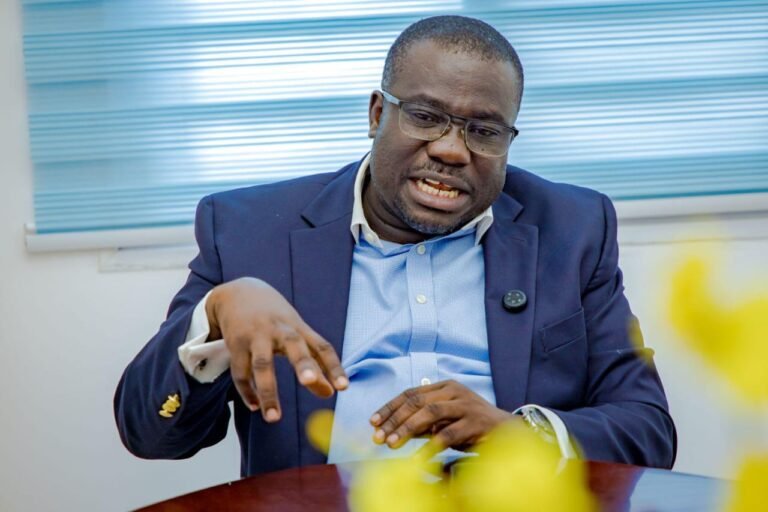
The Committee on Lands and Natural Resources of the Parliament of Ghana convened a high profile public hearing on the nation’s lithium agreement, drawing government officials, industry experts, civil society actors and members of the public. Among those in attendance was Dr John Kpikpi, the 2024 presidential candidate of the Progressive Alliance of Ghana (PAG), who used the platform to advocate for deeper local ownership and fairer terms in mineral resource contracts.
Dr Kpikpi expressed disappointment with the current state of negotiation but emphasized the importance of redefining Ghana’s position from a junior partner to a commanding stakeholder in the exploitation of its lithium resources.
Dr Kpikpi challenged the notion that foreign companies should hold controlling interests in Ghana’s lithium ventures, stressing that the nation’s resources are misrepresented as an inferior contribution in partnership agreements.
“Up until now, we’ve been treated as those who are coming empty-handed, and then the company is coming from abroad with 100 million, so they have to cut all their kindness of heart. Give us 5% 10%… no, we own the thing and the value of the thing. We should bring that to the table.” He laments.
He proposed that Ghana’s portion of the resource quantified by its total in-ground value should form the basis of the equity split:
“So 90 billion. Here we are, and the company brings 10 billion… That is what it should be like, because 10 billion compared with the value of the resource, that should be the starting point. And from that moment, we call the shots.” He said.
Dr. Kpikpi reiterated that such an approach would empower Ghana to lead negotiations, retain greater economic benefits, and shape the trajectory of its mining sector.
Beyond ownership percentages, Dr Kpikpi emphasized strengthening local capacity and ensuring Ghanaians benefit meaningfully from mineral exploitation.
“We want to get people interested, helping our people to rise up, acquiring skills and techniques and entrepreneurial to organize these minds. Mining is not a difficult thing.”
He also highlighted the massive capital flight he believes is associated with current multinational arrangements:
“As we speak, $80 billion has leaked out of Ghana over a 10-year period, but it’s due to this kind of arrangements… So I was expecting that already pushing for an agreement that actually flips it over, where Ghana becomes 90% shareholders” He emphasizes.
Dr Kpikpi argued that with strategic leadership and an empowered workforce, Ghana can rent or lease equipment, attract technical expertise, and shift away from unequal shareholding structures that leave the nation with limited control.
About The Author