Distinguished Ghanaian educationist and global thought leader, Professor Kwame Akyeampong, has emphasized the importance of teacher agency in Ghana’s education system, cautioning against over-reliance on scripted lessons.
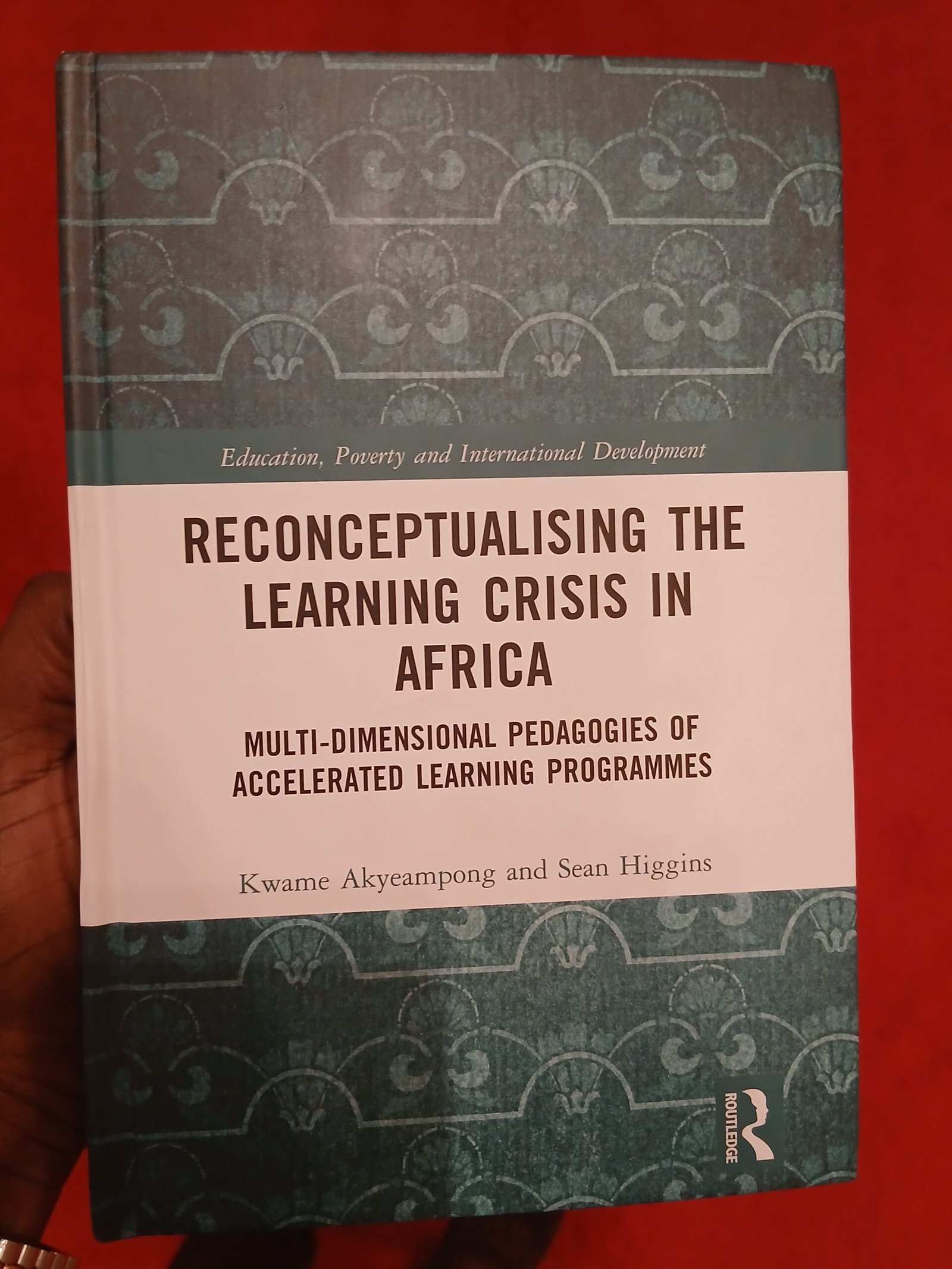
He made the call during the launch of his latest book, co-authored with Dr. Sean Higgins, titled “Reconceptualising the Learning Crisis in Africa: Multi-dimensional Pedagogies of Accelerated Learning Programmes,” at the Kempinski Hotel Gold Coast City, Accra, on Wednesday, October 22, 2025.
 Structured lesson plans
The Professor of International Education and Development and Founding Director of the Centre for the Study of Global Development at the Open University (UK) highlighted the growing preference in Ghana for structured lesson plans, noting that while such approaches can be useful, they should not undermine the professionalism and expertise of teachers.
He acknowledged that structured or scripted lessons are not inherently wrong, explaining that interventions of this kind must be introduced in ways that allow teachers to engage with and adapt the materials to their classroom environments. “The point we make in the book is not that interventions such as structured or scripted lessons are inherently wrong. Rather, we argue that they must be introduced in ways that allow engagement with teachers’ existing practices. Lessons must be re-contextualized and adapted to different classroom environments,” he said.
 Professor Akyeampong stressed that it is detrimental when teachers are given scripts in which they have no input. “It is a great disservice to the education system when teachers are given scripted lessons in which they have no input. Children are not the same. So I strongly oppose any scripted approach that dictates exactly what a teacher must say at a specific time for learning to occur,” he explained, drawing on his own experience as a teacher who planned and sometimes memorized lessons.
Teachers in the learning process
He emphasized that teachers must remain active participants in the learning process, analyzing, adapting, and reshaping lessons to suit the changing needs of their students throughout the school year. “Whatever form structured lessons take, teachers must remain active participants — analyzing, adapting, and reshaping them. I trained as a teacher myself; I planned my lessons and sometimes even memorized them. We should not reach a point where teachers neglect lesson planning entirely in favor of scripts. Contexts change throughout the school year. We cannot expect one script to work for every learner,” he said.
 Professor Akyeampong also pointed out that the international community promotes scripted lessons as a tool to address learning deficits, but he warned that without supportive conditions, such approaches risk de-professionalizing teachers. “However, it is our responsibility to create the conditions in which teachers can effectively engage with students, and too often that supportive environment is what is missing. When we rely solely on scripts, we risk de-professionalizing teachers — reducing their role simply to following instructions. Our aim should be to empower teachers, not diminish their agency,” he further noted.

About The Author