A panel of leading education experts has urged a re-examination of Africa’s learning crisis, highlighting the need for solutions that respect local contexts, leverage community strengths, and engage globally to ensure children are equipped for the 21st century.
The remarks came during the launch of the book “Reconceptualising the Learning Crisis in Africa: Multi-dimensional Pedagogies of Accelerated Learning Programmes” by Professor Kwame Akyeampong and Dr. Sean Higgins at the Kempinski Hotel Gold Coast City, Accra, on Wednesday, October 22, 2025.
 Wedad Sayibu
Director of School for Life, Wedad Sayibu, called for a shift in how the continent’s learning challenges are framed, arguing that the prevailing narrative, often influenced by Western frameworks, overlooks crucial aspects of holistic education. “To the question—yes, there is a crisis. But as the Professor highlighted earlier, what exactly is the focus of this crisis?” she asked, noting that the discussion has largely been limited to literacy and numeracy outcomes. “Often, this narrative focuses largely on children’s test scores in literacy and numeracy. Framing the educational challenge solely in this manner overlooks other essential factors that are critical to the holistic development of the child.”
Ms. Sayibu emphasized that education must develop critical thinking, emotional and social intelligence, vocational abilities, and life skills, all vital for economic empowerment and social development. She also warned against prioritizing foreign languages over local ones. “The emphasis is usually placed on foreign languages—English and French, the languages of former colonial powers, to the neglect of our own local languages. Community knowledge, languages, and cultural strengths shape education in ways that top-down approaches often fail to achieve,” she said.
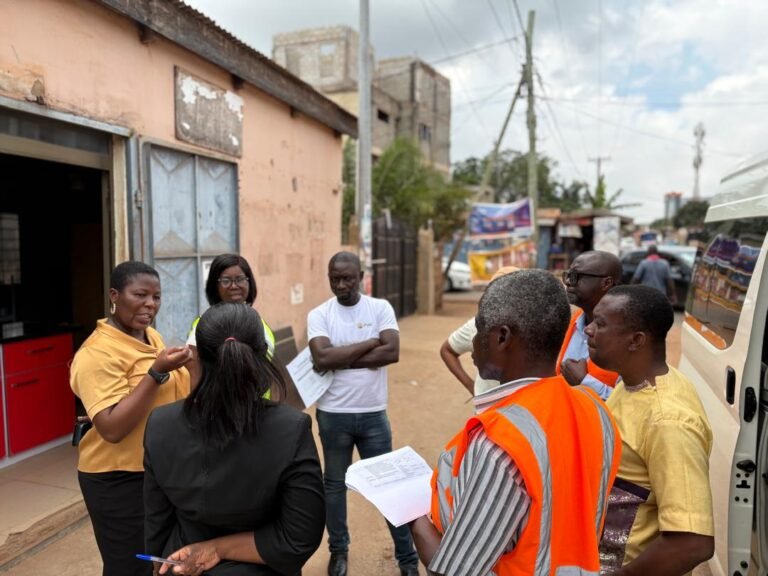
Highlighting the success of Ghana’s Complementary Basic Education programme, Ms. Sayibu underscored the importance of community-driven and flexible learning models. “The programme is designed so that the learning process is highly flexible, allowing time arrangements that reflect the social and economic realities of the community… When a programme is introduced in a community, we first examine the dominant economic activities taking place there. Based on this, the community itself selects the most suitable time for learning,” she explained, noting that such approaches prevent families from choosing between education and livelihood. She added that in farming communities, afternoon or evening lessons often ensure better participation, resulting in learners who are more engaged and supported throughout their educational journey.
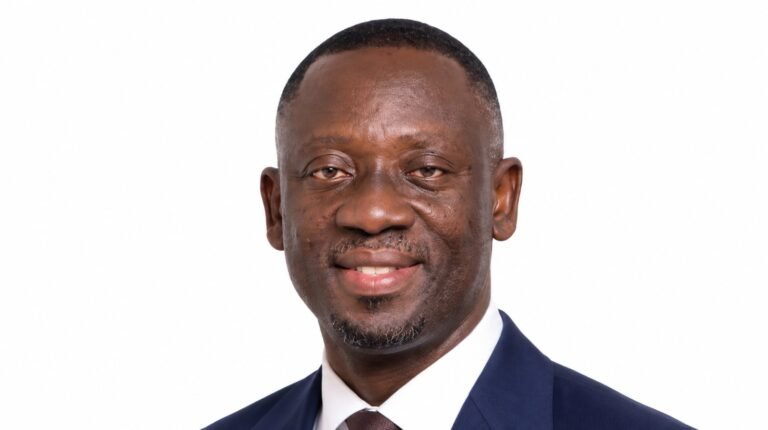
 Prof. Ernest Kofi Davis
Supporting this perspective, Prof. Ernest Kofi Davis, Director-General of the Ghana Education Service, acknowledged that the country’s educational system is not delivering the expected outcomes. “We have a significant number of students who are unable to read and write at the appropriate age or level. So, we cannot claim that there is no learning crisis,” he said, linking the crisis to the international approach to educational reform. “We are frequently presented with pre-packaged solutions that devalue and ignore the strengths and positive aspects that already exist within our systems.”
Prof. Davis criticized the fidelity model of curriculum implementation, which demands strict adherence to prescribed materials, arguing that it undermines teacher agency. “We do not apply the enactment model—a model that gives teachers agency, respects their professional knowledge, and positions them as individuals who can provide meaningful feedback. As a result, when implementation does not go as expected, teachers are blamed for not doing things ‘the right way’ or as instructed,” he said. He also stressed the central role of language in education, noting that learning begins, progresses, and is ultimately assessed through language. “There is no point bringing a student into the classroom if, at the end of the day, they remain virtually excluded because of the language barrier,” he said, adding that reviewing the curriculum at foundational levels is critical.
 Prosper Nyavor
Prosper Nyavor, Head of the Education Section at UNESCO Ghana, reinforced the call for African perspectives to shape global education narratives. He acknowledged the reality of learning deficits but also highlighted the continent’s unique strengths. “Whether we call it a crisis or not, the reality is that something is not right. Across many African countries—and even beyond—the data suggests that we often do not achieve the results we anticipate, particularly at the basic education level,” he said.
Nyavor stressed that while foundational skills are essential, Africa’s children acquire additional competencies through socialization, resilience, leadership, and contributions to household income. “We must engage strongly at the global level and agree on indicators that reflect our realities. With a stronger voice, our local strengths and experiences can help shape global frameworks so that Africa is not viewed purely through a deficit lens. If we sit back and accept global standards without asserting our perspectives, these standards will inevitably shape how we act locally,” he further added.

About The Author