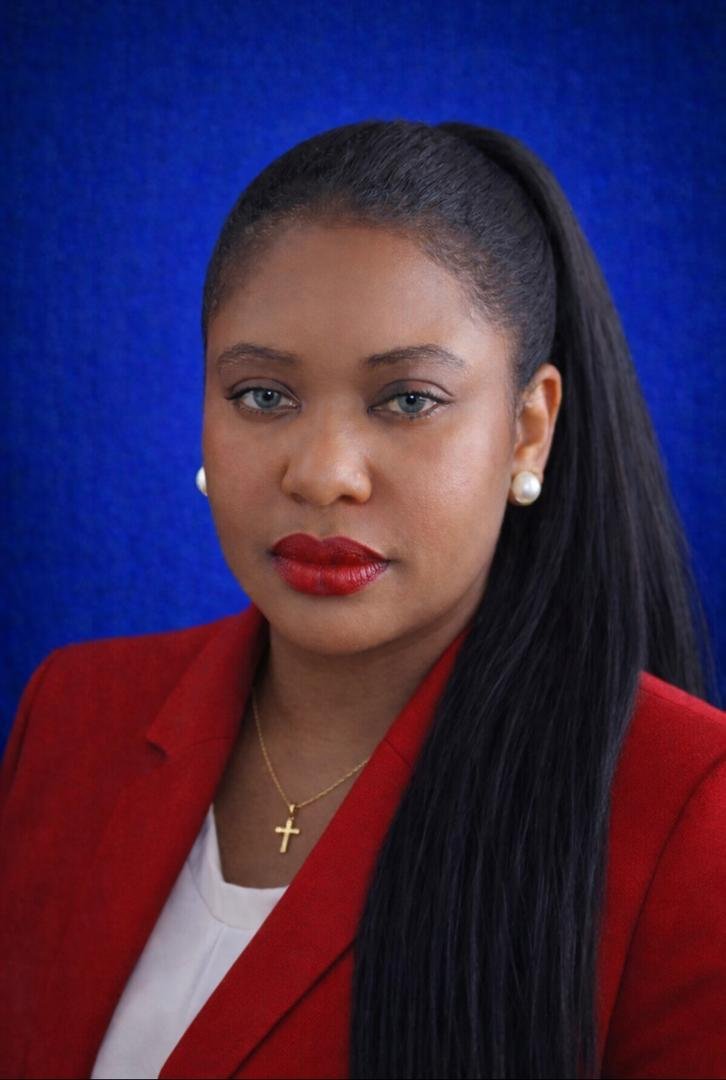
Dr. Frank Bannor, Development Economist and Senior Research Fellow at IERPP
Senior Research Fellow at the Institute of Economic Research and Public Policy (IERPP), Dr. Frank Bannor, has warned that while the government’s recent tax cuts may bring short-term political excitement and public relief, they pose long-term risks to Ghana’s economic stability.
Speaking on Asaase Radio during an in-depth analysis of the 2026 Budget Statement, Dr. Bannor urged Ghanaians to pay particular attention to the technical sections of the budget, especially the appendices, which he said reveal the true picture of the country’s fiscal situation.
According to him, Appendix 3A of the budget shows that interest servicing remains the second-largest item on government expenditure. Out of the GH¢57.7 billion earmarked for interest payments in 2025, a staggering GH¢50 billion will go into servicing domestic debt alone.
“That is shocking.It reflects both the heavy borrowing undertaken by the current government in its first year and the debt legacy inherited from the previous administration. It also tells us that significant borrowing is projected going forward,” he added.
Dr. Bannor further explained that the relatively lower GH¢7.6 billion allocated for external debt servicing is only temporary because external payments are currently suspended. He cautioned that these obligations will return strongly from late 2026, with steep repayment schedules expected in 2027, 2028, 2029 and the years ahead.
“This presents a major threat to fiscal discipline. It will test the government’s capacity to curb its appetite for borrowing — a concern economists have consistently raised. Ghanaians want a government that borrows less and invests more wisely,” Dr. Bannor stated.
Turning to tax abolition measures such as the removal of the COVID-19 levy, Dr. Bannor said the move is understandably popular among citizens because it puts money back in their pockets. However, he argued that the economic consequences are significant. The COVID-19 levy alone was expected to generate GH¢3.21 billion out of the government’s GH¢229 billion projected revenue for 2025.
“Scrapping these taxes creates a major hole in the revenue projections. And while citizens feel relieved, government loses critical revenue needed to fund public services,” he stressed.
He noted that despite removing key revenue items, the government has not adjusted its expenditure. The total planned spending for 2025 remains unchanged at GH¢269 billion.
“It is worrying that revenue sources are being cut due to political promises, yet the expenditure side has not been reviewed,” he said. “This raises a fundamental question: How will the government address the revenue shortfall within its fiscal framework? The Finance Minister must explain clearly how the gap will be filled.”
Dr. Bannor stressed that whether the tax cuts qualify as sound economic policy or mere political “sugar-coating” depends on Ghana’s real economic position, and that position, he said, remains weak.
He pointed out that Ghana’s domestic revenue performance is still low. Even with grants included, the GH¢229 billion revenue target represents only 16.4% of GDP. Without grants, domestic revenue falls to about GH¢222 billion, giving Ghana a tax-to-GDP ratio of just 15% — far below South Africa’s 24.8%.
“This confirms that Ghana performs poorly when it comes to tax collection. Yet the demand for government services remains very high. That’s why structural weaknesses in our tax system make these cuts economically dangerous,” he said.
He further cautioned that Ghana risks sliding into deeper fiscal challenges if political decisions continue to overshadow economic realities.
“Tax cuts may be politically sweet,” Dr. Bannor said, “but given the state of our revenue system, they are economically risky. Ghana must be careful not to trade long-term fiscal stability for short-term political applause.”
About The Author