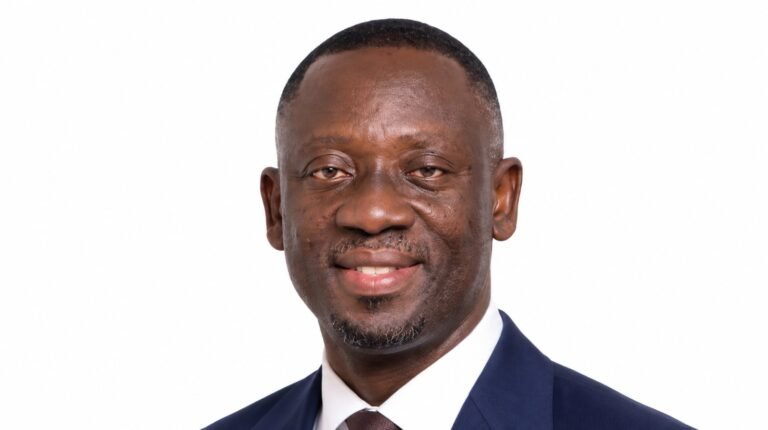
(L) Isaac Nyarko Antwi & Rhoda Opoku Tuffour (R)
By Isaac Nyarko Antwi & Rhoda Opoku Tuffour
What if students were not merely asked to answer questions about education, but were actually invited to help shape the conversation about it?
What if, instead of adults speaking continuously about what students need, we paused and asked students what they think?
And what if a teacher did more than mark a student’s essay—what if the teacher opened a door for that student’s ideas to reach the wider public?
These questions inspired this special teacher–student writing partnership, “Teaching Students to Write, Giving Them a Voice.” It is based on a simple belief: students should not only be taught to write; they should also be given opportunities to use their writing to express their experiences, concerns, aspirations and ideas about the society in which they live.
As a teacher, I have come to appreciate that students possess perspectives that adults can easily overlook. They sit in our classrooms every day. They experience our teaching methods, examinations, assignments, school rules and expectations. They understand the pressures and opportunities within the educational system from a perspective that is uniquely theirs.
So, rather than speaking for students, perhaps we should sometimes allow them to speak for themselves.
That is what this article seeks to do.
I asked my student, Rhoda Opoku Tuffour, ten questions about education in Ghana. Her responses provide an opportunity to listen to education through the eyes of a young person.
One of Rhoda’s strongest concerns is the emphasis placed on academic performance.
She believes that academic achievement is sometimes given greater importance than practical skills and creativity. In her view, students possess different talents and abilities, and education should therefore not focus only on academic development. It should also help hone students’ problem-solving abilities and logical reasoning skills.
This raises a fundamental question: Are we preparing students merely to pass examinations, or are we preparing them for life?
Examinations are important because they provide a means of assessing learners. However, we should understand that examination results alone cannot fully measure every component of human ability. She believes that examination results do not define students. Some learners may demonstrate practical intelligence, while others may possess abilities that conventional examinations do not adequately measure.
Rhoda also believes that students are not given enough opportunities to express their opinions about matters affecting their education.
According to her, students sometimes feel that people in authority do not provide sufficient platforms for them to express their frustrations, needs and concerns. This can become particularly troubling when students have serious issues that require attention but are afraid or unable to speak.
Perhaps educational institutions need to ask themselves this question: Do our students feel heard?
Listening to students does not mean allowing them to dictate educational policy. Rather, it means acknowledging them as key stakeholders whose experiences can better shape Ghana’s educational system.
Rhoda also speaks about examination pressure.
She believes that many students are under significant pressure to pass examinations and suggests that such pressure can contribute to examination malpractice.
She further points to the heavy emphasis on memorisation in some aspects of learning.
This deserves careful reflection. Rhoda believes that the success of a student should not be based on their examination results. When this happens, students may begin to view formal education as a race for grades rather than the process of development.
For Rhoda, the Ghanaian education system should also create opportunities for learners to acquire practical skills such as fashion design, soap making and hairdressing.
This does not necessarily mean that classroom learning should be left behind. Instead, it suggests that academic learning and practical learning can complement each other.
Students also need classrooms where learning is enjoyable.
Rhoda believes that learners become more engaged when they are allowed to participate in group discussions and other interactive activities. This reminds us that learning can be an engaging process in which students ask questions, work together and discover new ideas.
But participation requires confidence.
One of the challenges Rhoda identifies as a student is the fear of making mistakes. In some environments, mistakes are associated with failure and embarrassment. When students fear being laughed at for giving a wrong answer, they may stop asking questions altogether.
That is dangerous for education.
A student who is afraid to ask a question may remain confused. A student who is afraid to attempt an answer may never discover what he or she is capable of doing.
According to her, educators must therefore create classrooms where mistakes are treated as opportunities to learn rather than occasions for humiliation.
If Rhoda had the chance to transform one aspect of Ghana’s educational system, she would prioritise practical learning over theoretical instruction.
And if she were given the chance to interact with Ghana’s education leaders, her message would be simple:
“Dear leaders, this is my humble appeal: please listen and pay close attention to the experiences of learners.”
Her final response may be the most powerful of all.
Asked to complete the statement, “If students had a real seat at the table, education in Ghana would…”, Rhoda responded:
“Be more aligned with students’ actual needs.”
That statement deserves serious attention.
Students may not have all the answers to Ghana’s educational challenges, but they are living through the system we are trying to improve. Their experiences matter. Their concerns matter. Their ideas matter.
As teachers, our responsibility should therefore extend beyond teaching students how to pass examinations. We must teach them how to think, how to communicate, how to question respectfully, how to solve problems and how to participate meaningfully in society.
And sometimes, we must do something even more important: give them a platform.
My partnership with Rhoda is a small demonstration of what can happen when a teacher decides to share the platform with a student.
The objective is not simply to publish an article. It is to nurture confidence, encourage critical thinking and demonstrate to young people that their voices deserve a place in national conversations.
A student’s voice may begin in a classroom.
It may appear first in an exercise book.
But with encouragement, mentorship and opportunity, that voice can travel much further.
Perhaps education becomes truly transformative when students move from being spoken about to being listened to.
We must therefore teach students to write—not merely so they can pass examinations, but so they can express themselves, challenge ideas, contribute solutions and participate in shaping the future.
The writers are, Isaac Nyarko Antwi, GES Teacher, and Rhoda Opoku Tuffour, a student and emerging young writer.
About The Author