The Upper East Regional Coordinating Council has declared its readiness to partner with South Korean investors and technology companies to accelerate agricultural modernisation, industrial development and skills training, as the Region seeks to attract investment to support its 10-year development agenda.
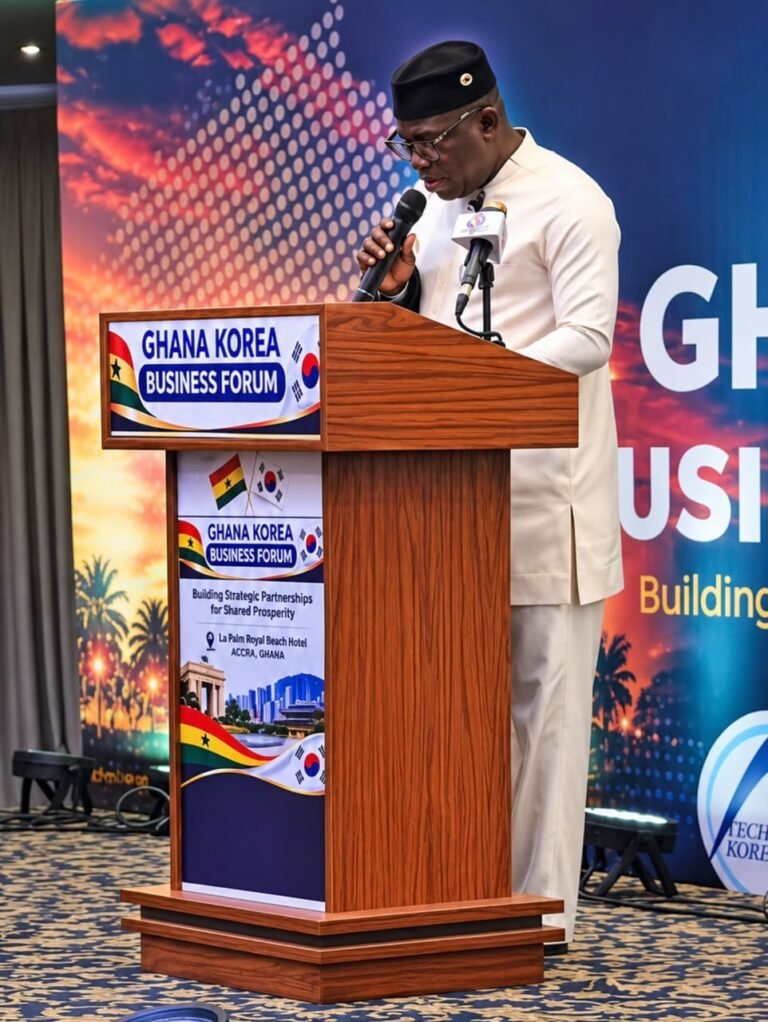
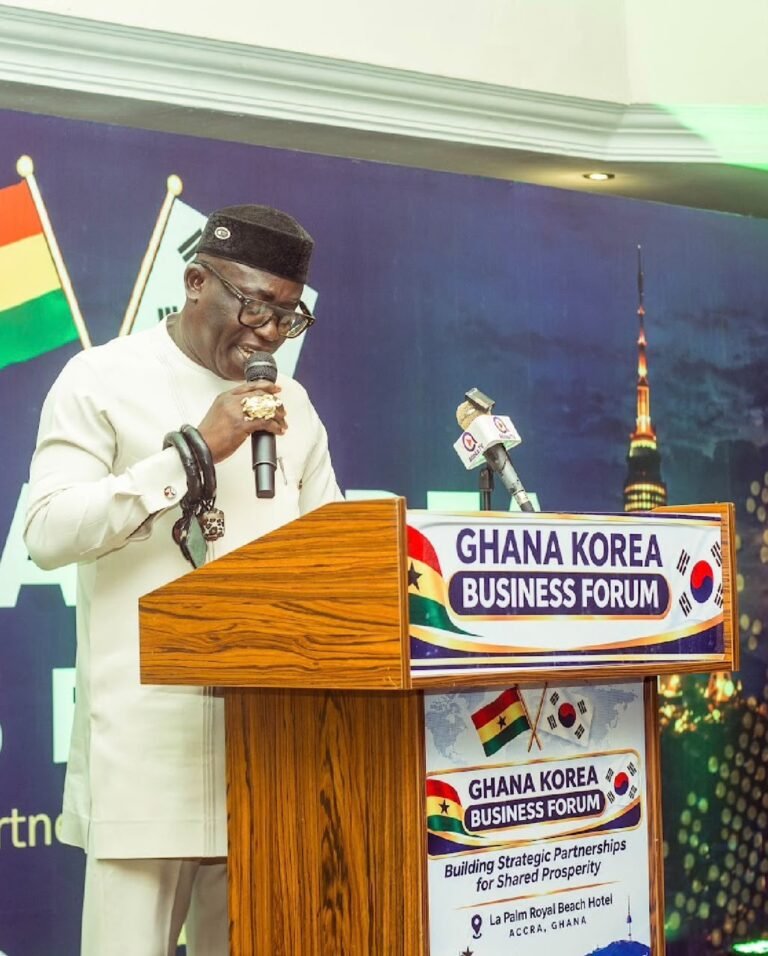
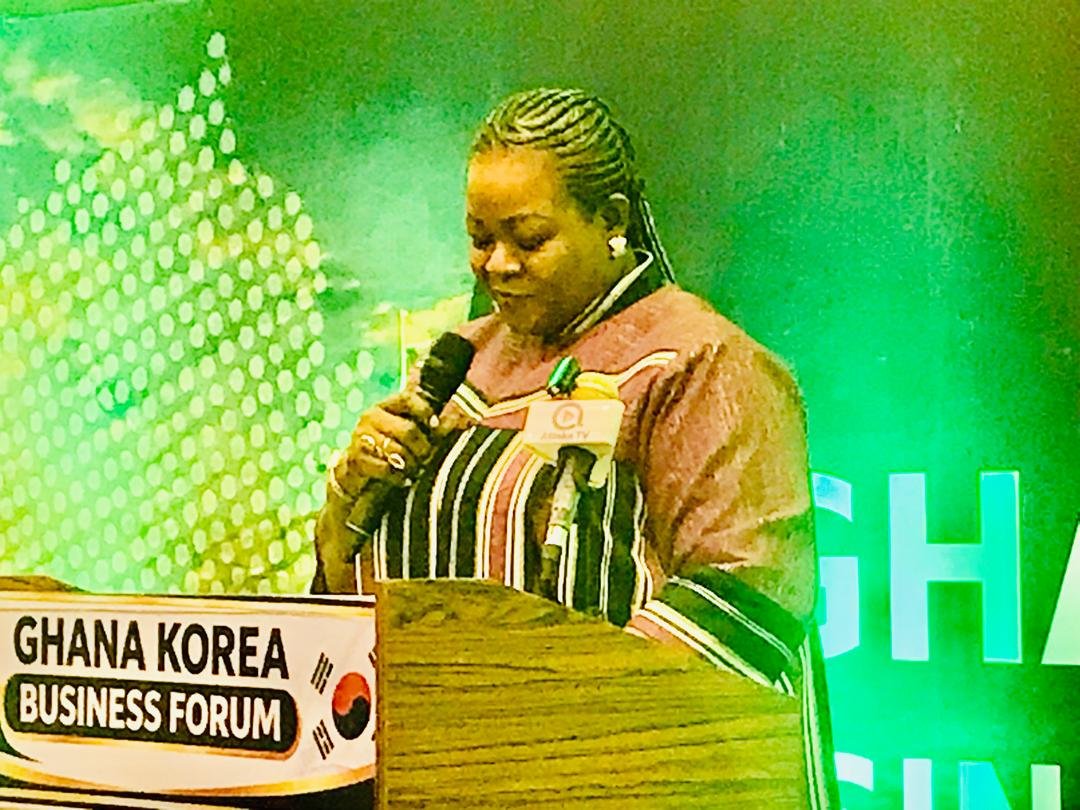
The declaration was made by Ms Anatu Bogobiri, who represented the Upper East Regional Minister, Hon. Akamugri Donatus Atanga, at the Ghana-Korea Business Forum 2026 held at the La Palm Royal Beach Hotel in Accra. She told the Korean delegation that the Region was ready to move beyond discussions to concrete investment partnerships that would create jobs, transfer technology and improve livelihoods.
“The Upper East Region is not only open to Korean partnership, it is ready for a Korean partnership!” she declared, adding that the Region had the land, human resources and development framework needed to support mutually beneficial investments.
Ms Bogobiri said the engagement was the culmination of discussions held over the past year between the Regional Coordinating Council and A-Tech Group Korea, which had explored cooperation in drone and satellite technology, skills development, academic exchange and the revival of agro-industrial facilities.
The discussions have been consolidated into a proposed Memorandum of Understanding between the Upper East Region and the Korean team, subject to approval by the relevant authorities.
The partnership framework involves Bolgatanga Technical University (BTU) as a key institutional partner, with the University of Technology and Applied Sciences (UTAS) in Navrongo also expected to participate in the proposed technology and training programmes.
Ms Bogobiri said South Korea’s transformation from a war-torn, largely rural economy into a global technology and manufacturing powerhouse offered important lessons for the Upper East Region, particularly its investment in human capital, rural modernisation and long-term development planning.
“South Korea’s own story inspires us. Within one lifetime, Korea turned a war-torn, largely rural economy into a world leader in technology and manufacturing. It did so by investing in people, in rural modernisation, and in the discipline to see long-term plans through,” she said.
At the centre of the Region’s investment drive is the PEARL Framework 2026-2035, an estimated GH¢8.6 billion development plan covering 15 districts and municipalities, eight sectors and 23 flagship projects.
PEARL, which stands for Prosperity through Enterprise, Agriculture and Regional Livelihoods, is intended to promote economic growth by exploiting the Region’s agricultural, industrial and natural resources. The framework was validated with traditional authorities, district assemblies, farmers, women’s groups, traders and private-sector representatives in Bolgatanga.
The Region is seeking Korean expertise to modernise agriculture through drone technology, satellite monitoring and precision farming, particularly at the Tono, Vea and Tamne irrigation schemes.
According to Ms Bogobiri, the technology would help farmers monitor crop conditions, identify threats such as drought, flooding and fall armyworm, and improve the application of fertilisers and agrochemicals.
The proposed cooperation also includes geospatial mapping to support district-level planning, water treatment and purification systems, as well as technical training for young people in drone operation, maintenance, geographic information systems, cybersecurity and coding.
Industrial cooperation is another major priority, with the Region inviting Korean companies to explore opportunities to revive dormant agro-processing facilities, including the Pwalugu Tomato Factory, Zuarungu Meat Factory, Pusu-Namongo cotton ginnery and rice mills in Bolgatanga.
Ms Bogobiri said the facilities offered opportunities for investors to establish agro-processing operations and add value to agricultural produce within the Region instead of having raw materials transported elsewhere for processing.
The Region also outlined what it described as four assurances to prospective investors: a clear development framework through PEARL, a single point of contact through the Regional Coordinating Council, accountability mechanisms and access to local institutions and a young workforce.
It is also establishing an independent PEARL Fund, with a Board of Trustees, a citizens’ oversight committee and published accounts, to strengthen transparency and accountability in the implementation of the development framework.As part of the immediate next steps, Ms Bogobiri proposed a drone and precision-agriculture pilot at one of the Region’s irrigation schemes, the establishment of a technology and skills training centre at Bolgatanga Technical University, and a community water-treatment demonstration project.
She also called for a Korean business delegation to visit the Upper East Region to inspect its irrigation schemes and agro-industrial facilities, as well as the formation of a joint working group involving the Regional Coordinating Council, A-Tech Group and the two universities to translate business discussions into specific project agreements.
Dr Bishop Akolgo was identified as the Region’s focal person for coordinating follow-up engagements. “We want projects that will still be running long after the ribbon is cut. We want legacy!” Ms Bogobiri said.
She maintained that the partnership must go beyond the introduction of technology to ensure local capacity development, employment creation, technology transfer and environmental protection.
“In the Upper East we have a saying that one hand cannot tie a bundle. Korea brings technology and experience; and the Upper East Region brings land, water, people and a plan. Together, we can tie this bundle,” she said.
About The Author