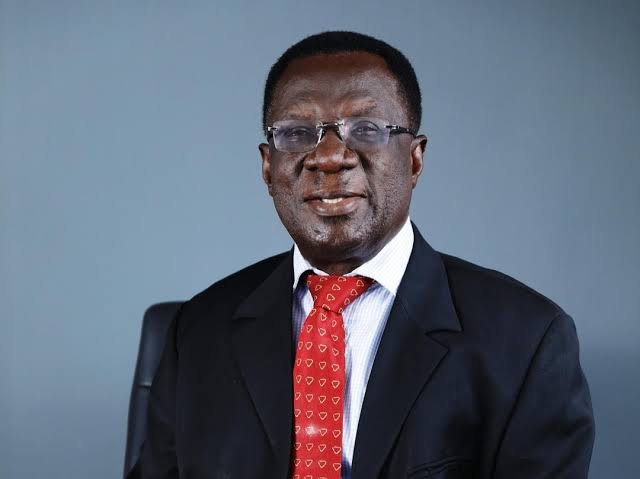
Dr Jeffrey Haynes, Professor Emeritus of Politics, London Metropolitan University, UK
By Professor Jeffrey Haynes
Shaykh Mustapha Abdul-Hamid’s recent Danquah Institute Liberty Lecture highlighted a dangerous trend: the weaponisation of faith for political leverage, which directly threatens Ghana’s history of religious tolerance. He explained how political opportunists use anti-Muslim rhetoric to sway the Christian electorate during elections. This division is further fuelled by radical charismatic pastors who warn their congregations against certain parties, framing the rise of a Muslim leader as a direct threat to Christianity.
Weaponising of religion refers to the use of religious beliefs, symbols, or groups as tools to win power, influence voters, or control people. It works like this. First, it creates division, with citizens divided into groups of “good believers” versus “outsiders” or “enemies.” This leads to a stoking of fear, with the claim that a rival group wants to destroy sacred values or traditions. This ends debate: policies are framed as absolute moral commands, making compromise difficult or impossible. Voters are distracted, as the political focus moves from solving difficult everyday problems such as: health inadequacies, unemployment, high price inflation, galamsey, and climate breakdown.
Weaponing religion in the UK
Weaponising of religion for political gain is not unique to Ghana. For example, in the UK where I live, a recent Catholic Herald article on “Britain’s new wars of religion” remarked on the return of politicians very much “doing God.” This shift is fuelled in part by immigration and the flow of religious influence from overseas, bringing into the spotlight religious fundamentalism, sectarian divisions, and the ripple effects of foreign conflicts into Britain. This makes religion in public life harder than ever to ignore.
Increasing entanglement of religion and politics – both on the far right and among Islamist-leaning groups – does not bode well for the UK’s security. From Tommy Robinson’s “Unite the Kingdom” rally and the Reform Party’s Christian nationalist “crusade” to counter-protests where masked Muslim men vow to “defend their community” and pray in the street, religion is being wielded as a political weapon, threatening Britain’s social cohesion and the secular foundations of the country’s stable democracy.
Weaponing religion in Ghana: The “Muslim threat”
Things have not reached this pitch in Ghana, and it is crucial to defuse rising religious tensions which centre on mutual suspicion between the Christian majority and Muslim minority. The backdrop is that Ghana is widely recognised as one of West Africa’s most stable, peaceful, and religiously tolerant nations, where Christians (approximately 71%) and Muslims (approximately. 20%) coexist harmoniously.
Some believe that the Muslim minority poses an actual existential or physical threat to the Christian majority. In political and social discourse, a perceived threat is being manufactured or amplified by the weaponising of religion. Certain frictions are framed as threats due to specific societal shifts. First, there is a perceived creeping “Islamisation” of public institutions. Certain developments are misinterpreted by conservative Christian factions as an attempt to introduce Islamic law (Sharia) or to erode the country’s Christian heritage. For some, friction points include educational rights regarding the entitlements of Muslim students in historically Christian-mission schools, such as the high-profile legal dispute over fasting and prayer rights at Wesley Girls’ High School, as well as policy inclusions. These include the Ministry of Education’s proposals to introduce Arabic as an optional primary school subject and consultations by the Bank of Ghana regarding interest-free (“Islamic”) banking. Others do not regard these measures as a threat, but as legitimate struggles by the Muslim minority for civic inclusion, equality, and constitutional religious freedom.
Such fears may be amplified by spillover fears from the Sahel region. There is a generalised security anxiety in Ghana regarding the rise of violent extremist jihadist groups such as Jama’at Nusrat al-Islam wal-Muslimin, an active al-Qaeda-affiliated militant in neighbouring Sahelian countries like Burkina Faso. On the other hand, security experts and the Ghana Police Service emphasise that Ghana’s domestic Muslim population is overwhelmingly moderate. In fact, Ghana’s robust interfaith cooperation between the National Chief Imam and Christian leadership is widely considered to be Ghana’s strongest defence against external radicalisation
Christian Nationalism and Democracy
In my recent book, Christian Nationalism and Democracy in Ghana (Routledge, 2025), I argue that Ghana is experiencing the rise of what I term “Christian Nationalism”. Christian nationalists would prefer that Ghana was a “Christian state,” implying Muslim political visibility as an inherent threat to that identity.
In my book, I argue that a dominant religious elite is actively using Christian nationalism to remake Ghana according to their specific values. Consequently, politicians may exploit religious slogans for votes. For example, there was the New Patriotic Party’s use of the biblical phrase “For the battle is the Lord’s|”, which framed recent presidential campaigns as “holy battles.” More generally, religious actors in both main parties are increasingly pushing a mandate to lead both politically and socially, attempting to inject a “prosperity gospel” and highly conservative ethics into state policy.
Scapegoating
Weaponising of religion for political gain in Ghana is expressed in two main ways: targeting both minority rights and social cohesion. On the one hand, there is a scapegoating of the LGBTQ+ community which links weaponisation of religion to aggressive political campaigns surrounding the anti-LGBTQ+ bill. Some religious elites use attacks on sexual minorities to build political momentum and display power. On the other hand, there is a marginalisation of religious minorities. Christian nationalists may target minority faiths (such as Muslims or followers of African Traditional Religions) in seeking to further the narrative that Christianity is the only legitimate national identity. This risks undermining the historical, peaceful co-existence between Christians and Muslims in Ghana. This is already happening in the UK; Ghana must be careful not to follow suit.
About The Author