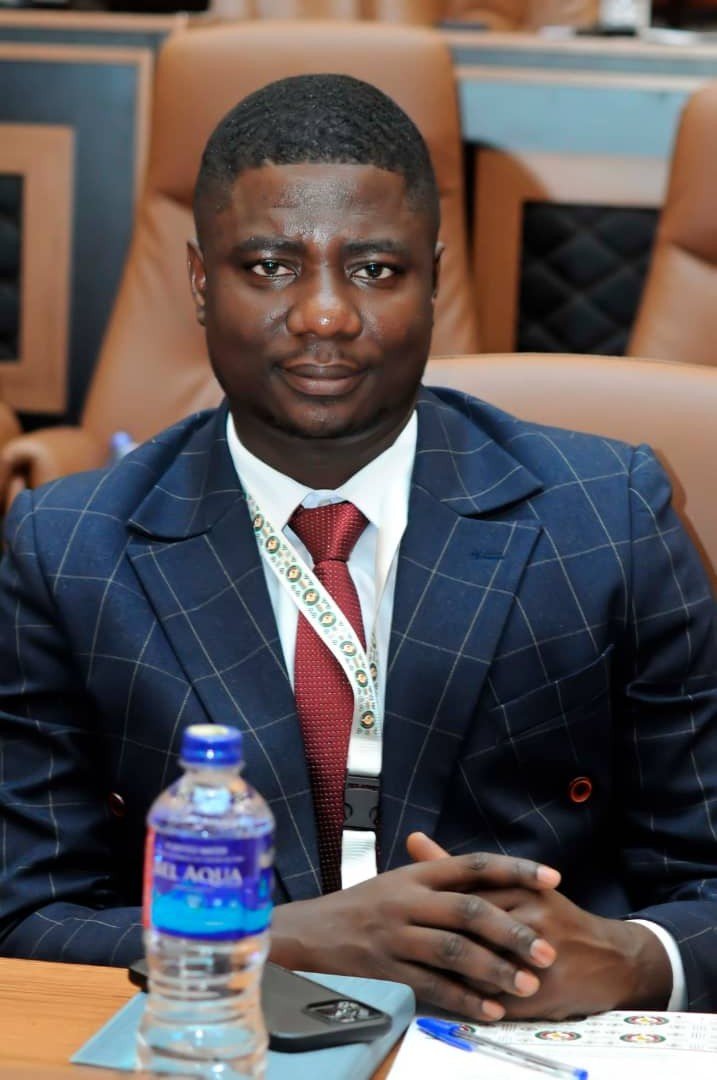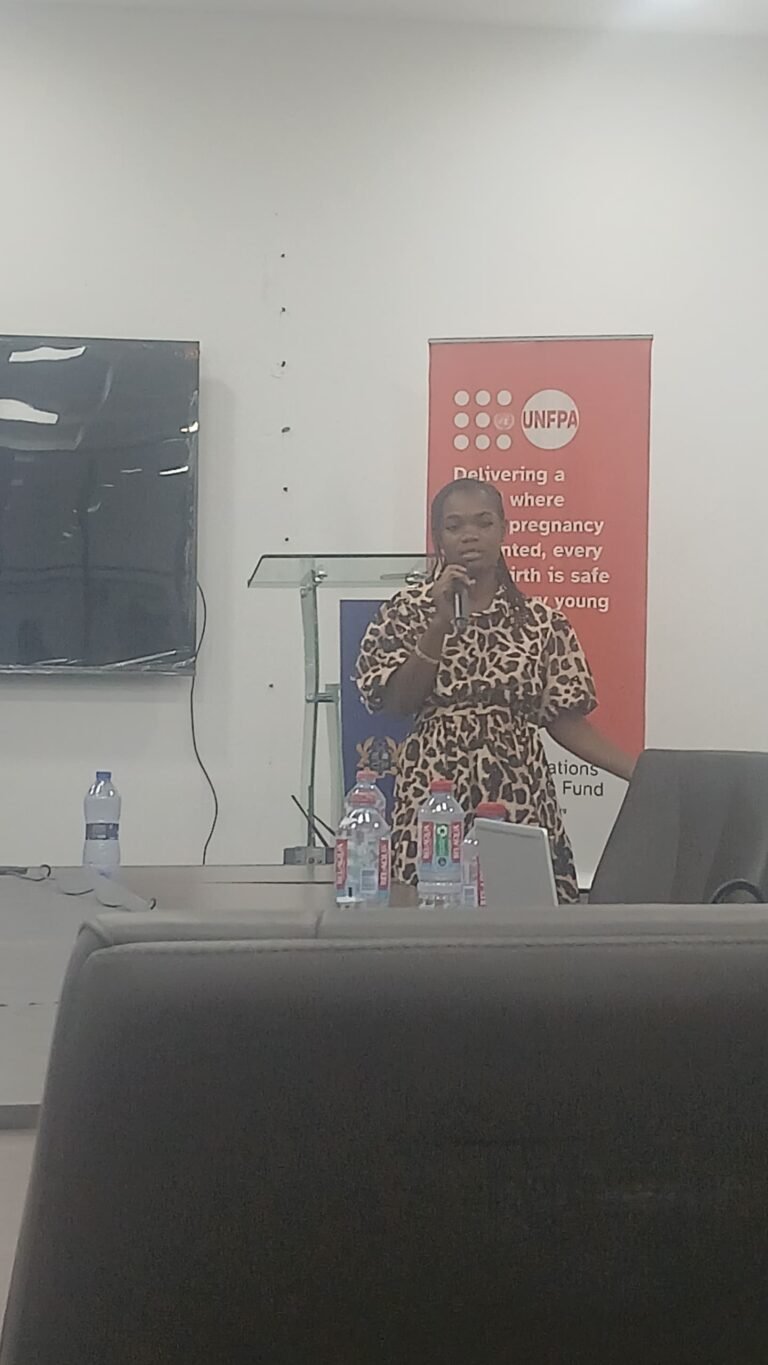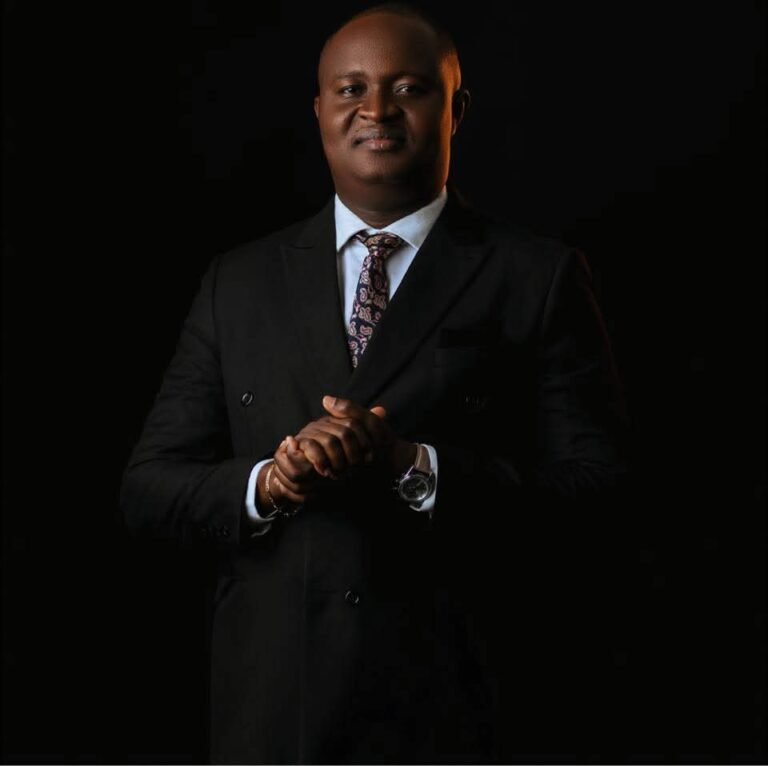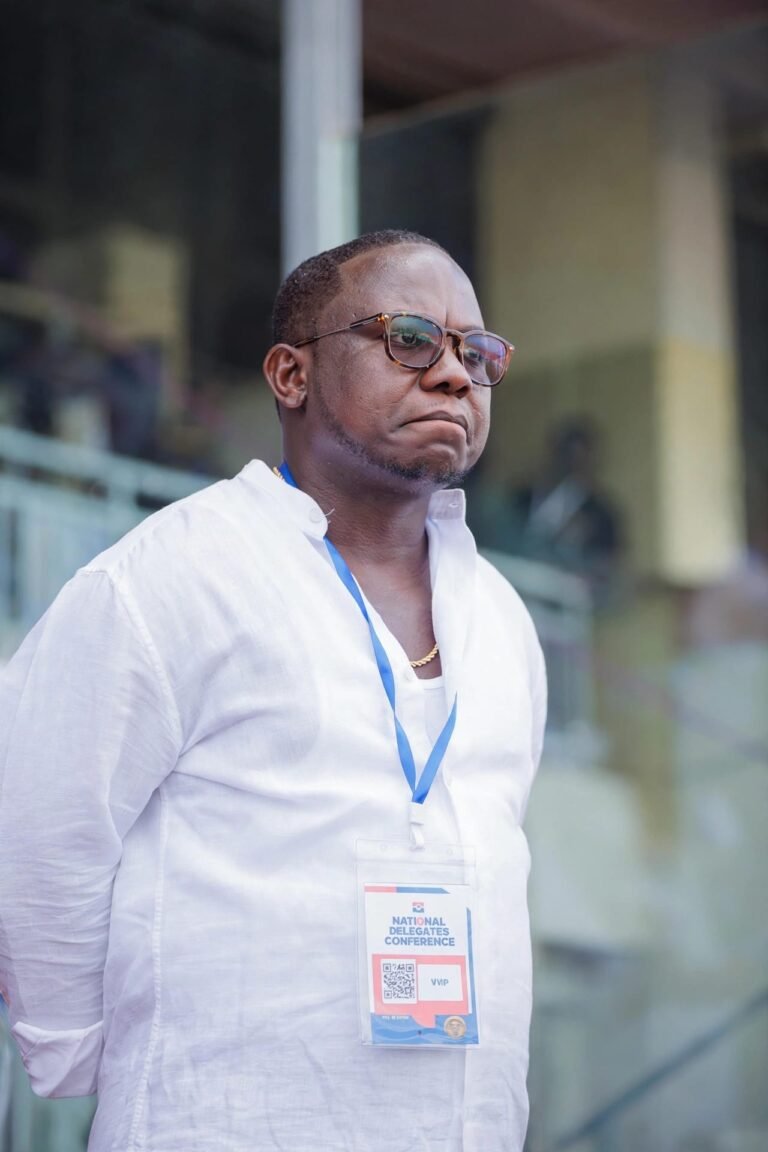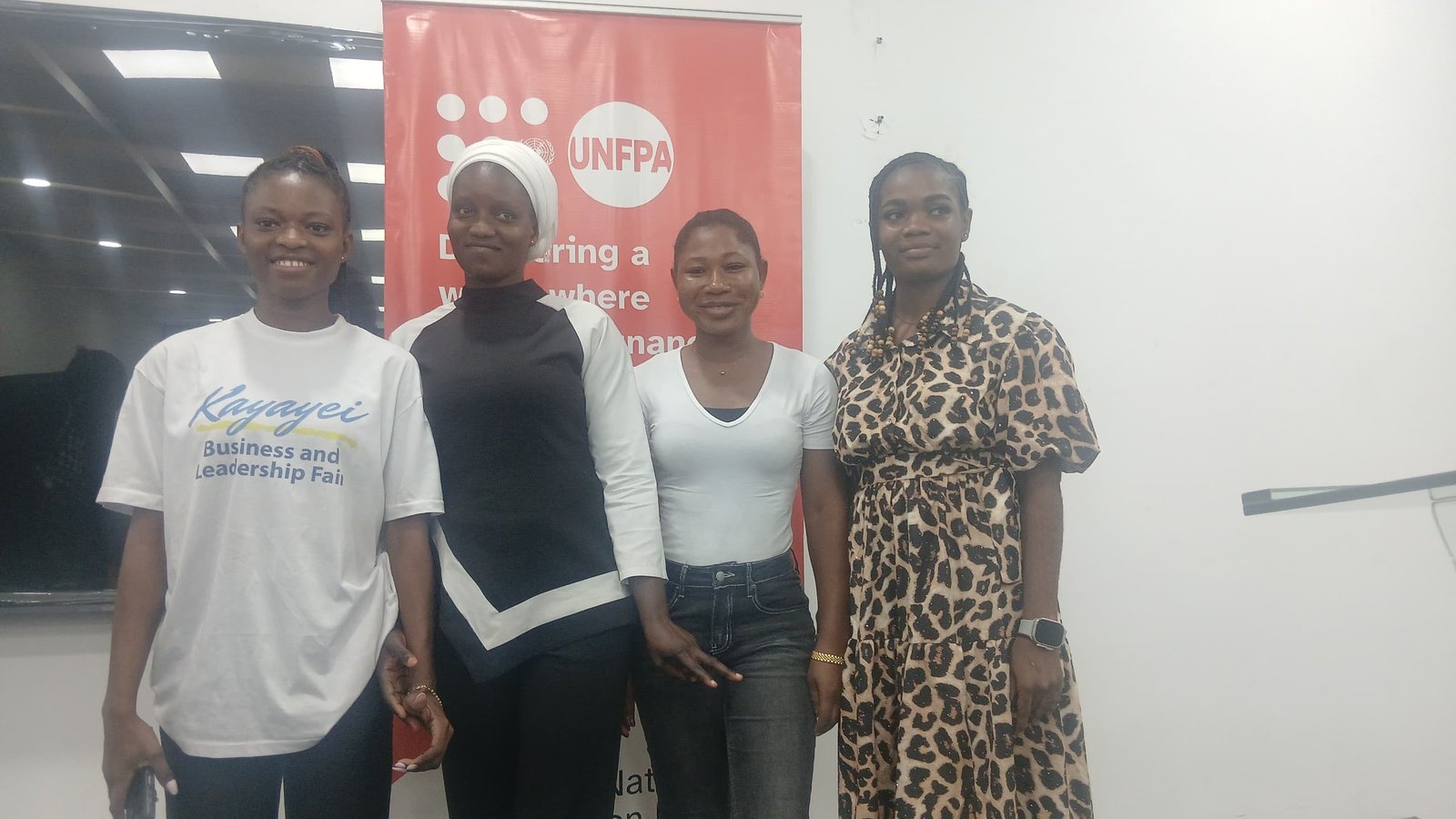
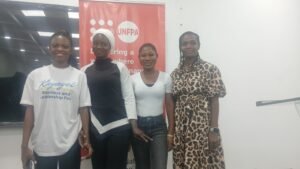
UNFPA programme beneficiaries from Left to Right: Bazaara Serinye Priscilla, Salah Abudu, Manuri Victoria, and Martha Allottey
By Bright Philip Donkor
Four young women whose lives have been shaped by interventions supported by the United Nations Population Fund (UNFPA) in Ghana have recounted how the programmes helped them overcome personal challenges, return to education, acquire employable skills and pursue ambitions they once thought were beyond their reach.
Their stories, shaped by experiences of abuse, dropping out of school, teenage pregnancy, homelessness and financial hardship, show how support from the UNFPA programmes has helped them overcome personal challenges, return to education, acquire practical skills and pursue opportunities to improve their lives.
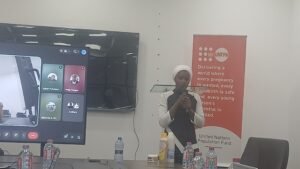
The beneficiaries, Martha Allotey, Bazaara Serinye Priscilla, Manuri Victoria and Salah Abudu, shared their experiences with the Daily Statesman during a one-day capacity-building workshop on UNFPA Country Programme Reporting and Development Communication in Accra.
The workshop, held on Thursday, November 5, 2026, at Conference Room C, 7th Floor, Tower 1, Ministry of Finance, was organised by the Media and Communication Advocacy Network (MCAN) in collaboration with UNFPA.
It brought together media practitioners to strengthen reporting on the UNFPA Ghana Country Programme, with particular attention to documenting the experiences of beneficiaries and the impact of interventions in communities.
The four accounts highlighted how access to information, skills training, mentorship, educational support and career guidance had helped the beneficiaries make different choices about their lives and futures.
Martha Allotey finds her voice, builds a career in fashion
For Martha Allotey, her participation in the UNFPA Adolescent Girls Programme (AGP) gave her something she previously lacked: the confidence to speak up for herself and stand against situations she considered unfair.
Adolescent Girls Programme (AGP) in Ghana is a joint initiative funded and supported by Global Affairs Canada and implemented by UNFPA Ghana and UNICEF Ghana.
She said the education and guidance she received through the programme helped her understand her rights and gave her the courage to challenge the treatment she was receiving at home.
With this new understanding, she reported her uncle to the head of her family so the matter could be addressed.
But the programme’s impact on her life went beyond helping her stand up for herself.
Allotey said she was also given an opportunity to participate in the Ambassador for a Day (AfD) competition, an annual leadership and mentoring initiative for young women aged 18 to 24.
She wrote an essay for the competition and was subsequently selected to serve as an ambassador for a day for the Norwegian Ambassador.
Her involvement with UNFPA and the Participatory Approach to Youth Development Programme (PAYDP) also opened another door, allowing her to pursue her interest in fashion.
Through the support she received, she secured a scholarship to study at the Starts Fashion Institute, where she has since graduated.Allotey said she was now working from home, using the skills she had acquired to build a career in fashion.
She attributed her progress to the opportunities provided through the programmes, which she said had helped her gain confidence, understand her rights and acquire practical skills to become economically independent.
Priscilla moves from homelessness to pursuing a law degree
For Bazaara Serinye Priscilla, the road to pursuing her dream of becoming a lawyer has been marked by loss, uncertainty and difficult living conditions.
She recounted that she had to discontinue her education and move in with her sister, who was an apprentice at the time. To support herself, she took up work as a salesgirl in the market.
She later became pregnant but lost her baby just days before her expected delivery.
Following the loss, she returned to her mother’s home, where she learnt about an organisation supporting out-of-school girls. Her mother encouraged her to register, although she was initially reluctant to join the programme.
When she eventually attended, she met one of her former teachers, who encouraged her to return to school after recognising her academic potential.Priscilla said she subsequently resumed her education but later travelled to Accra to look for work and raise money to support her ambitions.
Life in the capital, however, was not easy. She said she struggled to find accommodation and, at one point, had to sleep at the market before a woman offered her a place to stay temporarily.
The arrangement later became uncomfortable when she discovered that the woman wanted to involve her in activities she was not willing to undertake.
She said the experience made her reconsider her situation and look for a way to return home and rebuild her life.
Her next opportunity came when a friend invited her to an adolescent sexual and reproductive health programme. At the event, she reconnected with a PAYDP representative she had previously met during some workshops.
The representative asked about her ambitions, and Priscilla expressed an interest in cosmetology.
That engagement eventually led to further opportunities, including participation in the Chief Justice Mentorship Programme.
She said the mentorship programme exposed her to new possibilities and inspired her to consider a career in law.
“I met PAYDP at first, and they were working with UNFPA, and through them we went for some Chief Justice mentoring programmes, and I was empowered. So I chose to do law,” she said.
Priscilla disclosed that she was preparing to begin her Bachelor of Laws (LLB) programme at the Ghana Institute of Management and Public Administration (GIMPA) in February next year. She said becoming a lawyer remained her biggest dream.
Drawing from her experiences, she urged girls, particularly those living on the streets and facing difficult circumstances, not to be afraid to speak about their ambitions and the support they need.
“Sometimes we go out to preach to some of the ladies on the street, especially the girls. So I would like everyone to be bold in communicating with us about what they want to do, how we can help, and then we take it from there. My biggest dream is to become a lawyer,” she said.
Victoria moves from kayayei work to university admission
Manuri Victoria’s story is one of how an opportunity to learn about her rights eventually set her on the path back to the classroom.
A beneficiary of the UNFPA Global Programme to End Child Marriage in Ghana, Victoria said she moved to Accra with her aunt at the age of 10 and worked as a kayayei (head porter) at Agbogbloshie while trying to pursue her education.
Her situation became more difficult following the death of her aunt in 2018. She said her aunt’s husband subsequently withdrew his support, leaving her to fend for herself through strenuous work and under difficult living conditions.
Her encounter with the UNFPA-supported programme in 2020 marked a turning point.
Victoria said she came across facilitators educating girls on human rights and the need to end child marriage. She became interested in their discussions and continued listening to their presentations.
She later learnt about an opportunity for girls interested in acquiring vocational skills and decided to approach one of the facilitators.
“I realised that people were being paid to teach girls about human rights and ending child marriage, so I sat there listening to them. They later told us about another programme for girls who wanted to learn a trade. I thought to myself that since I had nothing doing, I might as well join,” she said.
Through the programme, she received skills training and learnt to produce items including hand sanitiser.
The training also covered health, gender-based violence, child marriage and other issues affecting girls. Officers from the Department of Gender also engaged the participants on their rights.
Victoria said the lessons helped her understand issues she had previously known little about and gave her the confidence to speak about her circumstances.
“I was empowered. I thought to myself, if only I had known all these things earlier, I could have gone back and spoken to my mother about my situation,” she recounted.
With that new confidence, she approached one of the facilitators and disclosed that she wanted to return to school.
Although she had previously written her examinations, she wanted to rewrite them to improve her results but did not have the money to register.
She said the facilitator encouraged her to study and provided financial assistance for her examination registration.
“I told her that I wanted to go back to school, but I did not have the money. She told me not to worry and that I should just go through the books and prepare. They helped me with the money, so I got the forms, registered and went back to write the examinations. This time, I passed all the subjects,” she said.
Passing the examinations brought her closer to her educational ambition, but paying for university remained another challenge.
Victoria said her father, who had been the family’s breadwinner, was no longer alive, while her mother was also ill and unable to support her education.
She therefore returned to the programme facilitators and explained her situation.
They encouraged her to apply to university and assured her of support. Following their advice, she purchased application forms for the University of Ghana and the University of Health and Allied Sciences (UHAS).
She was subsequently offered admission to study Biological Science at the University of Ghana and Medical Laboratory Science at UHAS.
However, she said she was initially confused about which programme to choose because she had little knowledge of the two courses.
“I was confused about which one to go for because I did not know much about Biological Science or what they did. Honestly, if you had asked me at the time what I wanted to become in the future, I would not have been able to tell you because I did not know what I wanted to do. I only knew that I wanted to go to school,” she said.
The facilitators arranged guidance and counselling to help her understand the courses and decide which one best suited her.
She eventually chose Medical Laboratory Science at UHAS.Victoria said the programme supported her in pursuing her admission, while some family members helped with her feeding and accommodation.
She said the support had given her the opportunity to pursue higher education and a future she once struggled to imagine.
Abudu turns livelihood training into a university education
Salah Abudu also credited the UNFPA Global Programme to End Child Marriage in Ghana with helping her return to school and broaden her educational ambitions.
She said she was facing several challenges before joining the programme, which exposed her to training in livelihood skills, Sexual and Gender-Based Violence (SGBV), legal literacy and Sexual and Reproductive Health (SRH).
Through the livelihood training, she learnt to produce shower gel and hair and body products, skills she could use to develop an income-generating activity.
She said the SRH sessions also gave her the confidence to have informed conversations about her sexuality, while the other training activities helped her understand issues affecting girls and reconsider her educational future.
Returning to school, however, was not straightforward. Abudu said she had been out of the classroom for some time and needed financial support to continue her education.
She also faced pressure in her community, where girls who did not perform well academically were often expected to get married.
Despite the challenges, she said she remained determined to complete her education.
“I had to be determined. I was able to go through my education successfully, and when I came back, I was still working to raise some money to further my education,” she recounted.
Even after completing that stage of her education, Abudu maintained her relationship with UNFPA and continued participating in activities under the Global Programme in her community.
One such activity was the Girls’ Talk Show, which brought beneficiaries together to share their experiences.
She was selected to participate, and the engagement provided an opportunity for programme officials to learn about her educational progress and encourage her to pursue further studies.
At the time, Abudu said she had her mind set on attending a nursing training college.
Her interest was largely influenced by the nursing uniforms worn by some of her former schoolmates, whom she admired.
She acknowledged, however, that she did not have the career guidance needed to explore other educational and professional opportunities.
“I didn’t really receive the career guidance I needed to help me decide what to pursue. All I kept saying was that I wanted to wear green and go to nursing training college because, back home, all my colleagues were wearing green,” she said.
She said the people around her encouraged her to consider university education, pointing out that she had performed well enough to pursue a degree.
“They were telling me that I had done well and could go to the university, so why did I want to go to a nursing training college?” she recalled.
The encouragement influenced her decision to apply to the University of Ghana, where she is now pursuing a Bachelor of Science degree in Public Health.
A common thread of opportunity
Although the four women faced different challenges, their accounts point to a common experience: the difference that access to information, guidance and practical support can make in the lives of vulnerable girls.
For Allotey, it was the confidence to speak up and the opportunity to train in fashion. For Priscilla, mentorship helped her discover a new ambition in law. Victoria found a pathway back to school and secured admission to UHAS, while Abudu received the encouragement to pursue a university degree rather than limit herself to the career path she initially had in mind.
About The Author