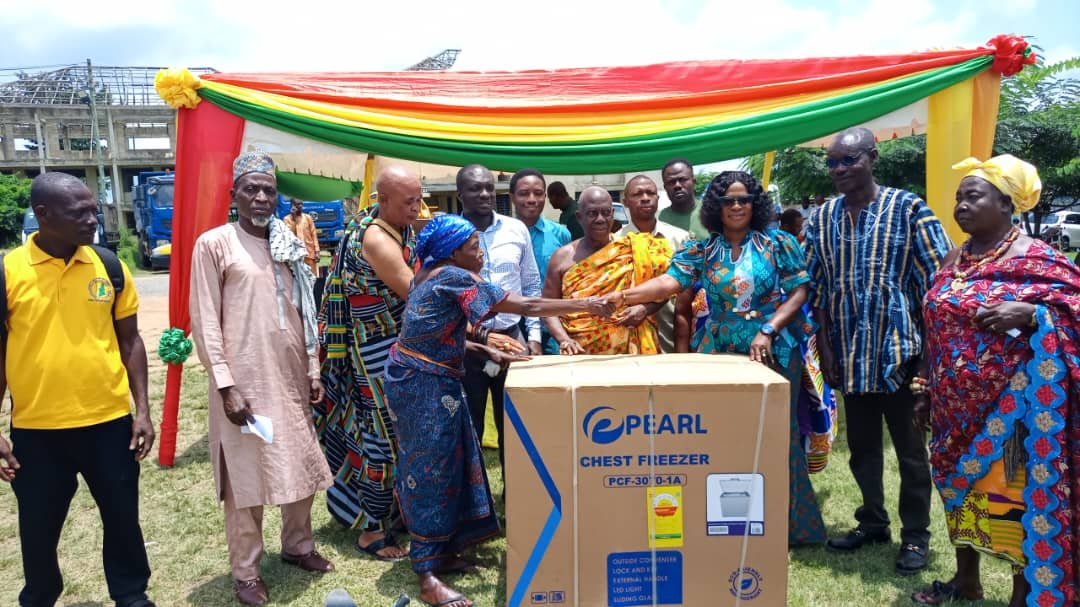
The Akyemansa District Assembly in the Eastern Region has supported more than 200 Persons with Disabilities (PWDs) with start-up kits to establish and expand livelihoods.
The intervention, funded through the Persons with Disabilities Common Fund, forms part of efforts to create economic opportunities, reduce poverty and improve livelihoods.
In addition to the start-up kits, 20 other beneficiaries received entrepreneurship training and seed capital to help them establish and grow sustainable businesses.
The support included spraying machines, shoemaking machines, baking ovens, deep freezers, wheelchairs, laptops, sewing machines and other equipment for various income-generating activities.
Intervention
The District Chief Executive (DCE), Linda Ahenkorah, said the intervention was the second batch of disability support since she assumed office, with preparations already underway for a third batch.
She said the Assembly was committed to empowering PWDs to become economically independent.
“Disability is not inability. Being disabled does not mean the end of one’s life,” she said.
Madam Ahenkorah urged the beneficiaries to make good use of the items and support provided, saying the initiative would help increase household incomes, improve economic well-being and discourage street begging.
The Akyemansa District Director of Social Development, Eric Ntim, cautioned beneficiaries against selling the items provided to them, stressing that such actions would defeat the purpose of the intervention.
He also urged families not to take over the items or engage in disputes with beneficiaries over their use.
Beneficiaries
Mr. Ntim said beneficiaries should have a say in determining how best the items could be used to support their livelihoods.
He assured them of his outfit’s willingness to explore additional support with stakeholders.
The Assembly also provided GH¢77,000 in additional support, comprising GH¢18,000 for healthcare, GH¢5,000 for education and GH¢54,000 to support businesses and livelihoods.
The Akyemansa District Coordinating Director, Samuel Kwasi Kittah, said the Assembly had complemented the intervention with entrepreneurship training, including bead-making, and seed capital.
He said the training and financial support would equip beneficiaries with practical skills and resources.
According to him, the initiative would strengthen the economic independence of PWDs, improve their incomes and promote inclusive development across the district.
The DCE said the various interventions reflected the Assembly’s commitment to ensuring that disability support translated into practical economic empowerment.
She encouraged beneficiaries to take the opportunity seriously and apply the skills acquired during the training to their businesses and communities.
About The Author