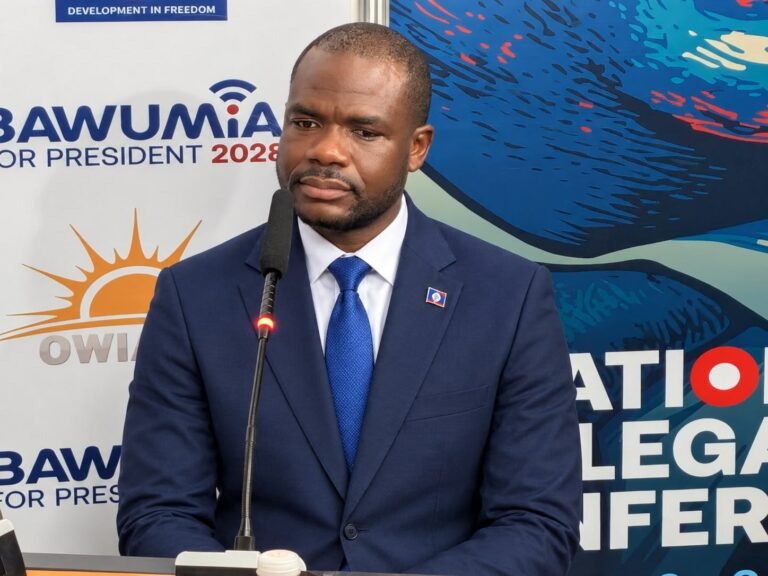
The Fisheries Commission, through research and trials, has identified an alternative fish feed formulation that can be prepared using locally available feed ingredients. This was unveiled by Dr. Lawrence Armah Ahiah, Director of the Fisheries Scientific Survey Division of the Fisheries Commission, at a stakeholders’ meeting held at NODA Hotel in Kumasi on Wednesday, October 15, 2025.
In his presentation to Regional Directors, Centre and Station Managers, Zonal Officers, regulatory institutions (EPA, WRC), academia, researchers, the Fish Farmers Association, and the media, Dr. Ahiah indicated that the research, which began in 2024, was completed in April 2025, and the report is now ready to be shared with stakeholders and the general public.

Through a PowerPoint presentation, Dr. Ahiah explained that formulated aquafeeds play a crucial role in promoting and sustaining the expansion of aquaculture. Fish feed typically accounts for 60–70% of production costs in the aquaculture industry. Despite the remarkable increase in aquaculture production in Ghana over the last decade, the industry still faces several challenges, including the availability of quality, low-cost formulated fish feeds. The high cost of fish feed has been largely due to the overreliance on imported feed ingredients by local fish feed manufacturing companies. Furthermore, the unstable exchange rate of the local currency against the US dollar and high import taxes have resulted in price instability, which continues to negatively affect the aquaculture sector.
 To alleviate the burden of high feed costs on fish farmers, several studies conducted on tilapia nutrition using locally available ingredients were assessed, and three of them were selected for trials on Oreochromis niloticus (Nile tilapia) in hapas, tarpaulin tanks, and cages.
Stakeholders were taken through the process — from the formulation of the three different fish feeds to the trials conducted on tilapia cultured in hapas, tarpaulin tanks, and cages for 126 days. The main objective of the study was to identify a nutritionally balanced fish feed formulation that has a low Feed Conversion Ratio (FCR), induces faster growth, and is cost-effective and affordable.
 Dr. Ahiah and his team of researchers concluded that while all three formulations supported fish growth, one formulation clearly emerged as the best-performing feed, yielding the highest profit index across all culture systems (hapas, tarpaulin tanks, and cages). This particular formulation was over 30% cheaper than the commercial fish feed used as a control during the experiment.
The team recommended that the identified formulation be made available to fish farmers for piloting on a commercial scale for validation and adoption as a national on-farm fish feed formulation for the aquaculture industry in Ghana.
 Prof. Berchie Asiedu, Deputy Executive Director of the Fisheries Commission, expressed his gratitude to the team of researchers, the Ghana Aquaculture Association, the Veterinarian Institute of Norway, and the Norwegian Government for supporting this research through the Fish for Development Project.
About The Author