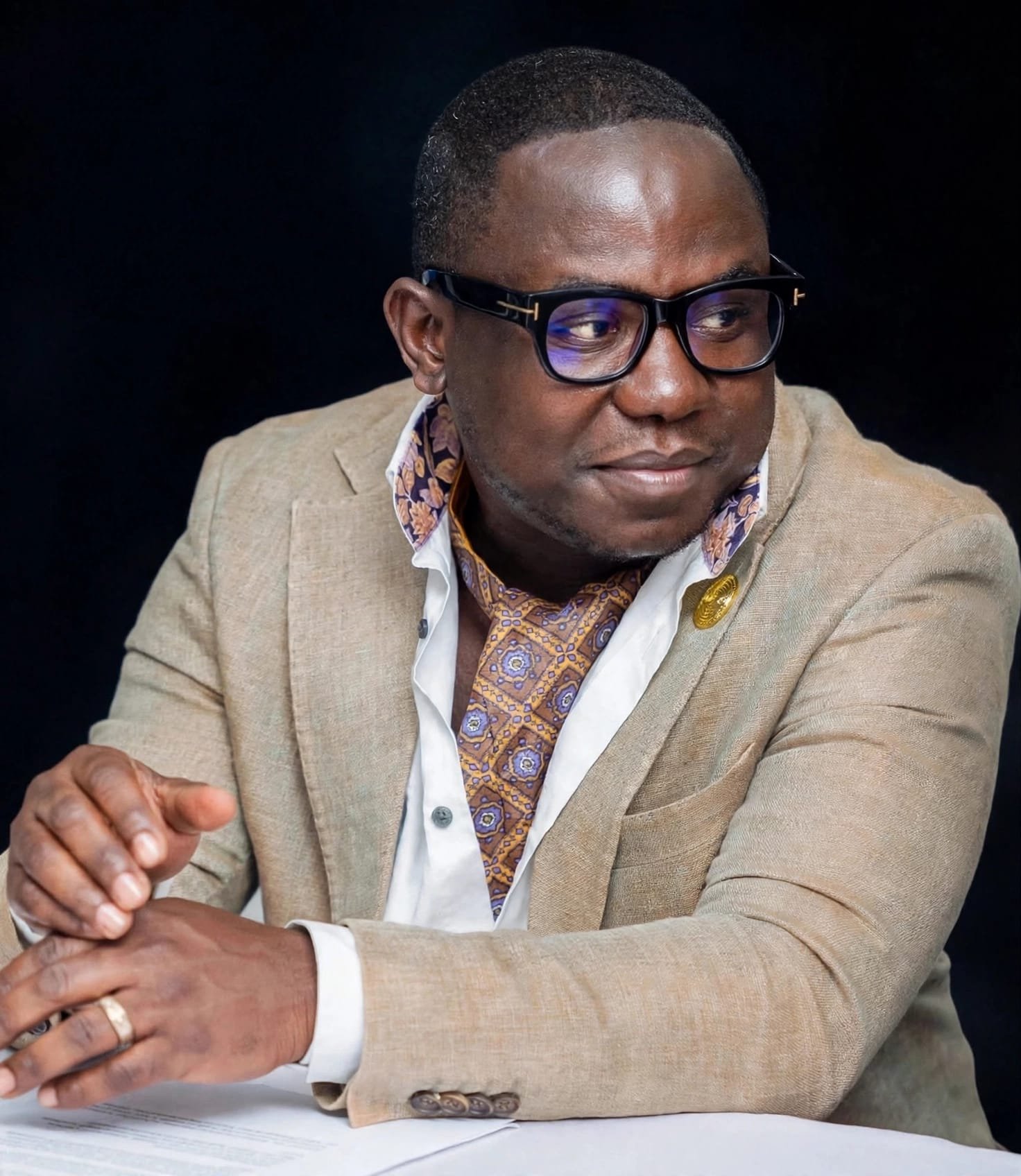
By Prince Adjei – Guy Gee
On Sunday, November 15, 2026, at the NYC Hotel in Manso Akwasiso, Ashanti Region, Ghana — owned by Kwaku Abonee, popularly known as Great Osama — Davido headlined “The Davido Experience” for the hotel’s 3rd Anniversary, with a reported duration of between 19 and 22 minutes for an alleged fee of around $600,000, about GH¢7 million.
This is not an accusation. It is a question. And in a country where ordinary Ghanaians pay tax on every cedi they earn, it is a fair question to ask.
If Davido was indeed paid $600,000 to perform for 19 to 22 minutes in Manso, how much tax was paid on that money?
And to whom?
The Night That Shocked Manso
The night was supposed to be historic. Great Osama had promised Manso the biggest night in the town’s history. Davido, the Nigerian Afrobeats superstar, had just performed at Tidal Rave in Accra. Now he was coming to Manso Akwasiso.
Fans paid for entry, with some reports putting regular tickets at GH¢500 and tables as high as GH¢80,000. The crowd was packed. Davido came on stage, performed hits like “Dami Duro” and “Aye,” and then he was gone.
Videos from the night show Great Osama visibly frustrated, confronting members of Davido’s team near the gate, complaining: “Just 19 minutes!”
Osama later said he had no regrets, that he promised to bring Davido and he fulfilled that promise. But he also said he could sell his house to repay a loan if he made a loss.
The fans were disappointed. The organizer was frustrated. And Ghana was left asking: Was $600,000 too much for 19 minutes?
Yet Davido reportedly suggests that $600,000 was too little for his Manso performance.
Too little? For 19 minutes?
If $600,000 is “too little,” then Ghanaians have a right to ask a second question: If the fee was that big, where is the tax?
What The Law Says
Under Ghanaian tax law, a non-resident artiste who performs in Ghana is generally subject to withholding tax on income earned in Ghana. The organizer is often required to withhold that tax before paying the artiste, and remit it to the Ghana Revenue Authority (GRA).
So, the real questions are:
1. Was the $600,000 fee ever confirmed, and was it paid in full — in cash, by bank transfer, or through middlemen?
2. Who actually received the money? Osama has now said: “The only person who took the money was Tokyo.” Others had earlier named Showboy and Ascona Money as middlemen. Who was paid what?
3. Was withholding tax deducted in Ghana before the money left the country?
4. Was the income declared in Nigeria, and was tax paid there?
5. If any part of Davido’s income falls under US tax jurisdiction, was it also declared to the IRS?
These are not insulting. They are accountability questions that apply to every artiste, Ghanaian or foreign, who performs and gets paid in Ghana.
Why This Matters To Ordinary Ghanaians?
A market woman in Kumasi pays tax. A trotro driver in Accra pays tax. A teacher in Manso has tax deducted from her salary before she even sees it.
Why should a superstar who allegedly earns $600,000 in 19 minutes be exempt from the same scrutiny?
$600,000 in 19 minutes is about $31,578 per minute. About $526 per second.
If that money left Ghana without tax, then Ghana lost twice. First, the community lost money that could have helped build roads, a clinic, or a school in Manso. Second, the state lost revenue that could have served the whole country.
This is not about hating Davido. Ghanaians love Davido’s music. He filled Tidal Rave. He filled Manso.
This is about fairness. The law must work for the small man and the big star alike.
The Middlemen Problem
Great Osama himself has raised the issue of middlemen. He first blamed Showboy and Ascona, then later said only only Tokyo took the money.
This confusion is exactly why the tax authorities must look into the matter. When a $600,000 deal is done through middlemen, through cash, through informal channels, with no clear contract made public, it becomes easy for money to disappear, for tax to be evaded, and for the organizer to be cheated.
If there was a written contract, let it be shown. If there was a payment receipt, let it be shown. If tax was withheld, let the GRA confirm it.
Transparency will protect Davido. Transparency will protect Osama. Transparency will protect the fans.
Our Open Letter to The Authorities
To the Ghana Revenue Authority (GRA):
Was tax withheld and paid on the alleged $600,000 fee for Davido’s performance at Manso Akwasiso on November 15, 2026? If yes, how much? If no, why not, and what action will be taken?
To the Federal Inland Revenue Service (FIRS) of Nigeria:
Was this income declared by the artiste as part of his earnings?
To the IRS of the United States (if applicable):
If any part of this income falls under US tax jurisdiction, was it declared?
To Davido and his management:
Did you receive $600,000? If you say it was “too little,” then tell Ghanaians what was agreed, what was paid, and what tax was paid. Clear the air.
To Great Osama and the organizers:
Show the contract. Show the payment proof. Ghanaians stood with you when you were disappointed. Stand with Ghanaians now by showing the truth.
Conclusion: 19 Minutes, $600,000, And A Nation Watching
Davido came, sang, and left. Manso is still there. Great Osama is still there. The fans are still there.
But the questions remain.
Was $600,000 paid? Was $600,000 too little? Was $600,000 too much? And most importantly, how much tax was paid on it?
In Ghana, we say: “Sika no ashe” — the money is gone.
Let us make sure that next time a superstar comes to Ghana and is paid millions, the money does not just vanish in 19 minutes without the nation getting its fair share.
That is not witch-hunting. That is patriotism. That is accountability.
About The Author