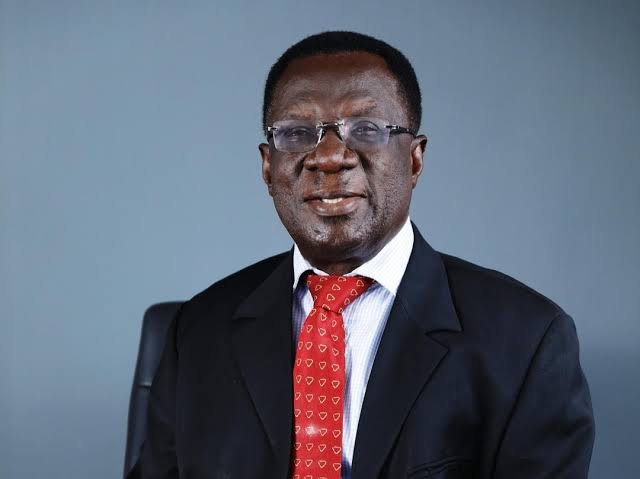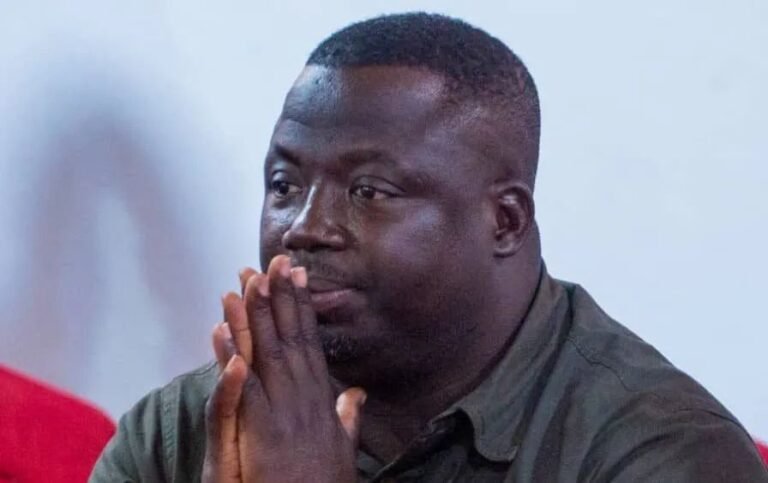
Dr. Frank Bannor, a Director of IERPP
The Institute of Economic Research and Public Policy (IERPP) has questioned why Ghana’s energy sector recorded a US$1.4 billion financial shortfall in 2025 despite a cumulative electricity tariff increase of about 40 percent since March 2025, citing findings contained in the International Monetary Fund’s July 2026 Selected Issues paper on Ghana.
In a press statement signed and issued in Accra yesterday, Dr. Frank Bannor, a Director of IERPP, said the IMF’s own data showed that consumers had paid significantly higher electricity tariffs, yet the sector remained deeply distressed.
“Government told the country that higher tariffs were the price of fixing the energy sector. The IMF’s own numbers show the sector is no closer to being fixed. IERPP is asking a simple question: if households and businesses are paying more, where is the money going?” Dr. Bannor stated.
Confirmation of shortfall
According to him, the IMF Country Report No. 26/213 confirmed that the sector shortfall stood at US$1.4 billion, representing 1.2 percent of GDP in 2025, only slightly lower than US$1.6 billion, or 1.4 percent of GDP, in 2024.
Dr. Bannor said the IMF was explicit that the limited improvement was “driven primarily by improved macroeconomic conditions and a stronger cedi … rather than by structural improvements in the sector’s operational or collection performance.”
“In plain terms, a favourable exchange rate bailed the sector out, not government reform,” he said.
He further noted that outstanding payables to power producers and fuel suppliers stood at US$1.7 billion, or 1.5 percent of GDP, at the end of 2025, after peaking at US$2.2 billion, or 1.9 percent of GDP, in early 2025.
Operational inefficiencies
Dr. Bannor also pointed to persistent operational inefficiencies, saying electricity distribution losses remained at 27 percent, while the collection rate on billed electricity was only 86 percent in 2024.
He stressed that unpaid electricity bills from Ministries, Departments and Agencies (MDAs) accounted for about 16 percent of total sector arrears at the end of 2025.
“The IMF report captures a damning verdict: government’s own ministries and agencies are responsible for roughly one in every six cedis of unpaid electricity bills in the sector. This is not a market failure, an exchange-rate shock, or a global gas price problem. It is the government failing to pay its own bills, while asking ordinary Ghanaians to pay 40 percent more for theirs,” Dr. Bannor said.
While acknowledging that part of the sector’s financial crisis had been inherited, Dr. Bannor argued that the current administration had already had a full year in office to implement meaningful reforms.
“The harder reforms, which include cutting distribution losses, enforcing collection from government’s own agencies, and private-sector participation (PSP), have moved far more slowly,” he said.
Private-sector participation
He added that the IMF noted that the transaction advisor required to operationalise private-sector participation in electricity distribution had still not been appointed as of the report, despite the adoption of a framework.
“A framework was adopted; nothing has actually changed on the ground,” Dr. Bannor said.
According to him, the IMF identified three structural gaps that continue to undermine the sector: tariffs that do not cover costs, distribution losses that shrink the revenue base, and incomplete bill collection.
“Tariff increases only address the first. Without matching progress on the other two, which is squarely within government’s control, every future tariff hike will be absorbed by the same leaks, and consumers will be asked to pay again for a problem government has failed to solve,” he argued.
Series of immediate measures
Dr. Bannor called for a series of immediate measures, including a binding and published deadline for appointing the PSP transaction advisor for ECG, enforcement action to recover unpaid MDA electricity bills, an independent audit of ECG and NEDCo distribution losses, and greater transparency in official communication regarding the true sources of any sector improvements.
He insisted that exchange-rate gains should not be presented as evidence of successful energy sector reforms unless accompanied by operational and collection performance data.
Dr. Bannor further indicated “Ghanaians are paying more for electricity due to government’s failure to implement the much-needed reforms in the energy sector”.
“IERPP’s review of the IMF’s own findings shows the government is not yet getting the energy sector any closer to being fixed. Government owes the country a transparent account of where the money from these tariff increases has gone,” he added.
About The Author