By Isabella Agyakwa
The Institute for Fiscal Studies (IFS) is calling on the government to establish a Rice Development Board (RDB) to spearhead strategic interventions in Ghana’s rice sector, in a bid to reduce the country’s growing dependence on rice imports and transform it into a net exporter.
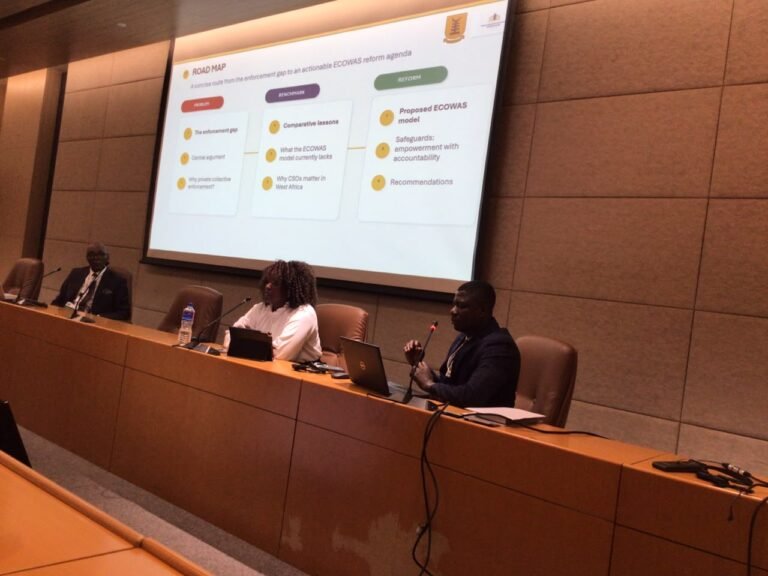
The recommendation was made during the launch of an IFS report titled “Increasing Importation of Rice in Ghana: Can the Country Transform its Fortunes in the Rice Sector?” presented by Dr. Said Boakye, Acting Executive Director of IFS.
According to the report, the proposed Rice Development Board would coordinate all government support for the rice sector, covering the entire value chain from production and harvesting to milling, storage, and distribution.
“The RDB should be well-equipped, both financially and technically, to handle interventions such as the provision of certified seeds, fertilizers, irrigation facilities, mechanised farming equipment, and access to land,” Dr. Boakye stated.
He urged that the Board be modelled on best practices from countries like Vietnam and Thailand, where targeted public interventions have significantly boosted rice output and export earnings.
The report highlights Ghana’s deepening reliance on rice imports, with 2024/2025 import projections expected to hit 950,000 tonnes, further widening the domestic supply gap.
In 2024 alone, Ghana spent GHC1.98billion on semi-milled or wholly milled rice, and an additional GHC1.07 billion on broken rice. Rice remains one of the largest components of the national food import bill.
The Ministry of Food and Agriculture estimates that per capita rice consumption had risen sharply from 12.4kg in 1980 to over 61kg in 2022, far outpacing local production capacity.
Poor productivity
Dr. Boakye attributed the underperformance of the sector to a lack of direct government involvement, contrasting Ghana’s approach with that of Vietnam and Thailand, where governments have played an active role in stimulating rice production.
“Unlike those countries, Ghana has confined itself to creating an enabling environment and expected the private sector to handle everything else. This has failed. To transform the sector, government must directly address key bottlenecks,” Dr. Boakye said.
He cited low fertiliser application, ineffective seed systems, limited mechanization, and inadequate irrigation infrastructure limiting the sector. These are further compounded by restrictive land tenure arrangements.
Ghana’s average rice yield ranges between 1.1 to 3.3 metric tonnes per hectare, compared to about 6 tonnes per hectare in Vietnam.
A critical bottleneck identified is the collapse of the domestic seed industry, which followed the privatisation of seed production and marketing in 1989 under the Structural Adjustment Programme (SAP). The dismantling of the Ghana Seed Company left seed supply entirely in the hands of private actors, but without effective public oversight.
“The intention was to make the private sector more efficient in seed supply, but the outcome has been the opposite,” Dr. Boakye noted.
As a result, only three percent of rice farmers currently use certified seeds in Ghana, compared to over 80 percent in Vietnam, where a coordinated public-private model ensures access to high-quality seeds.
Land tenure, irrigation and mechanisation
The report also flagged land access as a key challenge, with traditional land tenure systems making it difficult and expensive for farmers to secure long-term leases for commercial rice farming.
“Without reforming land allocation and ownership, Ghana cannot scale production to meet national demand,” Dr. Boakye warned.
Only 10 percent of rice farms in Ghana are irrigated, leaving the majority vulnerable to erratic rainfall patterns. Mechanisation is also minimal, with most farmers relying on manual tools, significantly lowering productivity.
By contrast, countries like Vietnam have mechanised nearly the entire rice production process, contributing to their high yields and global competitiveness.
A role for RDB
The IFS recommends that the proposed Rice Development Board work closely with the Ghana Irrigation Development Authority (GIDA) to develop irrigation systems across the 1.9 million hectares of land identified as suitable for irrigated rice farming.
On mechanisation, the Board should support entire farming processes, not just land preparation, but also fertiliser and pesticide application, weeding, harvesting, milling, and storage.
To achieve this, Dr. Boakye said government should provide tax incentives and subsidies for importing new and used machinery, while also investing in local production of rice-farming machines.
“Through the RDB, government should either establish entities to produce rice farming machines suited to local conditions or partner with private firms such as Kantanka Automobile to manufacture the equipment domestically,” he added.
The IFS believes that a well-structured, well-resourced Rice Development Board could provide the institutional backbone needed to modernise Ghana’s rice sector, reduce imports, and build the capacity to export.
“Ghana has the potential to become a major rice producer and exporter. But without bold government intervention, this potential will remain unrealised,” Dr. Boakye emphasised.
About The Author