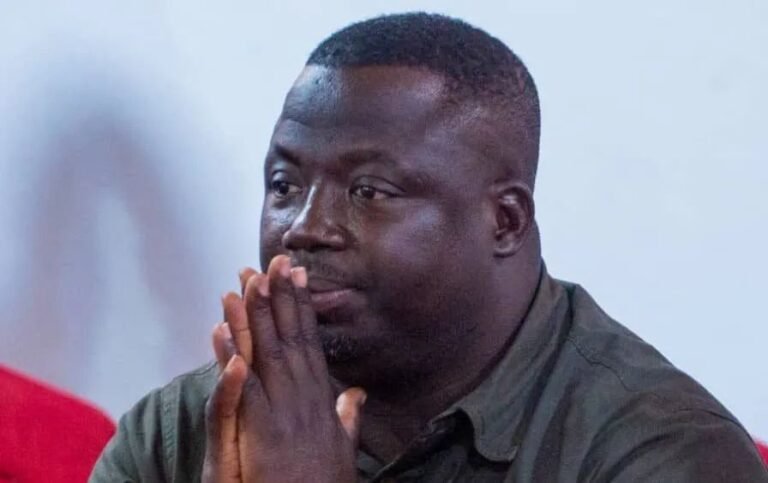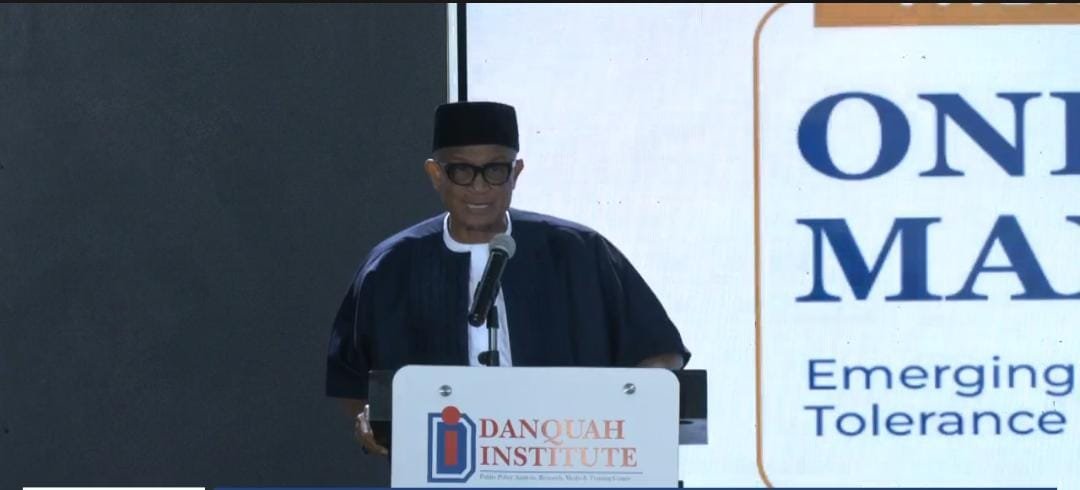
Islamic scholar, academic, politician and former Minister of State, Shaykh Dr. Mustapha Abdul-Hamid
Islamic scholar, academic, politician and former Minister of State, Shaykh Dr. Mustapha Abdul-Hamid, has dismissed suggestions that Ghanaian Muslims have a grand agenda to Islamise the country, saying the political choices of Muslims do not support claims of a coordinated religious project.
He said this during the 2026 Liberty Lecture Series of the Danquah Institute at Alisa Hotel on Tuesday, August 25, 2026, under the theme “One Nation, Many Faiths: Emerging Threats to Religious Tolerance in Ghana.
According to Abdul-Hamid, political actors had taken advantage of developments in the previous two weeks to create fear around the prospect of a Muslim becoming President of Ghana, including suggestions that such an outcome could trigger Islamisation and plunge the country into religious conflict similar to what has happened in Nigeria.
“Political mischief makers took advantage of the happenings of the last two weeks to poison the atmosphere and to suggest that voting for a Muslim president would trigger the Islamization of Ghana and set the country aflame, as has happened in Nigeria,” Abdul-Hamid said.
He said the 2024 presidential election provided the clearest evidence against the existence of such an agenda because Muslims did not rally wholesale behind the Muslim candidate, Dr. Mahamudu Bawumia, despite his candidacy providing what would have been a major opportunity for any supposed religious mobilisation.
“From the political choices of Muslims in Ghana, it does not seem to me that there is a grand agenda or a collective aspiration of Muslims to Islamize Ghana,” Abdul-Hamid said.
He argued that if such an agenda existed, Bawumia’s candidacy would have served as the catalyst for Muslims across the country to unite behind him on religious grounds.
“Were such an agenda to exist, the candidacy of Mahamudu Bawumia would have been the catalyst, and his candidature would have been the opportunity for Muslims to rally round it,” Abdul-Hamid said.
Abdul-Hamid said voting patterns in several Muslim-dominated constituencies further demonstrated that religious identity did not determine the political choices of Ghanaian Muslims.
“The fact that Muslims in 2024 did not rally wholesale behind a Muslim candidate shows that no such agenda exists,” Abdul-Hamid said.
He cited Ayawaso East, Ayawaso North, Asawase, Ejura, Tamale North, Tamale Central, Tamale South and Sagnarigu as Muslim-dominated constituencies that he said voted massively for John Dramani Mahama, a Christian, against Bawumia.
Abdul-Hamid said the voting pattern was particularly significant because it showed that Muslim voters were prepared to support a Christian presidential candidate even when the alternative was a Muslim candidate.
He also pointed to the performance of Bawumia in Christian-dominated constituencies as evidence that his support was not confined to Muslims.
“Conversely, Mahamudu Bawumia garnered more votes than many of his Christian parliamentary candidates in Christian-dominated constituencies, the most prominent one being Assin South, where he beat his parliamentary candidate, who is a Minister of the gospel,” Abdul-Hamid said.
He further rejected claims that Bawumia’s presidential ambition was intended to alter the religious character of Ghana, saying the former Vice President’s education and professional career had been overwhelmingly focused on economics and national development.
“Mahamudu Bawumia is not seeking the presidency of Ghana to re-order the religious destiny of our country,” Abdul-Hamid said.
He said Bawumia had studied economics throughout his education and training and had built his professional career around developing solutions for economies and nations.
“From Zimbabwe to Oxford University, to the Bank of Ghana, to the vice presidency of Ghana, his lifelong occupation has been propounding solutions for the health of economies and nations,” Abdul-Hamid said.
He cited medical drone delivery, national identification and the gold purchase programme as examples of initiatives associated with Bawumia, arguing that they had benefited Ghanaians regardless of their religious affiliation.
“As a vice president, his far-reaching propositions – medical drone delivery, national identification and the gold purchase programme have benefited every Ghanaian irrespective of religious affiliation,” Abdul-Hamid said.
Abdul-Hamid also referred to the nickname “Walewale Adam Smith”, which he said Bawumia’s political opponents had given him, arguing that the comparison underscored the economic rather than religious focus of his public career.
“Adam Smith, we all know, was in the business of propounding theories for the health and wealth of nations, not re-ordering the theological destinies of nations,” Abdul-Hamid said.
About The Author