The Iustum Center for Democracy and Governance (ICEDEG-Africa), a non-profit policy and governance think tank dedicated to advancing accountable institutions across Africa, will today hold a virtual Policy Dialogue Roundtable to assess the performance and economic impact of Budget 2026, propose evidence based solutions, and produce a policy brief to inform the Ministry of Finance and government policy within the current fiscal cycle
The programme will take place from 5:00 to 6:30 p.m. under the theme “Economic Confidence and Fiscal Expectations: Stakeholder Perspectives Ahead of Ghana’s 2026 Mid-Year Budget Review.” It will be streamed live via Google Meet in the Africa/Abidjan time zone through [https://meet.google.com/dnt-bmnp-heh](https://meet.google.com/dnt-bmnp-heh).
Participants may also join by dialing (ZA) +27 10 823 1043 and entering the PIN 630 456 041#, with additional dial-in options available at [https://tel.meet/dnt-bmnp-heh?pin=2455997660691](https://tel.meet/dnt-bmnp-heh?pin=2455997660691).
The event will also be broadcast live on the ICEDEG-Africa YouTube Channel at [https://www.youtube.com/@ICEDEGAFRICALBG](https://www.youtube.com/@ICEDEGAFRICALBG) and across all official ICEDEG-Africa LBG social media platforms, including Facebook, X (formerly Twitter), Instagram and WhatsApp.
Panel of experts
A distinguished panel of experts has been assembled for the engagement, drawn from governance, media, taxation, climate finance, industry and development practice to deliberate on the state of the economy and expectations ahead of the government’s Mid-Year Budget Review.
They include Maxwell Kudekor, Chairman of the Ghana Journalists Association in the Eastern Region; Ellen Ofosu Asieduaa, Executive Secretary of ICEDEG-Africa; Kwesi Yamoah Abidoo, Policy Lead for Climate Finance and Energy Transition at the Institute of Climate and Environmental Governance; Richard Amo-Hene, Chartered Accountant and Tax Compliance and Audit Expert; Michael Ofori-Adjei, Executive Secretary of the Frozen Foods Association of Ghana; and Dr. Mercedes Rowe Asamani, a governance and development expert; and Sophia Kudjordji, IJM, APR, Senior Public Relations & Communications Expert.
Solution-driven policy engagement
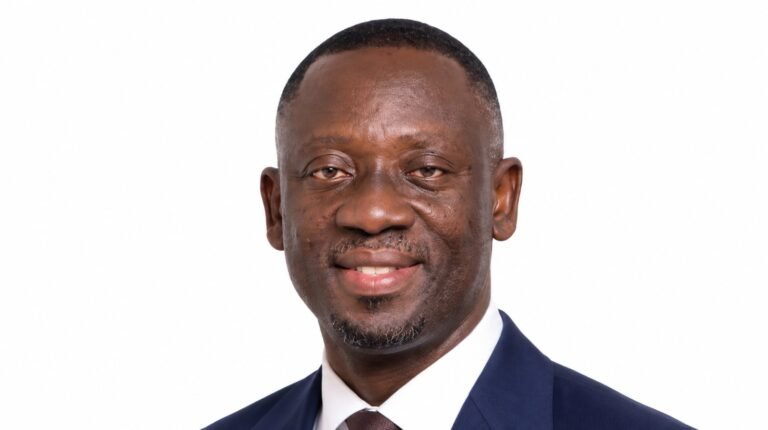
Ahead of the dialogue, Advisory Chairman of ICEDEG-Africa, Nana Kwasi Asuman-Frimpong, said the roundtable had been deliberately designed to move beyond problem narration and prioritise solution-driven policy engagement. He explained that the experts selected for the engagement were carefully chosen to focus not on problem-driven questions, but on solution-oriented discussions capable of informing practical policy direction.
He noted that the Council’s approval of the initiative was informed by growing concerns over governance trends across the continent, with data from the Global Peace Index and Afrobarometer pointing to a gradual decline in public confidence, particularly among young people, in democratic governance systems. He added that part of this challenge is linked to the disconnect between policy formulation and research-based, grassroots-driven evidence.
He stressed that the central focus of the programme is not to narrate problems. While acknowledging that challenges exist, it said the key interest is to assess how Budget 2026 has performed so far and how it has influenced the economy, using evidence-based analysis to guide policy discussions.
The think tank further explained that all discussions and expert inputs will be consolidated into a policy brief to be submitted to policy makers, particularly the Ministry of Finance and other relevant state institutions, to inform fiscal policy decisions.
It distinguished its approach from conventional civil society engagements, noting that while many organisations wait for the Mid-Year Budget Review before issuing critiques, ICEDEG-Africa seeks to proactively influence policy through structured dialogue and evidence-based recommendations. According to the think tank, this approach is intended to strengthen trust in governance systems and rebuild public confidence in democratic and economic policy processes.
ICEDEG-Africa expressed confidence that the recommendations emerging from the roundtable will be reflected in the Mid-Year Budget Review. It further observed that many communiqués from similar engagements tend to be largely descriptive, resembling reported speeches rather than actionable policy inputs, a gap it aims to address through this initiative.
Inclusive policymaking
Bright Philip Donkor, Director of Corporate Communication and Branding for ICEDEG-Africa, also speaking on Asaase Radio ahead of the programme, explained that the dialogue roundtable was also to ensure that public policy discourse goes beyond post-decision commentary, and instead creates space for citizens, experts, civil society organisations and policymakers to contribute meaningfully before key fiscal and governance decisions are finalised. He noted that this philosophy underpins the ICEDEG-Africa Policy Dialogue Roundtable Series, which seeks to bridge the gap between research, citizen perspectives and policy formulation, while promoting evidence-based governance across the continent.
He emphasised that the Mid-Year Budget Review remains a critical point in Ghana’s economic governance cycle, as it provides government with the opportunity to assess fiscal performance, review revenue and expenditure targets, and introduce policy adjustments where necessary. He added that at a time when businesses are concerned about taxation, households are facing cost-of-living pressures, investors are monitoring economic indicators, and young people are increasingly seeking employment opportunities, it is important to ensure that stakeholder perspectives are properly integrated into policy discussions.
According to him, the Roundtable is deliberately designed to be non-partisan, constructive and solution-oriented, rather than a platform for political contestation. He stressed that ICEDEG-Africa is more concerned with producing actionable insights that can inform policy direction than merely highlighting challenges.
He noted that this diversity of expertise is intended to ensure a holistic discussion that captures multiple dimensions of Ghana’s economic and governance landscape, including fiscal policy, taxation, business development, climate finance and consumer welfare. He further urged stakeholders, including policymakers, researchers, media practitioners, civil society organisations, students and the general public, to actively participate in the dialogue, stressing that economic policy decisions affect all citizens regardless of background or profession.
About The Author