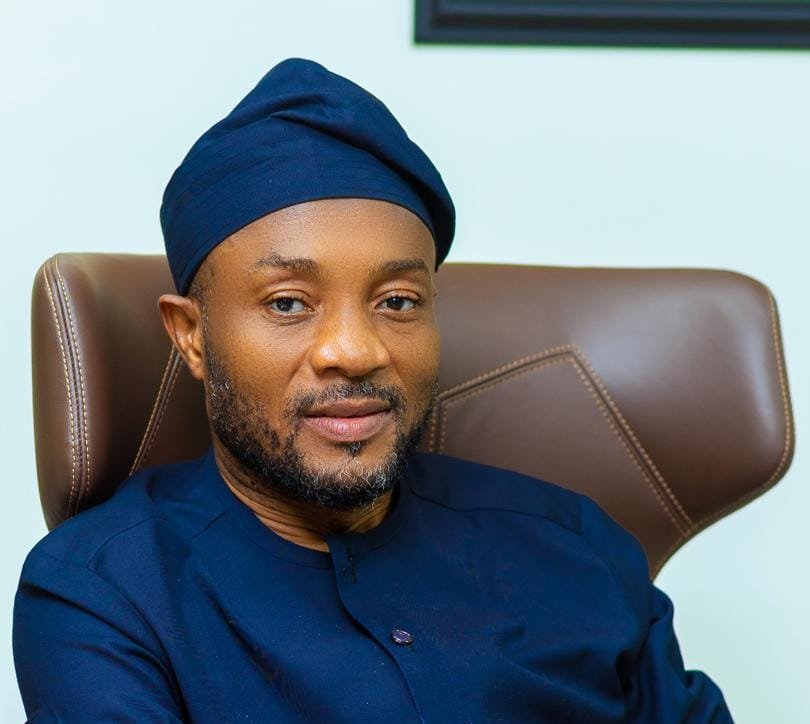
Second Deputy Minority Whip and Member of Parliament for Weija-Gbawe, Jerry Ahmed Shaib
The Second Deputy Minority Whip and Member of Parliament for Weija-Gbawe, Jerry Ahmed Shaib, has cautioned the governing National Democratic Congress (NDC) against using the power of the state to punish dissent. He emphasised that political authority must never be transformed into an instrument of vengeance against opponents and critical voices.
In an interview with the Daily Statesman, Mr Shaib said the government must demonstrate greater tolerance for criticism and political disagreement, stressing that dissent is an essential component of every functioning democracy.
He said President Mahama, having returned to power through a democratic process, had a responsibility to protect the same democratic freedoms that enabled him and the National Democratic Congress (NDC) to campaign, criticise previous governments and eventually win the 2024 elections.
Mr Shaib said the exercise of political power should not create a situation where citizens, opposition politicians or other critics become afraid to express opinions that differ from those of the government.
Democracy
According to him, a democracy cannot thrive when disagreement with those in authority is interpreted as hostility towards the state.
He said political leaders must understand that criticism, however uncomfortable, is not necessarily an attempt to undermine government but can serve as an important mechanism for holding public officials accountable.
Mr Shaib told the Daily Statesman that the government should therefore resist every temptation to silence opposing voices through the use of state institutions.
He said the police, intelligence agencies, prosecutorial authorities and other institutions of state must operate within the law and should never be perceived as tools for settling political differences.
Power is temporary
The Weija-Gbawe MP said the principle is particularly important because political power is temporary and changes hands through elections.
He warned that any government that establishes a culture in which dissent is punished could ultimately create a precedent that may be used against its own members and supporters when political circumstances change.
Mr Shaib said Ghana’s democratic journey had been built on political competition, freedom of expression, institutional checks and the right of citizens to question those entrusted with public power.
He therefore urged the NDC to ensure that his administration’s approach to political opposition did not undermine those democratic foundations.
Criticism of government
He said the NDC must distinguish between genuine criminal conduct and legitimate political expression, insisting that criticism of government officials should not automatically be treated as a threat to national security or public order.
Mr Shaib said Ghanaians have a constitutional right to question government decisions and demand accountability from public officials.
He argued that political leaders should respond to criticism with explanations, evidence and engagement rather than intimidation.
According to him, the credibility of any administration depends not only on the policies it introduces but also on how it treats people who disagree with those policies.
Pursue opponents
Mr Shaib said the current administration must therefore be careful not to create the impression that political power had become a reward that entitled its holders to pursue opponents.
He described such an approach as dangerous because it could weaken public confidence in state institutions and deepen political divisions in the country.
The Second Deputy Minority Whip said the opposition has a constitutional responsibility to scrutinise the government and raise concerns whenever it believed public interest was being compromised.
He said the NPP Minority would not abandon that responsibility simply because the government might find some of its criticisms uncomfortable.
Mr Shaib said the role of the Minority is not to obstruct government unnecessarily but to provide checks and balances and ensure that public officials remained accountable to the people.
Robust scrutiny
He said the government should therefore welcome robust scrutiny as part of the democratic process rather than view every criticism through a partisan lens.
The Weija-Gbawe MP also cautioned against the politicisation of state institutions, saying institutions of the Republic must serve the Constitution and the Ghanaian people rather than the interests of whichever political party happens to be in government.
He said the independence and credibility of such institutions are essential to maintaining public trust in Ghana’s democracy.
Mr Shaib told the Daily Statesman that political vengeance has no place in a mature democracy, and urged President Mahama to rise above partisan considerations in the exercise of executive authority.
Democratic freedoms
He said the President had an opportunity to demonstrate that his administration could protect democratic freedoms while pursuing legitimate government business.
According to him, the test of democratic leadership is not how a government treats people who praise it, but how it treats those who criticise it.
Mr Shaib said President Mahama should therefore use his position to promote tolerance, dialogue and respect for constitutional rights rather than create an environment in which citizens felt compelled to remain silent.
He maintained that Ghana’s democratic reputation had been built over decades and must not be weakened by political intolerance.
The MP said successive governments had a duty to leave behind institutions that were stronger, more independent and more trusted than they found them.
Punishment of opponents
He warned that if political power became synonymous with punishment of opponents, the country could gradually lose the institutional safeguards that protect every Ghanaian, regardless of political affiliation.
Mr Shaib said the government must consequently demonstrate through its conduct that its commitment to democratic governance extended beyond election campaigns and political rhetoric.
He called on President Mahama to stop “the punishment of dissent and ensure that the authority entrusted to his administration is used to serve the national interest.”
“Power must not become political vengeance,” Mr Shaib told the Daily Statesman, stressing that the country’s democratic future depends on political leaders recognising that power is entrusted to them temporarily by the people.
Political culture
He said Ghana needed a political culture in which governments could be criticised without fear, opposition parties could perform their constitutional duties without intimidation and state institutions could operate without partisan pressure.
Mr Shaib said protecting dissent is ultimately about protecting democracy itself, adding that every government must remember that the same freedoms it enjoyed while in opposition must remain available when it assumes power.
He urged President Mahama to demonstrate leadership by ensuring that disagreement was treated as part of democratic governance rather than as an offence deserving punishment.
For Mr Shaib, the enduring responsibility of political leaders must be to strengthen Ghana’s democratic institutions, protect constitutional freedoms and ensure that the power of the state is never converted into an instrument for political revenge.
About The Author