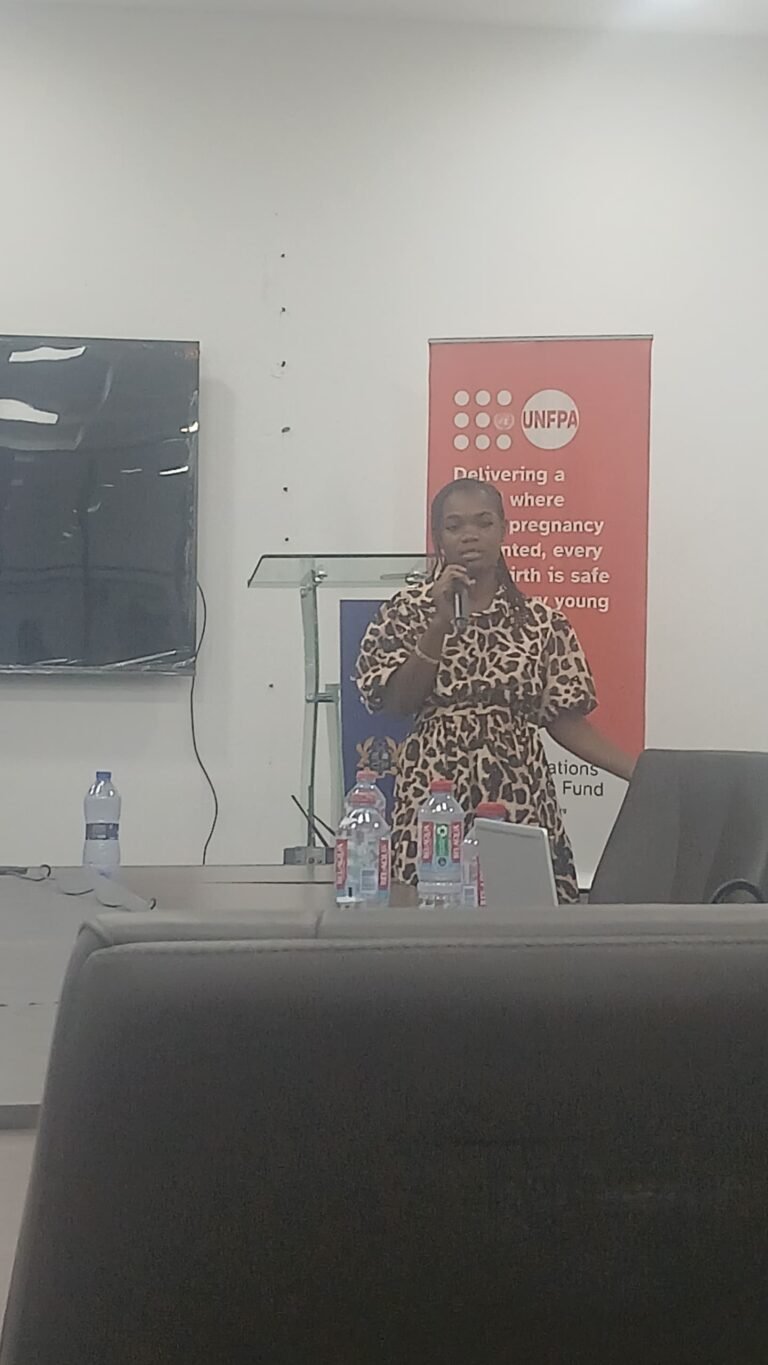
Madam Hagar Ampah, Principal Civic Education Officer with the NCCE
By Bright Philip Donkor
The National Commission for Civic Education (NCCE), an implementing partner of the United Nations Population Fund (UNFPA), is intensifying education on sexual and reproductive health and gender-based violence (GBV) in four regions under the UNFPA Adolescent Girls’ Programme (AGP).
The AGP, which took off in 2025, is being implemented jointly by the United Nations Population Fund (UNFPA), and the United Nations International Children’s Emergency Fund (UNICEF), with funding from Global Affairs Canada.
The initiative is being implemented in the Ashanti, Eastern, Volta and North East regions, with a focus on educating adolescent girls about their rights, promoting informed decisions and addressing gender-based violence in their comcommunitiesI
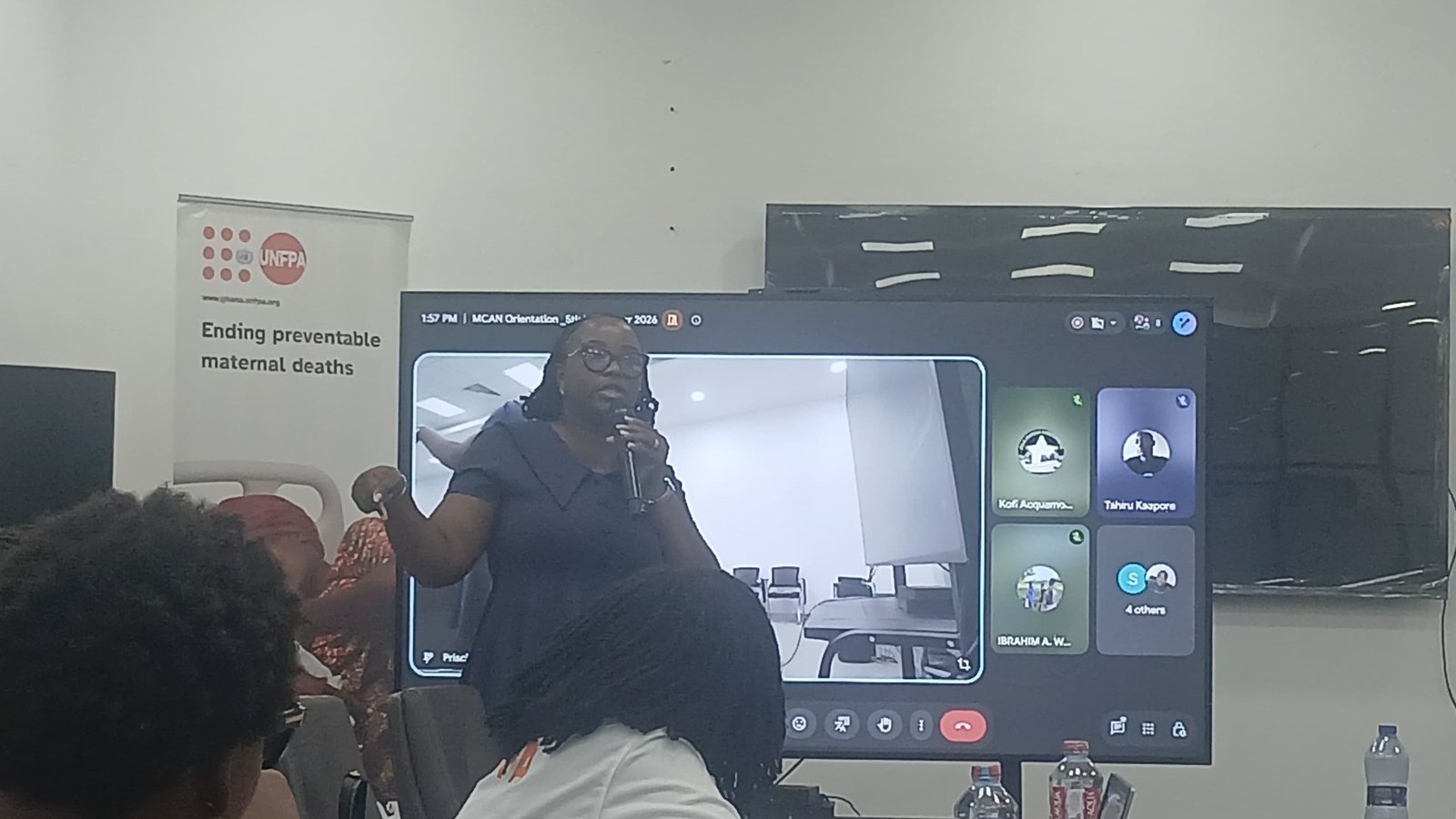
n a brief address at a one-day capacity-building workshop on UNFPA Country Programme Reporting and Development Communication in Accra on Thursday, November 5, 2026, a Principal Civic Education Officer at the NCCE, Hagar Ampah, said the Commission had also expanded its GBV education to include men and boys, recognising that they could also experience violence and had an important role to play in preventing abuse.
She explained that although much of the discussion on gender-based violence focused on women and girls, men and boys also reported experiencing different forms of violence, making it necessary to engage them in the education and prevention efforts.
Community-based platforms
Ms Ampah said the NCCE used different community-based platforms to reach adolescent girls, including girls’ clubs, hairdressers’ and dressmakers’ associations, shops and church-based groups.
She noted that the Commission also engaged boys and men through their own groups, with separate sessions organised for males and females to provide safe spaces for participants to discuss sensitive issues freely and ask questions without feeling uncomfortable.
According to her, the Commission had adopted a range of approaches to make the education accessible, particularly to young people who might not otherwise have opportunities to participate in formal discussions on sexual and reproductive health and gender-based violence.
She said one of the approaches involved the use of mobile vans fitted with public address systems, which travelled through communities, stopped at places where people gathered and provided information on the issues.
Ms Ampah added that the NCCE also used radio discussions and community information centres to extend its outreach and provide platforms for public education.She said the Commission engaged relevant stakeholders, including health institutions, traditional authorities, religious leaders, faith-based organisations and other opinion leaders, at the regional and district levels before taking the programme into communities.
The engagements, she explained, were intended to secure the support of community leaders and create an enabling environment for adolescent girls to participate in the activities, listen to the education and freely ask questions.
Ms Ampah said the involvement of community stakeholders was important because their support helped build trust and encouraged families and community members to accept the programme.
She reaffirmed the NCCE’s commitment to educating citizens on their rights and responsibilities, adding that the Commission would continue to use its community structures and communication platforms to promote awareness of sexual and reproductive health, gender-based violence and the rights of adolescent girls.
The workshop
The one-day workshop was organised by the Media and Communication Advocacy Network (MCAN), in collaboration with UNFPA, to strengthen media engagement and development reporting on the UNFPA Ghana Country Programme.
Beyond the training sessions, the workshop provided an opportunity to identify and document human-interest stories from implementing partners and beneficiaries of the Adolescent Girls and Child Marriage programmes.
It also highlighted the experiences, achievements and impact of UNFPA-supported interventions in communities, with the aim of improving media coverage of development programmes and the changes they bring to the lives of beneficiaries.
About The Author