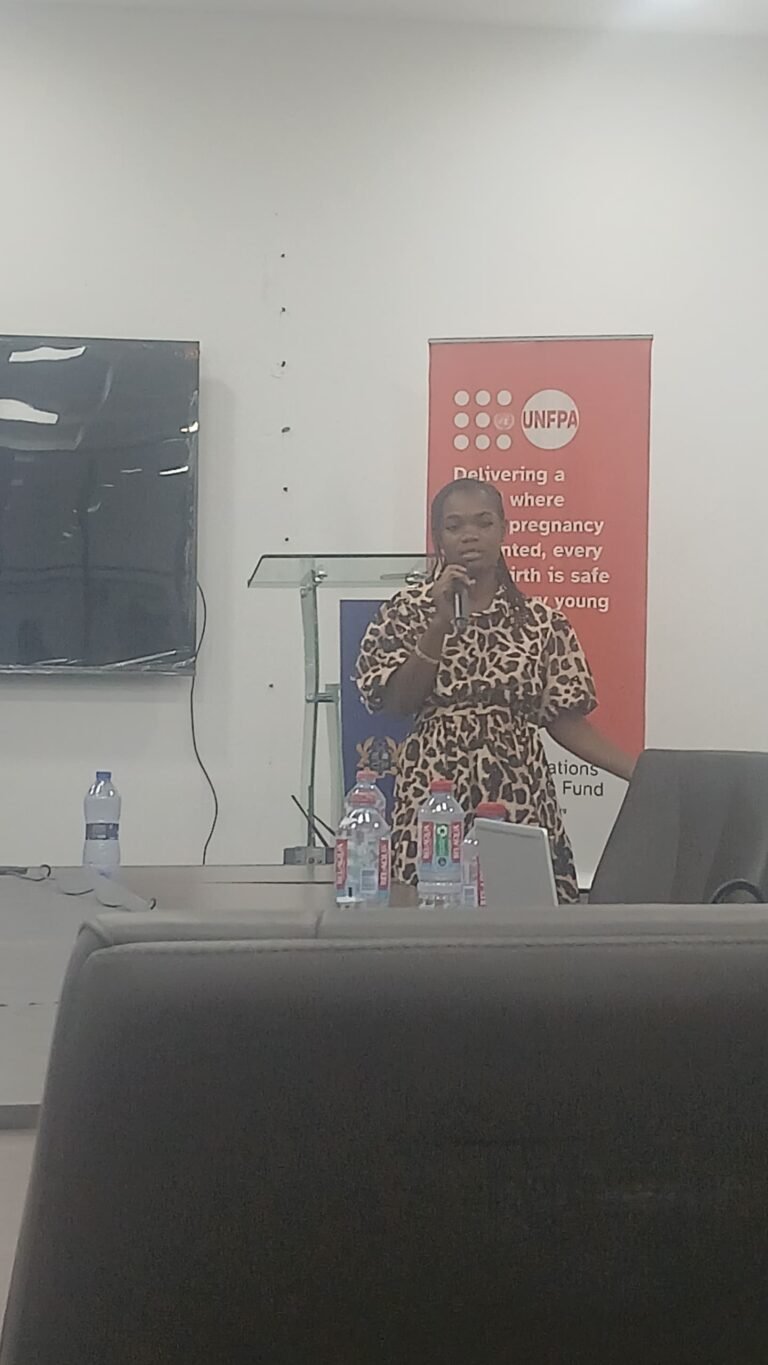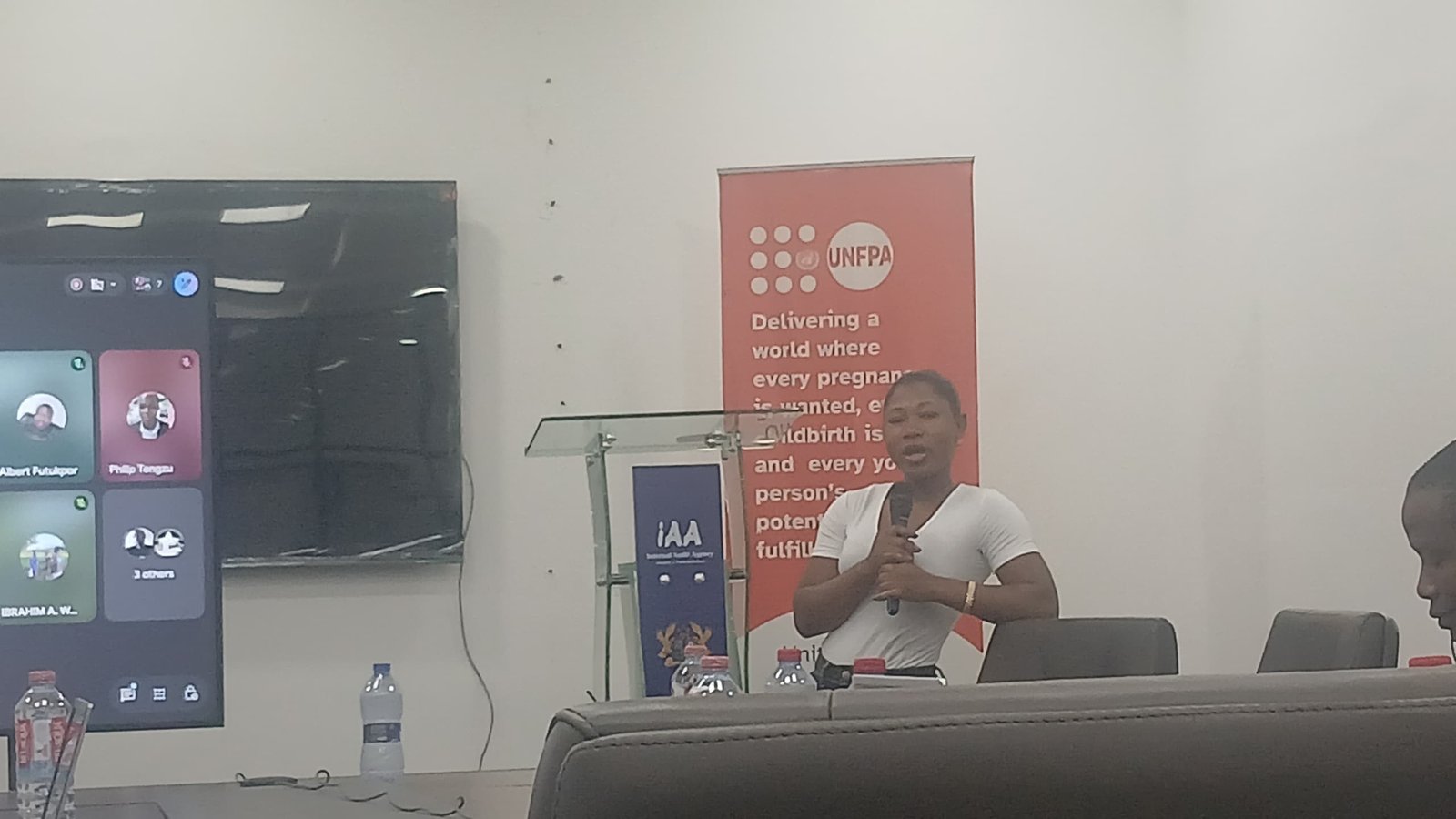
Manuri Victoria
By Bright Philip Donkor
Manuri Victoria, a beneficiary of the United Nations Population Fund (UNFPA) Global Programme to End Child Marriage in Ghana, has recounted how support from the initiative helped her overcome years of hardship, return to school and secure admission to the University of Health and Allied Sciences (UHAS).
Victoria, who moved to Accra with her aunt at the age of 10, said she worked as a kayayei (head porter) at Agbogbloshie while trying to pursue her education.
Ordeal
In an interview with the Daily Statesman during a one-day capacity-building workshop on UNFPA Country Programme Reporting and Development Communication in Accra on November 5, 2026, she narrated that her situation became more difficult following the death of her aunt in 2018, after which her aunt’s husband withdrew his support, leaving her to fend for herself.
She said her circumstances began to change in 2020 when she encountered facilitators educating girls on their rights and the need to end child marriage.After listening to their discussions, she learnt about an opportunity under the programme for girls interested in acquiring vocational skills and decided to participate.
“I realised that people were being paid to teach girls about human rights and ending child marriage, so I sat there listening to them. They later told us about another programme for girls who wanted to learn a trade. I thought to myself that since I had nothing doing, I might as well join,” she said.
Victoria subsequently joined the skills training, where she learnt to produce various items, including hand sanitiser. The sessions also covered health, gender-based violence, child marriage and other issues affecting girls.
She said officers from the Department of Gender also engaged participants on their rights, helping her understand issues she had previously known little about.
Knowledge
The knowledge, she said, changed how she viewed her circumstances and gave her the confidence to consider returning to school.
“I was empowered. I thought to myself, if only I had known all these things earlier, I could have gone back and spoken to my mother about my situation,” she recounted.
With renewed determination to continue her education, Victoria approached one of the programme facilitators and explained that she wanted to rewrite her examinations to improve her results but could not afford the registration fees.
She said the facilitator encouraged her to prepare for the examinations and provided financial assistance to enable her to register.
“I told her that I wanted to go back to school, but I did not have the money. She told me not to worry and that I should just go through the books and prepare. They helped me with the money, so I got the forms, registered and went back to write the examinations. This time, I passed all the subjects,” she said.
However, securing the results she needed was only one part of the challenge. Victoria said her plans to pursue higher education were threatened by financial difficulties, as her father, who had been the family’s breadwinner, was deceased and her mother was ill and unable to susupport her.
She herefore returned to the programme facilitators for assistance, explaining that she could not afford to continue her education.
Encouragement
According to her, the facilitators encouraged her to apply to university and assured her of support. She subsequently purchased application forms for the University of Ghana and UHAS.
She received admission offers to study Biological Science at the University of Ghana and Medical Laboratory Science at UHAS. However, she was initially uncertain about which programme to choose because she had little knowledge of the courses and their career prospects.
“I was confused about which one to go for because I did not know much about Biological Science or what they did. Honestly, if you had asked me at the time what I wanted to become in the future, I would not have been able to tell you because I did not know what I wanted to do. I only knew that I wanted to go to school,” she said.
She said the facilitators arranged guidance and counselling to help her understand the two programmes and make an informed decision.
Following the counselling, Victoria chose Medical Laboratory Science at UHAS. She said the programme supported her in pursuing her admission, while some family members helped with her feeding and accommodation.
Victoria said the support she received through the UNFPA Global Programme to End Child Marriage was not limited to financial assistance, but also gave her the knowledge and confidence to make decisions about her life and education.
The workshop
The one-day workshop was organised by the Media and Communication Advocacy Network (MCAN), in collaboration with UNFPA, to strengthen media engagement and development reporting on the UNFPA Ghana Country Programme.
Beyond the training sessions, the workshop provided an opportunity to identify and document human-interest stories from implementing partners and beneficiaries of the Adolescent Girls and Child Marriage programmes.
It also highlighted the experiences, achievements and impact of UNFPA-supported interventions in communities, with the aim of improving media coverage of development programmes and the changes they bring to the lives of beneficiaries.
About The Author