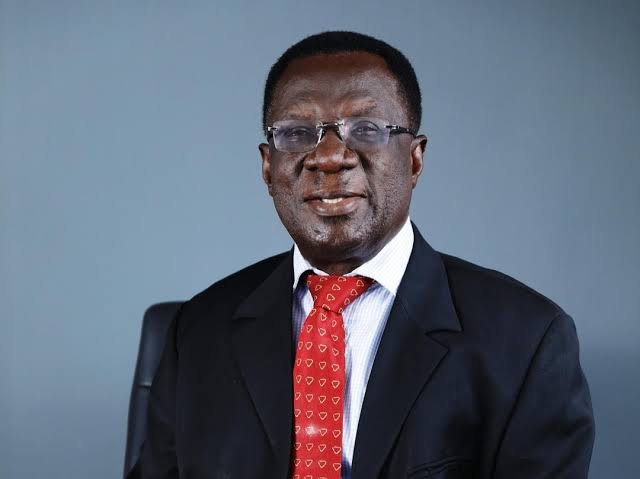
(L) Isaac Nyarko Antwi, GES teacher, and President John Mahama (R)
A teacher with the Ghana Education Service (GES), Isaac Nyarko Antwi, has called on President John Dramani Mahama and the government’s educational authorities to prioritise innovation in addressing the persistent challenge of overcrowded classrooms across the country, describing it as a major setback to effective teaching and learning in many schools.
In a statement, Mr. Nyarko Antwi, who is an English Language tutor at the Kumasi Girls’ Senior High School, observed that overcrowding remains a significant barrier to quality education in many developing countries, including Ghana, where teachers are often required to manage large numbers of learners under constrained conditions.
He noted that although the situation places considerable pressure on educators, committed teachers continue to adopt innovative strategies to ensure that learning outcomes are not compromised.
According to him, “innovation, therefore, becomes the bridge between obstacle and opportunity,” stressing that creative teaching methods are essential in improving classroom engagement and learner performance despite large class sizes.
Key approaches
He explained that one of the key approaches is team based learning, which allows students to work in small groups to share ideas and complete academic tasks collaboratively. He stated that in such settings, “the teacher is no longer seen as the repository of knowledge,” as learners actively participate in the learning process.
To illustrate this approach, he cited a Biology classroom scenario where students can be grouped to study topics such as the human body system, plant structure and ecological systems. In his explanation, he noted that “one group can identify and label the various parts of the digestive system with the aid of a chart, another group can identify the process of photosynthesis, while another group can work on food chains in an ecosystem.”
He added that group presentations after such activities help to deepen understanding, build confidence among learners and improve knowledge retention.
The GES teacher further advocated peer assisted learning, describing it as an effective strategy where academically stronger students support their weaker colleagues. He observed that in overcrowded classrooms, “it is almost impossible for a teacher to attend to the needs of all the learners in the classroom.”
He explained that when teachers identify high achieving students and train them as peer tutors, it enhances understanding among learners, especially those who may feel shy or afraid to seek clarification directly from teachers. According to him, “many students learn better when they are taught by their peers.”
Integration of technology
Mr Nyarko Antwi also emphasised the integration of technology in teaching as a practical solution to classroom overcrowding. He noted that tools such as PowerPoint presentations and short educational animations can make lessons more engaging and easier to understand.
He explained that in Geography lessons, for instance, teachers can project maps, satellite images and climate charts to help learners analyse topics such as population distribution, weather patterns and landforms.
Where internet access is available, he encouraged the use of digital platforms such as Google Classroom to share learning materials, including videos on relief features, soil formation and vegetation zones. He stated that “technology, without doubt, helps learners to visualize the earth’s features and encourages continuous learning beyond the classroom.”
The teacher also recommended the flipped classroom model as another innovative strategy for managing large class sizes. He explained that unlike the traditional approach where teaching is done in class and homework is assigned afterwards, the flipped model allows learners to access instructional materials at home before classroom sessions.
Class time approach
He stated that this approach enables class time to be used for discussions, clarifications and practical engagement, adding that it “increases student engagement and reduces the talking hours of teachers.”
According to him, this method ensures that learners come to class better prepared, making lessons more interactive and participatory even in overcrowded environments.
In addition, he highlighted activity based learning as an effective method for sustaining learner attention in large classrooms. He explained that incorporating games, role plays and practical exercises helps to make lessons more engaging.
He noted that in Literature lessons, students can dramatise scenes from prose or drama texts, while science classes can involve simple group experiments. He stated that such activities “helps to sustain attention and makes the learning environment lively, even when the classroom is full.”
Differentiated instruction
Isaac Nyarko Antwi further stressed the importance of differentiated instruction, explaining that learners have varying abilities and learn at different speeds. He indicated that teachers can design tasks of varying difficulty levels to cater for both strong and weak students within the same classroom.
According to him, assigning complex tasks to advanced learners while giving simpler exercises to struggling students ensures inclusivity and prevents learners from being left behind.
He added that although overcrowded classrooms remain a serious challenge, they should not discourage teachers. He maintained that with strategies such as cooperative learning, peer tutoring, technology integration, flipped classroom approaches, activity based learning and differentiated instruction, teachers can overcome these difficulties and significantly improve learning outcomes.

About The Author