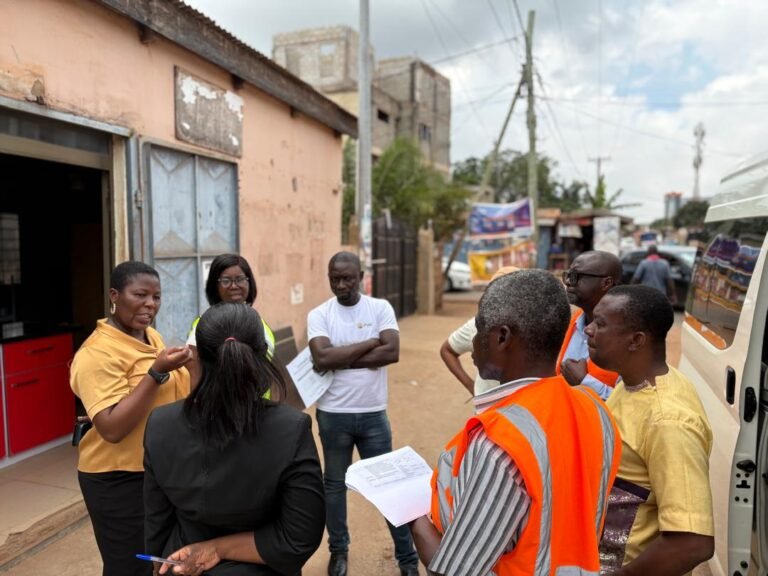
Dr Susan Yaa Aframa Arkah, Principal of the Sefwi Asafo College of Health
The Principal of the Sefwi Asafo College of Health, Dr Susan Yaa Aframa Arkah, has called for a renewed continental shift towards entrepreneurship, innovation and agribusiness development as key pillars for sustainable economic transformation across Africa.
Speaking as keynote speaker on the theme “Entrepreneurship and Agribusiness in the African Context” at a British Council funded Transnational Education workshop held at Mount Everest Hotel in Kwabenya, Accra, Dr Arkah said Africa’s development trajectory depends on its ability to fully harness its human capital and convert agricultural potential into value driven enterprises.
She noted that although Africa is endowed with vast natural and agricultural resources, the continent continues to face structural challenges such as unemployment, poverty, food insecurity and limited industrialisation, all of which require a deliberate shift towards entrepreneurial thinking and innovation led development.
Innovation
According to her, “Africa’s future prosperity depends on our ability to transform challenges into opportunities through entrepreneurship, innovation and value creation”. She stressed that the time had come for African economies to move beyond subsistence approaches and embrace enterprise driven development models.
Dr Arkah emphasised that agribusiness must no longer be viewed merely as farming, but as an integrated value chain that includes production, processing, packaging, transportation, marketing, technology adoption and export oriented development. She explained that significant economic gains remain untapped because many African countries continue to export raw agricultural commodities instead of adding value locally.
She argued that value addition and agro processing remain essential if Africa is to build resilient economies capable of competing globally, adding that agribusiness presents one of the strongest pathways for job creation and industrial expansion on the continent.
The academic and health sector leader further highlighted the importance of technology in reshaping agricultural systems across Africa. She pointed to the emergence of young entrepreneurs developing digital platforms, mobile applications and climate smart innovations that are improving productivity, market access and financial inclusion within the agricultural sector.
Dr Arkah said such innovations demonstrate that agriculture is no longer confined to traditional practices, but is increasingly driven by data, digital tools and modern scientific approaches that can significantly increase yields and reduce post harvest losses.
Entrepreneurial
She also stressed the need for universities and higher education institutions to play a more active role in nurturing entrepreneurial mindsets among students. According to her, tertiary institutions must go beyond producing graduates for employment and instead focus on equipping young people with the skills, creativity and confidence to establish their own enterprises.
She further stated that “Africa’s greatest resource lies not beneath its soil but within its people,” adding that human capital development must become the central focus of all economic planning and educational reform efforts.
Dr Arkah further underscored the importance of sustainable development in shaping Africa’s entrepreneurial future. She called for increased investment in climate smart agriculture, renewable energy systems, environmental protection and inclusive business models that ensure women, youth and marginalised groups are fully integrated into economic development processes.
She noted that climate change and environmental degradation pose serious risks to agricultural productivity, and therefore sustainable practices must be prioritised to safeguard food systems and rural livelihoods.
Investment
Dr Arkah also used the platform to encourage policymakers and development partners to invest more in youth led innovation, noting that Africa’s rapidly growing young population presents both a challenge and an opportunity. She said with the right support systems, mentorship and access to finance, young people can become powerful drivers of economic transformation.
She reiterated that entrepreneurship should be seen not only as a career option but as a national development strategy capable of addressing structural unemployment and stimulating inclusive economic growth.
Dr Arkah also urged stakeholders to commit to building resilient systems that support innovation and enterprise development, stating that long term prosperity will depend on how effectively African countries invest in people, ideas and sustainable economic models.

About The Author